Emergency Home Loans in Canada
Financial emergencies do not wait for a convenient time. A sudden job loss, a large medical bill, an urgent home repair, or a tax demand can land all at once and leave you needing cash fast.
If you own your home, you have options the bank may never mention. Emergency home loans let you use the equity in your home to access funds quickly, with same-day approval and a decision based on your equity rather than your credit score. At LendToday, we help Canadian homeowners get the money they need, even when the bank has already said no.

Looking for Emergency Loans in Canada?
Most people searching for emergency loans in Canada are looking at unsecured options like personal loans, payday loans, or cash advances. Those can work for small, short-term needs, but they come with smaller limits and higher costs.
If you are a homeowner, you have a better option. You may qualify for a much larger amount at a lower cost by using the equity in your home. This page focuses specifically on emergency home loans because, for Canadian homeowners, they are often the most affordable emergency financing available.
What Is an Emergency Home Loan?
An emergency home loan is fast financing secured against the equity in your home, designed for situations where you need money quickly. Because the loan is backed by your property, approval is based mainly on your equity, not a perfect credit score or verified income. That is what makes it so much faster than a traditional bank loan.
This is not a payday loan. Payday loans are small, short-term, and expensive. An emergency home loan gives you access to a larger amount at a far lower cost, using value you have already built in your home. It can be arranged as a home equity loan, a second mortgage, a HELOC, or a refinance, whichever fits your situation best.

When Homeowners Need an Emergency Home Loan
Homeowners reach out to us for all kinds of urgent reasons. If any of these sound familiar, you likely have options:
- A sudden job loss or a drop in income
- A large medical, dental, or veterinary bill
- An urgent home or vehicle repair that cannot wait
- Mortgage arrears or property tax arrears piling up
- A Canada Revenue Agency balance owing or other tax debt
- High-interest credit cards and debt that keep growing
- Funeral costs or a family emergency
- A separation or divorce that needs to be settled quickly
- A time-sensitive opportunity you cannot afford to miss
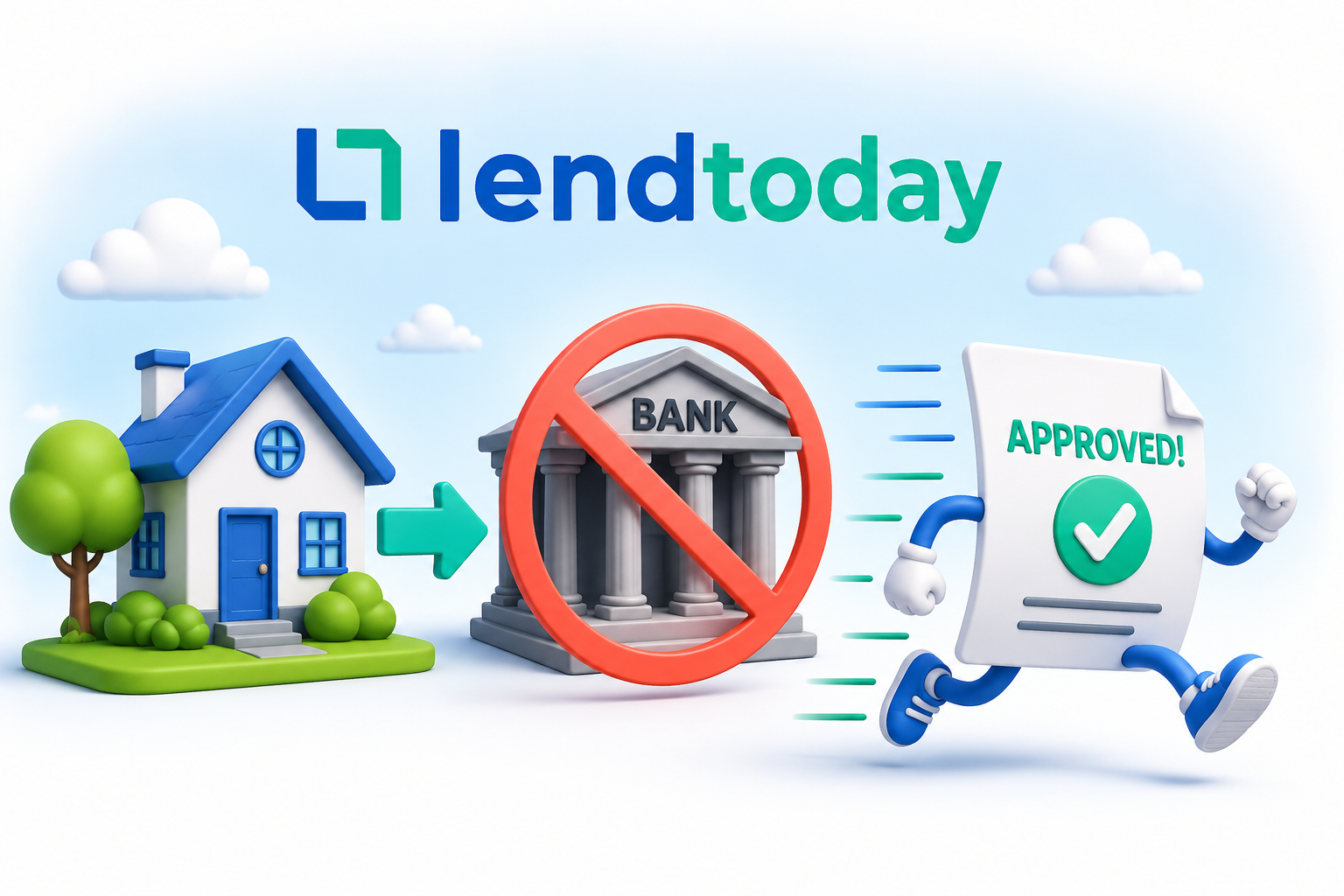

How Home Equity Powers a Fast Emergency Loan
Your home equity is the difference between what your home is worth and what you still owe on any mortgages against it. For most homeowners, that equity is the fastest and most affordable source of emergency cash available.
Because the loan is secured by your home, the lender is far less concerned with your credit score or how your income looks on paper. Approval is driven by equity. That is why homeowners with bad credit, self-employment income, or a past bankruptcy can still qualify for an emergency home loan when a bank would turn them away, and why the funds can move so quickly.
Types of Emergency Loans Available in Canada
When you need money urgently, it helps to understand every option on the table. Emergency financing in Canada generally falls into a few categories, each suited to a different situation:
Personal Loans
Unsecured installment loans based on your credit and income. Useful for mid-sized needs if your credit is strong, but harder to get with bruised credit.
Payday Loans
Small, very short-term loans with high fees. Fast, but the cost and tight repayment window make them risky for anything beyond a minor shortfall.
Cash Advances
Borrowing against a credit card limit. Quick, but interest starts immediately and the rate is usually higher than a normal purchase.
Credit Cards
Convenient for small emergencies you can repay quickly. Carrying a balance gets expensive fast at typical card interest rates.
Line of Credit
Revolving credit you draw on as needed. Rates and limits depend heavily on your credit profile and income.
Home Equity Loan
A home equity loan gives homeowners a lump sum secured by their equity, with larger amounts and lower costs than unsecured options.
Second Mortgage
A second mortgage sits behind your first and is often the fastest route to funds when timing is critical. Approval is driven by equity.
HELOC
A HELOC is a revolving line secured by your home. Draw what you need, repay, and draw again, paying interest only on what you use.
Mortgage Refinance
A mortgage refinance replaces your existing mortgage with a larger one and pays you the difference in cash, ideal when consolidating debt too.
For homeowners, the last four are usually the strongest choices. Because they are secured by your home, they offer larger amounts, lower borrowing costs, and approval based on equity rather than a perfect credit score, which is exactly what makes them work in an emergency when banks say no.
Emergency Home Loan vs Payday Loan vs Personal Loan
When you need money fast, it helps to know how the options actually compare. Payday loans and personal loans are quick, but they come with real trade-offs. Here is how an equity-based emergency home loan stacks up:
Payday Loan
Very fast, but small amounts only and extremely high fees. A short repayment window can pull you into a cycle of borrowing that is hard to escape.
Personal Loan
Larger than a payday loan and usually cheaper, but approval leans heavily on your credit score and income. Bad credit often means a decline or a high rate.
Emergency Home Loan
Larger amounts at a much lower cost because it is secured by your home. Approved on equity, not credit, so it works even when the bank has said no.
Emergency Loan Options Compared
Here is a side-by-side look at how the most common emergency loan options stack up for a Canadian homeowner:
| Loan Type | Typical Amount | Credit Needed | Speed | Relative Cost | Best For |
|---|---|---|---|---|---|
| Payday Loan | Small | Low | Same day | Very high | Minor short-term shortfalls |
| Credit Card / Cash Advance | Existing limit | Existing | Instant | High | Small purchases you repay fast |
| Personal Loan | Mid-sized | Medium to good | 1 to 5 days | Medium | Borrowers with stronger credit |
| Emergency Home Loan | Large | Flexible (equity-based) | Often 1 to 3 days | Lower | Homeowners with available equity |
General comparison for illustration only. Actual amounts, timelines, costs and approvals vary by lender and individual situation.
Why Not Just Use a Payday Loan or Credit Card?
When cash is tight, a payday loan or a credit card cash advance can feel like the easy answer. The problem is the cost. Payday loans carry some of the highest borrowing costs of any product, and they have to be repaid in full within a couple of weeks, which is exactly when most people cannot. Credit card cash advances start charging interest the moment you take them out, often at rates far above a normal purchase.
An emergency home loan works differently. Because it is secured by the equity in your home, the cost of borrowing is dramatically lower, the amount available is far larger, and the repayment is structured to be manageable. For a homeowner, tapping equity is almost always the more affordable and more sustainable way to handle a financial emergency.
How Much Can You Borrow in an Emergency?
This is the question most homeowners ask first. The answer comes down to three numbers: what your home is worth, what you still owe on it, and how much you need. Most homeowners have built up far more equity than they realize, which is why this approach works even when the amount you need feels large.
Lenders will often advance up to 80% of your home's value, minus what you already owe. Private and alternative lenders focus on meaningful remaining equity rather than a perfect credit score or verified income. The fastest way to know exactly how much you can access is to run the numbers.
Our Emergency Home Loan Solutions
There is no single right answer for every emergency. We match the solution to your situation, your equity, and how fast you need the funds.
Home Equity Loan
A home equity loan gives you a lump sum borrowed against your equity, ideal when you know exactly how much you need. It sits separate from your first mortgage, so your existing mortgage stays untouched.
Home Equity Line of Credit (HELOC)
A HELOC gives you a revolving line of credit secured by your home. Draw what you need now, keep the rest available for later, and pay interest only on what you use.
Cash-Out Mortgage Refinancing
With mortgage refinancing, your existing mortgage is replaced with a new, larger one and the difference is paid to you in cash. A strong option when you also want to consolidate other debts into one payment.
Second Mortgage
A second mortgage is registered behind your first mortgage and is often the fastest route to funds when time is critical. Approval is driven by equity, not credit.
Reverse Mortgage for Homeowners 55+
A reverse mortgage lets homeowners aged 55 and older convert equity into tax-free cash with no required monthly payments. A practical option for retirees on fixed incomes.
Private Mortgage
A private mortgage is funded by lenders who focus on your home's equity rather than credit or income documents. Often the option that can still close quickly when other doors have closed.
Why Banks Decline Emergency Loan Applications
When you need money fast, a bank decline can feel like the door closing. The truth is that banks turn people down for reasons that have little to do with whether you can actually repay. Common reasons a bank says no include:
- A credit score below their cutoff, even by a few points
- Debt ratios that are too high for their rigid formulas
- Probationary or recently changed employment
- Self-employed income that is hard to document on paper
- A current or past consumer proposal or bankruptcy
- Outstanding tax debt owed to the Canada Revenue Agency
- Existing mortgage arrears or property tax arrears
This is where private and alternative lending differs. Instead of starting with your credit score, these lenders start with the equity in your home. If you have built up equity, you have leverage the bank's checklist simply does not account for, which is why so many homeowners who were declined still get approved.
Can You Get an Emergency Loan With Bad Credit?
Yes. This is the situation we handle most often. Emergency home loans are approved primarily on the equity in your home, not your credit score, so a low score does not disqualify you the way it would at a bank.
We regularly help homeowners who have been turned away elsewhere, including those dealing with:
- Bad credit or a low credit score from missed payments
- A current or past consumer proposal or bankruptcy
- Self-employment income that is hard to verify on paper
- Lower or irregular income that banks treat as a barrier
- Existing mortgage or tax arrears alongside the emergency
If your credit took a hit from the same financial pressure that created the emergency, you are exactly who these solutions are built for. A bad credit mortgage or a self-employed mortgage can get you the funds you need and give you room to recover.
An Emergency Home Loan Example
Sarah, a homeowner who had recently been through a stretch of reduced income, was hit with an urgent bill and a credit score the banks would not touch. Her situation looked like this:
- $20,000 needed to cover an urgent family emergency
- $285,000 remaining on her first mortgage
- Home valued at roughly $640,000
With strong equity but bruised credit, Sarah used a second mortgage to access the funds she needed within days. The emergency was handled, her low-rate first mortgage stayed exactly as it was, and she had a clear, manageable repayment plan, all without the cost of a payday loan or the wait of a bank.
This is an illustrative example for explanation only and does not represent a specific client. Individual results, rates and approvals vary.
How Quickly Can You Receive Funds?
Every file is different, but the path from application to funding usually follows the same steps. With an urgent file, these can often move quickly:
You share a few basic details about your home and your situation. No obligation.
We assess your equity and confirm which solutions realistically fit, often the same day.
Once your options are clear, we move toward an approval based primarily on your equity.
The lender confirms your home's value, typically through an appraisal.
A lawyer prepares and finalizes the paperwork to register the loan.
Funds are advanced so you can handle your emergency and move forward.
Timelines vary by lender, file complexity, and how quickly documentation and legal steps are completed.
Do You Qualify?
Most homeowners who come to us can see right away whether this is a fit. You are likely a strong candidate if you:
- Own a home in Canada
- Have available equity built up in your property
- Need fast, reliable financing
- Are looking for $25,000 or more
- Want a decision based on equity, not just credit
Common Emergencies We Help Solve
Homeowners use emergency financing for all kinds of urgent needs. These are some of the most common situations we help with:
Why Canadian Homeowners Choose LendToday
We work where banks won't. Our team specializes in situations traditional lenders avoid: urgent timelines, bad credit, bruised income history. We assess your situation on equity and find a path forward.
Personalized guidance. Every emergency is different. We take the time to understand yours and recommend the solution that actually fits, not the one that is easiest to sell.
A network of trusted lenders. We work with a wide range of lenders across the country to secure competitive rates and terms, even in difficult circumstances. Through our partners, we help homeowners from Ontario to Alberta, British Columbia, and beyond.
Speed when it counts. Emergencies are time-sensitive. Our streamlined application is built to get you approved and funded as quickly as possible.
Licensed and accountable. LendToday operates under a provincially regulated mortgage brokerage in Ontario. We are based in Ontario and, through our lending partners, help homeowners access emergency financing across Canada.

Get Emergency Funds Before the Situation Escalates
In an emergency, every day matters. The sooner you act, the more options you have and the easier the situation is to resolve. We will review your situation, confirm how much equity you have available, and lay out your options clearly, with no obligation.
Talk to an emergency loan specialist today and get a fast, honest answer on what is possible.
See an example: Read how a homeowner secured emergency financing after an unexpected job loss.
Emergency Home Loan FAQs
How fast can I get an emergency home loan?
Timelines depend on your situation, but equity-based financing can often be arranged in a matter of days, sometimes with same-day approval. The fastest way to start is to tell us how soon you need the funds so we can prioritize your file.
Can I get an emergency loan with bad credit?
Yes. Emergency home loans are approved primarily on the equity in your home rather than your credit score, so bad credit does not disqualify you. This is the most common situation we help with.
Is an emergency home loan the same as a payday loan?
No. A payday loan is small, short-term, and very expensive. An emergency home loan is secured by your home equity, which means a larger amount at a far lower cost and a repayment plan built to be manageable.
How much can I borrow in an emergency?
It depends on your home's value, your mortgage balance, and how much equity you have. Lenders will often advance up to 80% of your home's value minus what you already owe. Our equity calculator can give you a quick estimate.
Do I need to prove my income to qualify?
Often less than a bank would require. Because the loan is secured by your home, approval leans on equity rather than strict income verification, which is why self-employed homeowners and those with irregular income can still qualify.
Can I apply for an emergency loan online?
Yes. You can start your application online and one of our specialists will follow up quickly to walk you through the next steps and confirm your options.
Are there any cash advance fees?
No. There is no cash advance fee, because the financing is tied to the equity in your home rather than a credit card or short-term cash product.
What documents do I need to apply?
It helps to have your most recent mortgage statement, a recent bank statement, and government photo ID ready. Having these on hand lets us move faster, but tell us your situation first and we will guide you on exactly what is needed.
What can I use the funds for?
Almost any urgent need: medical bills, repairs, arrears, tax debt, debt consolidation, or a family emergency. Once the funds are advanced, how you use them is up to you. Speak with one of our mortgage specialists today.
Will applying affect my credit score?
An initial conversation and review of your options does not require a hard hit to your credit. We will always explain each step before anything is done, so there are no surprises.
Is collateral required for an emergency home loan?
Yes, your home is the collateral. That is exactly what makes the loan affordable and accessible: because it is secured by your property, the cost is lower and approval is based on equity rather than credit.
Can I get emergency funds without refinancing my mortgage?
Yes. A second mortgage or a HELOC lets you access funds while leaving your existing first mortgage exactly as it is, which protects a low rate you may already have.
Can I use the money to pay off CRA tax debt?
Yes. Many homeowners use equity-based financing to clear a balance owing to the Canada Revenue Agency. You can learn more on our Revenue Canada debt page.
Can I use an emergency home loan for renovations or repairs?
Yes. Urgent repairs are one of the most common reasons homeowners tap their equity, and the funds can be used for any home improvement you need.
Can I use the funds to pay off credit cards?
Yes. Consolidating high-interest credit cards into a lower-cost loan secured by your home is a frequent and practical use, often lowering your overall monthly payments.
What if my mortgage is already with another lender?
That is not a problem. A second mortgage or HELOC can be arranged behind your existing mortgage, no matter who your current lender is, without disturbing that mortgage.
Do I need an appraisal?
In most cases the lender will confirm your home's value, often through an appraisal, as part of approving the loan. We will tell you upfront what your specific file requires.
Can seniors qualify for an emergency home loan?
Yes. Homeowners aged 55 and older have extra options, including a reverse mortgage, which converts equity into tax-free cash with no required monthly payments.
Can I repay the loan early, and are there penalties?
Prepayment terms vary by lender and product. Some allow early repayment with little or no penalty, others have specific terms. We will confirm the details for your option before you commit, so there are no surprises.