Second Mortgages in Canada
A second mortgage lets Canadian homeowners borrow against the equity in their home without touching the first mortgage. Approval is based on your equity, not a perfect credit score, which is what makes it work when a bank has already said no.
Whether you want to consolidate high-interest debt, fund renovations, clear tax arrears, or stop a power of sale, a second mortgage can give you fast, equity-based access to the value you have already built in your home. At LendToday, we help homeowners get approved based on what their property is worth.
What Is a Second Mortgage?
A second mortgage is a secured loan that lets you borrow against the equity in your home. It is registered in second position, behind your existing first mortgage, and is secured by a lien on your property. Your home equity is simply the difference between what your home is worth and what you still owe on it.
Because it sits behind the first mortgage, your original mortgage and its interest rate stay exactly as they are. You make two separate payments each month: one on your first mortgage and one on the second. Second mortgages typically carry higher interest rates than first mortgages because the second lender takes on more risk by being second in line to be repaid.
Second Mortgage vs. Refinancing
Both let you tap your home equity, but they work very differently. The right choice usually comes down to one question: do you want to keep your current first mortgage, or replace it?
Refinancing
Replaces your existing first mortgage with a new, larger one and pays you the difference. Breaking your current mortgage early can trigger prepayment penalties, and you give up your existing rate, for better or worse.
Second Mortgage
Leaves your first mortgage completely untouched, so you keep your existing rate and avoid breakage penalties. You simply add a second loan behind it, secured by your remaining equity. Often faster to arrange.
Here is how a second mortgage compares to a HELOC and a full refinance at a glance:
| Feature | Second Mortgage | HELOC | Refinance |
|---|---|---|---|
| Lump sum | Yes | No | Yes |
| Keeps your existing first mortgage | Yes | Yes | No |
| Payment type | Fixed | Flexible | Fixed |
| Interest rate | Usually fixed | Usually variable | Fixed or variable |
| Typical approval speed | Fast | Moderate | Slower |
| Equity-based approval | Yes | Yes | Partly |
General comparison for illustration only. Terms, rates, and approvals vary by lender and individual situation.
How Much Can You Borrow on a Second Mortgage?
With a second mortgage, it is generally possible to borrow up to 80% of your home's value, less the balance remaining on your first mortgage, and in some cases higher through a private lender. This combined figure is called your combined loan-to-value, or CLTV, and most lenders cap it between 80 and 85% of the total appraised value, depending on the lender and your location.
A simple example: Say your home is worth $500,000 and you still owe $250,000 on your first mortgage. Here is roughly how much you could access:
In this case, you may be able to borrow around $150,000 through a second mortgage. The exact amount depends on your property, your lender, and your overall situation.
Not sure how much equity you have to work with? Run the numbers with our Home Equity Calculator, or talk to one of our specialists for a precise figure.
Types of Second Mortgages
Most homeowners take out a second mortgage as either a home equity loan or a home equity line of credit (HELOC). They are distinct products that suit different needs, so it helps to understand how each one works.
Home Equity Loan
A home equity loan is based on the equity you have built in your home and gives you the funds as a single lump sum, typically at a fixed interest rate. It is a strong fit when you know exactly how much you need and want predictable payments.
- Fixed interest rate
- Predictable, fixed repayment terms
- Funds delivered as one lump sum
- Closing costs of roughly 2 to 5% of the loan
- Your home is used as collateral
Home Equity Line of Credit (HELOC)
A HELOC is a revolving credit product secured by your home. It works much like a credit card: you draw on your equity as needed and your payment is based on the amount you have actually borrowed, giving you flexibility over time.
- Competitive, flexible interest rates
- Borrow as little or as much as you need
- Draw period of up to 10 years
- Variable interest rates
- Closing costs and other fees may apply
Common Reasons to Get a Second Mortgage
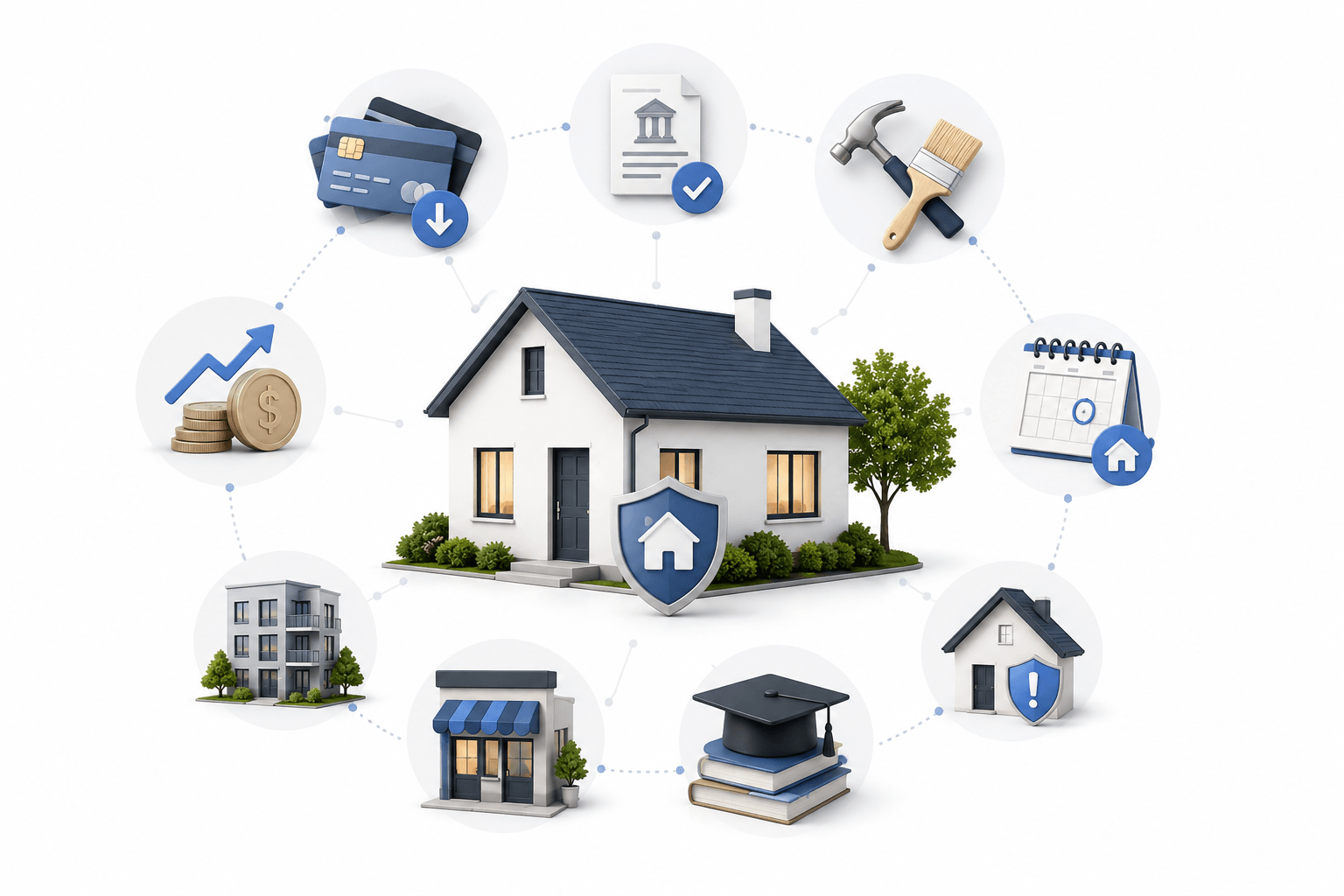
A second mortgage is often faster, easier, and lower-cost than other forms of credit. Homeowners use one for all kinds of reasons:
- Consolidate and pay off high-interest credit card debt
- Clear tax debt owed to the Canada Revenue Agency
- Fund home renovations and repairs
- Catch up on mortgage payments or property tax arrears
- Avoid foreclosure or power of sale
- Cover education or tuition costs
- Provide cash flow for a business
- Purchase an investment or second property
See how this plays out in practice in our client case studies.
How Does a Second Mortgage Work?
Getting a second mortgage is often smoother than getting your original mortgage. Because the loan is secured against your property, lenders put far more focus on the equity in your home than on your income or credit score. That equity is the security a lender needs, which is why the application and approval process tends to be simpler and faster.
This is also why a second mortgage is accessible to homeowners the banks turn away. Mortgage brokers like LendToday have access to private and alternative second mortgage lenders who base their decision on how much equity you hold, rather than the rigid credit and income rules a big bank applies. Private lenders are also not bound by the federal mortgage stress test that the major banks must apply, so their decision comes down to your equity and your property rather than a strict qualifying-rate calculation.
Second Mortgage Rates and Costs
Interest rates are typically higher on second mortgages than on first mortgages. The reason is straightforward: the second lender assumes more risk because they sit behind the first mortgage and are second in line to be repaid if the home ever goes into foreclosure or power of sale.
Several factors influence the rate you are offered on a second mortgage:
- Your equity: more equity generally means a better rate
- Loan-to-value ratio: borrowing a smaller share of your home's value lowers risk
- Credit profile: stronger credit can unlock lower rates
- Income and affordability: how comfortably you can carry the payment
- Property location and type: marketable properties are lower risk
- Loan amount and lender: each lender prices risk differently
On top of interest, plan for closing costs in the range of 2 to 5% of the loan amount. Typical costs can include an appraisal fee, legal fees, lender fees, brokerage fees where applicable, and in some cases a discharge fee when the loan is paid out. We will always lay out the full cost of your specific option before you commit, so there are no surprises.
For broader context on borrowing against home equity, the federal Financial Consumer Agency of Canada offers an independent overview of borrowing against home equity for Canadian homeowners.
Why Banks Decline Second Mortgage Applications
When you need to access your equity, a bank decline can feel like the door closing. The truth is that banks turn homeowners down for reasons that often have little to do with whether you can actually repay. Common reasons a bank says no include:
- A credit score below their cutoff, even by a few points
- Debt service ratios that are too high for their rigid formulas
- Probationary, recently changed, or self-employed income that is hard to document
- A current or past consumer proposal or bankruptcy
- Outstanding tax debt owed to the Canada Revenue Agency
- Existing mortgage arrears or property tax arrears
This is where private and alternative lending differs. Instead of starting with your credit score, these lenders start with the equity in your home. If you have built up equity, you have leverage the bank's checklist simply does not account for, which is why so many homeowners who were declined still get approved for a second mortgage. A private mortgage or self-employed mortgage often succeeds exactly where a bank would not.
Second Mortgage Eligibility Requirements
Requirements vary from lender to lender, so treat the following as a general guideline rather than a fixed rule. Because approval is equity-driven, the bar is more flexible than a first mortgage.
You are generally a strong candidate for a second mortgage if you:
- Have at least 15% equity in your home
- Are up to date on your first mortgage payments
- Have a property that can be appraised to confirm its value
- Keep your combined loan-to-value (CLTV) within about 80 to 85%
Is a Second Mortgage Right for You?
A second mortgage is a powerful tool, but it is not the right move for every situation. Here is an honest look at both sides.
A second mortgage may be a good fit if you
- Have meaningful equity built up in your home
- Need access to cash relatively quickly
- Want to keep your existing first mortgage and its rate
- Have been declined by a bank but can carry the payment
- Are consolidating higher-interest debt into a lower-cost option
You may want another option if you
- Are planning to sell your home in the near future
- Can refinance your first mortgage at a significantly lower rate
- Do not yet have enough equity to qualify
- Would struggle to manage a second monthly payment
Can You Get a Second Mortgage With Bad Credit?
Yes. There is usually no strict minimum credit score for a second mortgage, because approval depends mainly on the equity position in your home rather than your credit history. A low score generally means you will pay a higher interest rate, or you may use a co-signer, but it does not automatically disqualify you the way it might at a bank.
In fact, a second mortgage can help rebuild your credit over time. By using the funds to pay down or consolidate high-interest debt and then making your payments on time, you can reduce your balances and start moving your score in the right direction, while opening up more financial options down the road. If your credit is a concern, a bad credit mortgage may also be worth exploring.

How to Get a Second Mortgage in Canada
The process is similar to getting your first mortgage, with fewer eligibility hurdles. No two applications are the same, so timelines vary from a few days to a few weeks, but the path usually follows these steps:
Share a few basic details about your home, your first mortgage, and what you need the funds for. No obligation.
We review your equity and situation, then confirm which second mortgage option realistically fits.
A credit check is completed and your home's value is confirmed, typically through an appraisal, to establish your available equity.
Once approved, the legal paperwork is finalized and the funds are advanced so you can put them to work.
Pros and Cons of a Second Mortgage
Before you decide, it helps to weigh both sides. Here is an honest look at the main benefits and drawbacks.
Pros
- Access your home equity without refinancing
- Easier qualifying process, driven by equity
- Lower interest rates than a personal loan or credit card
- Your existing first mortgage and rate stay untouched
Cons
- Higher interest rates than a first mortgage
- Often shorter terms than a first mortgage
- A second monthly payment to manage
- Your home is used as collateral
Why Choose LendToday for Your Second Mortgage
We work where banks won't. Even if your bank has declined you, we will work to find the right second mortgage or financing solution for your situation. We base our decisions on your equity, so you owe it to yourself to apply where you will actually be considered.
No judgment, just solutions. A second mortgage can help repair credit and begin your financial rehabilitation. Options are available even if you have filed a bankruptcy or consumer proposal, lost your job, or maxed out your credit.
Access to private lenders. Through our network, we connect you with private and alternative second mortgage lenders who base their decision on your equity, not just a credit score or debt-to-income ratio.
A fast, honest answer. Apply online today and we will get back to you within 24 hours with a clear picture of what is possible.
Licensed and accountable. LendToday operates as a licensed mortgage brokerage in Ontario, and through our lending partners we help homeowners access second mortgage financing across Canada.
What a Second Mortgage Can Help You Do
Homeowners put second mortgages to work in all kinds of ways. These are some of the most common goals we help with:
Ready to Tap Your Home's Equity?
At LendToday, our experts help homeowners qualify for the financing they need, even when the bank says no. We base our decisions on your equity, lay out your options clearly, and there is no obligation to move forward.
Apply online today and we will get back to you within 24 hours.
Second Mortgage FAQs
Can I refinance to pay off my second mortgage?
Yes. If you have enough equity, you can do a cash-out refinance and use it to pay off your second mortgage. Once it is paid off, you return to having a single mortgage payment.
Should I refinance or take out a second mortgage?
If you are unhappy with the rate on your first mortgage, refinancing may be the better move. Refinancing can also help if you do not have a high enough credit score or income to qualify with an A lender. A second mortgage is usually better if you have a decent credit profile, can comfortably make two payments, and are happy with the rate on your existing first mortgage.
Can I get a second mortgage to buy another house?
Yes. You can use a second mortgage to fund the down payment on a vacation home, rental, or investment property, drawing on the equity in your current home.
How long does it take to get a second mortgage?
It varies, because no two applications are the same. With the equity confirmed and documentation in order, a second mortgage can move from application to funding in as little as a few days, though more complex files can take a few weeks.
Do I need good credit to get a second mortgage?
Not necessarily. Because approval is driven mainly by your home equity, there is usually no strict minimum credit score. A lower score may mean a higher rate, but it does not automatically disqualify you the way it can at a bank.
Can I pay off a second mortgage early?
Often, yes, though prepayment terms vary by lender and product. Some allow early repayment with little or no penalty, while others have specific terms. We confirm the prepayment details of your option before you commit, so you know exactly where you stand.
Can I get a second mortgage if I'm self-employed?
Yes. Self-employed homeowners are one of the most common groups we help. Because approval is driven by your home equity rather than strict income verification, hard-to-document or irregular income is far less of a barrier than it would be at a bank.
Can a second mortgage help me stop foreclosure or power of sale?
Yes. Many homeowners use a second mortgage to catch up on arrears and stop a foreclosure or power of sale before it escalates. Acting early gives you the most options. You can learn more on our mortgage arrears assistance page.
Can I get a second mortgage after a bankruptcy or consumer proposal?
Often, yes. A past or current bankruptcy or consumer proposal does not automatically disqualify you, because the decision is based mainly on your equity. For many homeowners, an equity-based second mortgage is part of rebuilding their financial footing.
Is the interest on a second mortgage tax deductible?
It depends entirely on how the funds are used. In general, interest may only be deductible where the borrowed money is used to earn investment or business income, subject to Canada Revenue Agency rules. Interest on funds used for personal purposes is typically not deductible. This is not tax advice, so confirm your specific situation with a qualified accountant or tax professional.
What are some second mortgage alternatives?
If you want to borrow from your home's equity, other options include a cash-out refinance, which replaces your existing mortgage with a larger one and pays you the difference, and a reverse mortgage for older homeowners, which lets you access equity without required monthly payments. Contact us to learn which option fits your situation best.