A mortgage built around how you actually earn
Running your own business should not stand between you and your home. We help self employed Canadians get approved, including business owners the big banks have already turned down.
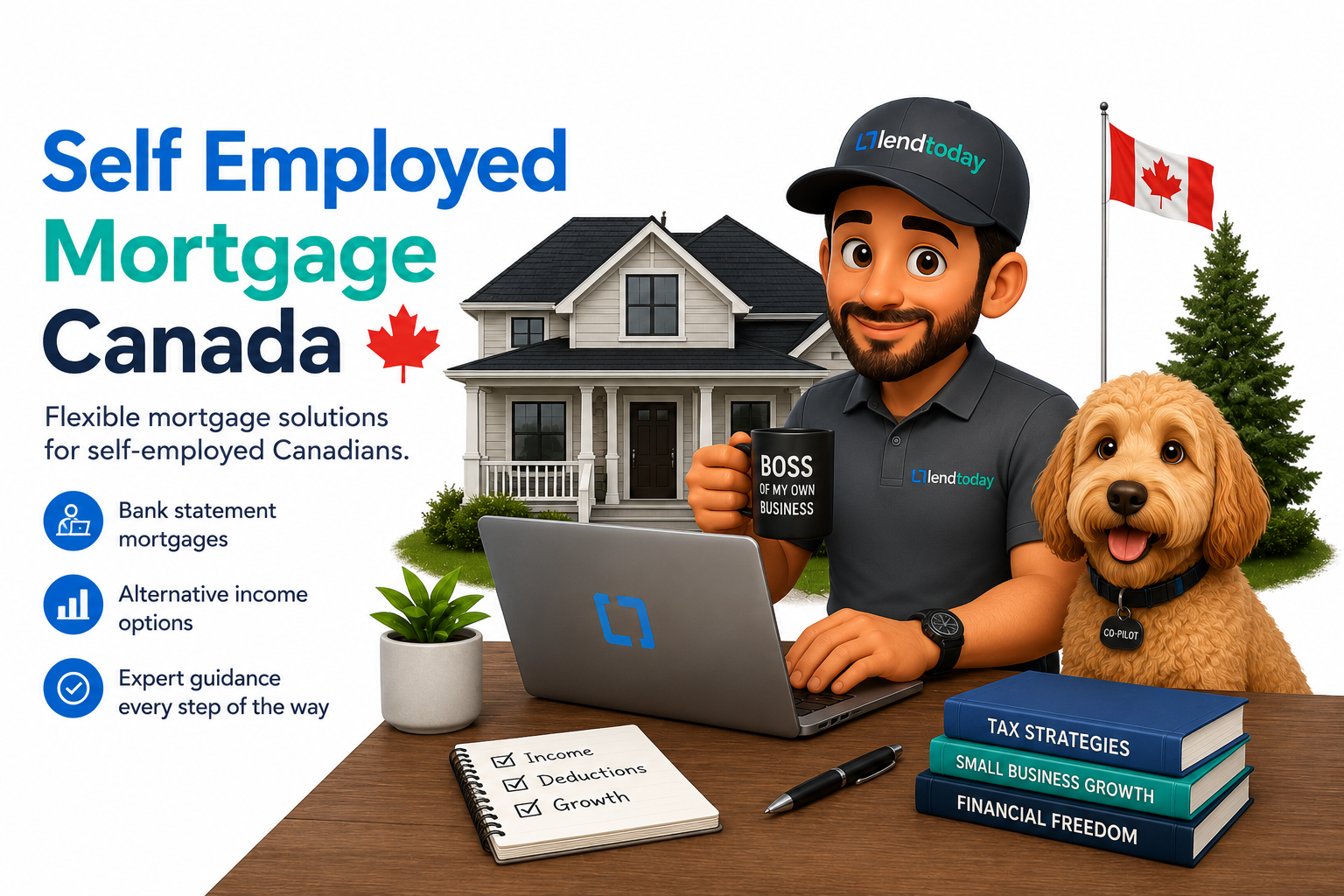
What is a self employed mortgage?
A self employed mortgage is simply a home loan approved for someone who earns income through their own business rather than a regular paycheque. The property and the mortgage work the same way. What changes is how the lender confirms your income.
It suits sole proprietors, incorporated business owners, freelancers, contractors, commission earners and gig workers. The common thread is that your income shows up differently on paper than a salaried employee, so it needs to be presented in a way lenders understand.
Many business owners write off expenses to lower their taxable income, which is smart at tax time but can make your declared income look smaller than what you truly earn. That single fact is the reason so many self employed applicants get declined by a bank, and exactly what the right lender and broker can work around.
Three ways your income can be verified
There is no single path to a self employed mortgage. The right one depends on your credit, your down payment and how your income appears on your tax filings. These are the three most common approaches.
Full documentation
Your income is confirmed with tax documents such as your Notices of Assessment and T1 Generals, plus financials for incorporated businesses. Strong declared income can unlock the best rates at prime lenders.
Bank statement program
When write offs shrink your taxable income, lenders can review 12 months of business or personal bank statements to see your real cash flow, then lend based on that deposit history.
Stated income
With solid credit and a reasonable down payment, some lenders accept a reasonable stated income supported by your business documents, rather than relying only on your tax return figure.
Notices of Assessment
Your two most recent NOAs from the CRA are the starting point for most lenders.
Bank statements
12 months of business or personal statements to show real deposits and cash flow.
Business registration
Proof your business exists, such as registration, licensing or articles of incorporation.
Invoices and contracts
6 to 12 months of invoices or signed contracts that back up your expected earnings.
A lenders, B lenders and private lenders
Self employed borrowers can qualify across every tier of lending. The right fit comes down to your credit, your income documents and your timeline. Our job is to place you as high up this ladder as you qualify for, then help you move up over time.
Best rates, tighter rules
- Banks and prime lenders with the lowest rates
- Need strong credit and provable declared income
- CMHC insured options for qualifying business owners
Flexible and popular
- Common home for self employed borrowers
- Bank statement programs and bruised credit welcome
- A practical stepping stone back to prime
Fast, equity focused
- Approval driven by home equity, not paperwork
- Useful when speed matters or credit is a hurdle
- A short term bridge while you strengthen your file
Learn more about B lenders, private mortgages and options for a bad credit mortgage, or let us tell you honestly which tier you qualify for today.
How to qualify for a self employed mortgage
Most lenders want to see about two years of self employment history to confirm your income is stable. That is the standard, but it is not the whole story. If you have less time in business but work in a similar field, or you have contracts that prove your earnings, you may still have strong options.
A few things you can do ahead of time make a real difference. The more organized your file, the more lenders we can approach on your behalf.
- Keep two years of tax filings and Notices of Assessment handy
- Set aside a down payment, since a larger one opens more doors
- Protect your credit score by keeping balances low and payments on time

Your path to approval
Apply
Share a few basic details about you, your business and your goal. No obligation.
We review
We assess how your income is best presented and which lenders fit your situation.
Get approved
We bring you options and secure an approval that matches your file and timeline.
Close
Paperwork is finalized and your mortgage funds so you can move forward.
Mortgage options for the self employed
Whether you are buying, refinancing or freeing up cash from your home, there is a self employed friendly solution. A few of the most common:
Buying a home
Financing to purchase your next home, built around business income. See mortgages for home buyers.
Refinancing
Replace your current mortgage to lower payments or pull out equity. Explore refinancing.
Debt consolidation
Roll high interest debt into one lower cost payment secured by your home.
Home equity access
Tap your equity with a home equity loan or HELOC.
Second mortgage
A second mortgage behind your first for fast access to funds.
Private mortgage
An equity based private mortgage when timing or credit is tight.

Self employed mortgage rates
Being self employed does not automatically mean a higher rate. When your income is well documented and your credit is strong, you can qualify for the same competitive rates as any salaried borrower, often with faster approval.
There are also insured programs designed specifically for business owners. Mortgage default insurance through providers such as CMHC and Sagen can help qualifying self employed borrowers buy with a smaller down payment and access strong rates.
If your declared income is lower, an alternative lender may charge a modest premium in exchange for flexibility. We lay out the true cost of each option so you can choose with your eyes open, and we plan the move back to prime rates when your file is ready.
Business owners we love to help
Our brokers have spent years placing self employed clients who were turned away by the big banks, sometimes more than once. We work with an extensive network of lenders who understand the hurdles business owners face, and we take the time to understand your situation before we recommend anything.
We also offer in house credit repair. If a bankruptcy, a consumer proposal, a job loss or maxed out cards are holding you back, we can help you rehabilitate your credit and work toward qualifying for a self employed mortgage over time.
- Access to more than 50 lenders across Canada
- A fast, simple process with an answer in as fast as 24 hours
- We work with you even when banks and credit unions will not
See an example: Read how a homeowner secured a mortgage after being declined by the bank on paper income.

Trusted Canadian mortgage specialists
Average client rating across our reviews
Lenders in our network
Years of combined experience
Licensed brokerage, #13691
Self employed mortgage FAQ
What is a self employed mortgage?
It is a regular home mortgage approved for someone who earns income through their own business rather than a salaried job. The loan itself works the same way. The difference is how the lender confirms your income, using tools like tax documents, bank statements or a stated income approach.
Can I get a mortgage if I am self employed?
Yes. Being self employed does not disqualify you. Many lenders offer programs designed for business owners, and a broker can match your income documents to the lender most likely to approve you, including options if the bank has already said no.
How many years of self employment do I need?
Most lenders like to see about two years of self employment history to confirm your income is stable. If you have less than that, you may still qualify when you work in a similar field to previous employment or have contracts that prove your expected earnings.
How do lenders calculate self employed income?
Depending on the program, lenders may use the income on your Notices of Assessment, an average of your last two years of business income, or the deposits shown across 12 months of bank statements. We help present your income in the way that qualifies you for the most.
Can I get a mortgage with only one year of self employment?
It is possible. Some alternative and private lenders will consider a shorter history, especially with strong credit, a larger down payment, or contracts and invoices that support your income. The path may start with a B or private lender and move to prime later.
Can I get a self employed mortgage with bad credit?
Often yes. Alternative and private lenders focus more on your home equity and cash flow than on a perfect credit score. We also offer credit repair to help you qualify for better terms over time. Learn more on our bad credit mortgage page.
Can I use bank statements instead of tax returns?
Yes. Bank statement programs let lenders review 12 months of business or personal statements to see your true cash flow. This is a popular route when write offs have lowered your taxable income on paper.
Do self employed mortgages have higher rates?
Not always. With well documented income and strong credit you can access the same competitive rates as a salaried borrower. If your declared income is lower, an alternative lender may charge a small premium for flexibility, which we can plan to move away from as your file strengthens.
Let us turn your business income into a mortgage approval
Applying as a self employed borrower does not have to be stressful. Call us or apply online and a specialist will review your situation and lay out your options clearly, with no obligation.