Table of Contents
Toggle7 Great Ways to Reduce Your Mortgage Payments Without Sacrificing Your Goals
Mortgage payments can feel like the one bill that never stops testing your budget. When rates rise, renewals hit, or everyday life gets more expensive, it is normal to start looking for ways to lower that monthly payment without putting your entire financial future on hold.
The tricky part is that “reducing your mortgage payment” can mean different things. Some homeowners want the lowest possible payment right now. Others want a payment that is more predictable, even if it is not the absolute lowest. And some are trying to free up cash flow so they can pay off debt, build savings, or simply breathe again.
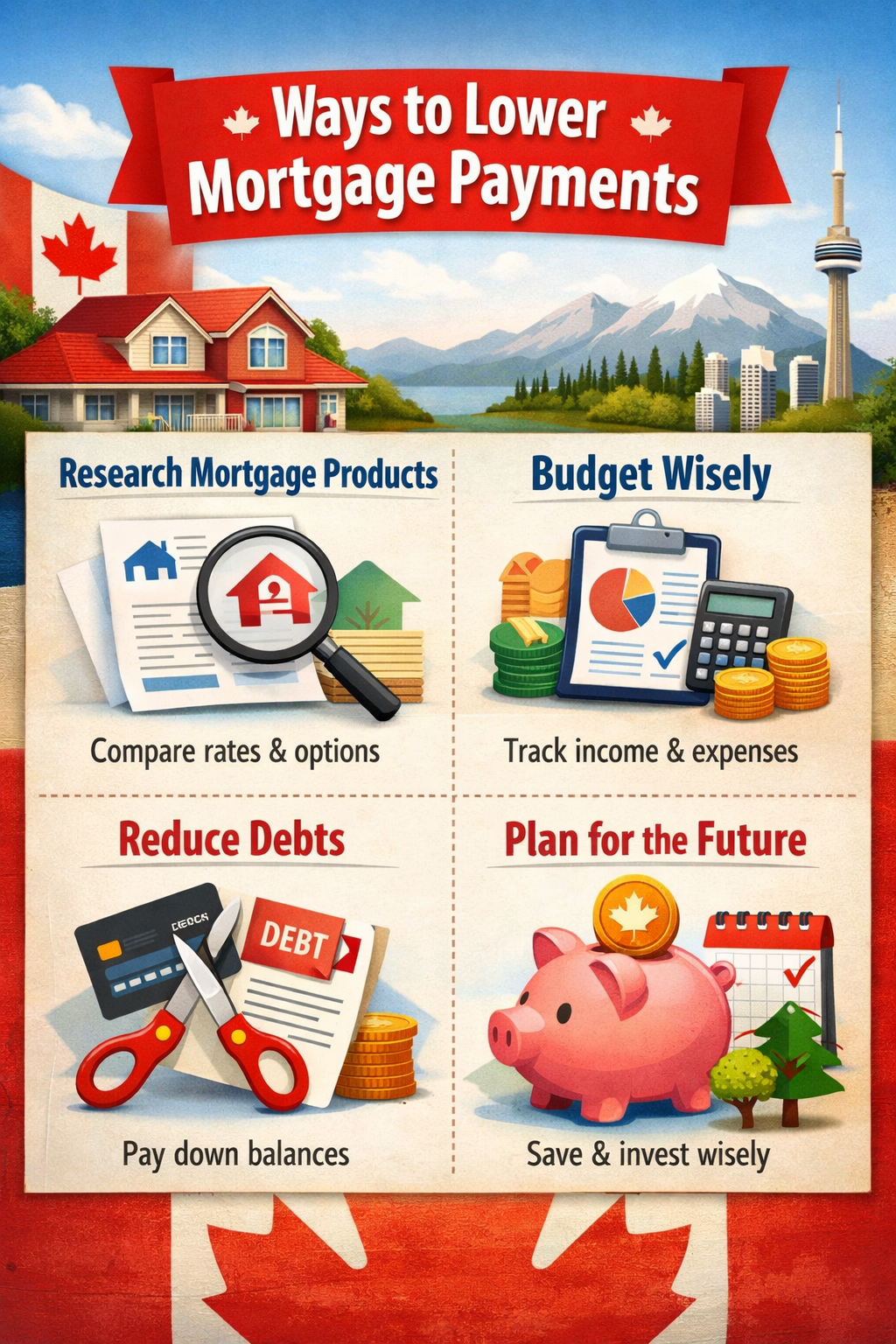
This guide walks through seven practical strategies that can reduce your mortgage payments. You will also see the trade-offs, because the best approach is not always the one that looks cheapest on paper.
Quick checklist before you make changes
Before you pick a strategy, take five minutes to confirm these three items:
-
Your renewal date: If your term ends soon, you may have strong options with fewer fees.
-
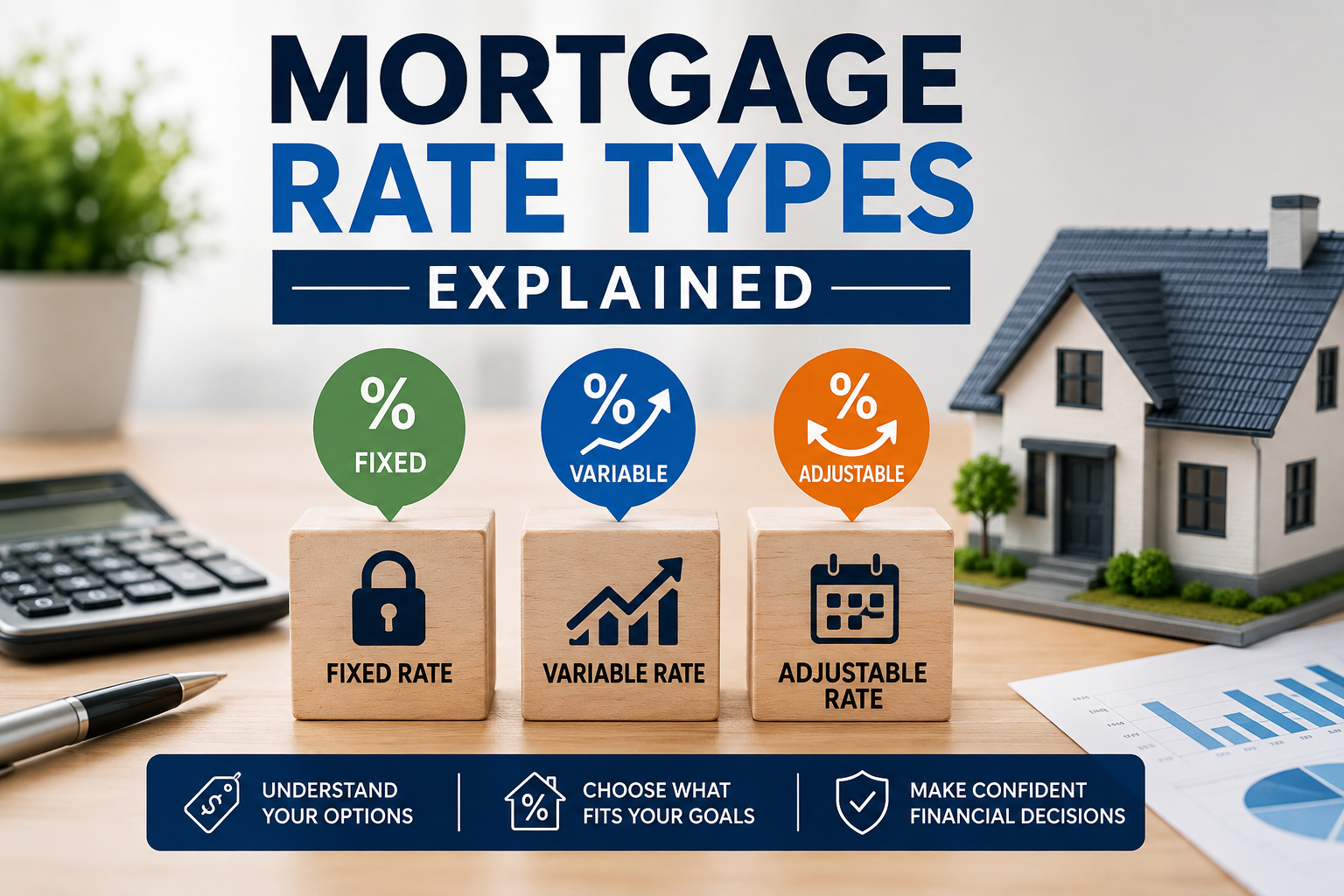
Your mortgage type: Fixed, variable, open, closed, adjustable-rate. This affects penalties and flexibility.
-
Your goal: Lowest payment, stable payment, debt relief, or long-term savings.
When you know those three, the right option usually becomes clearer.
1) Shop your rate at renewal and negotiate hard
For many homeowners, renewal is the cleanest opportunity to reduce mortgage payments. When your term ends, you can often switch lenders without paying a traditional early-break penalty. That alone makes renewal a powerful moment to negotiate.
Why this works:
-
A lower interest rate reduces the payment immediately
-
Competing lenders may offer incentives or better pricing
-
You can adjust term length and features to match your needs
Smart steps:
-
Start comparing offers 120 to 180 days before renewal
-
Ask your current lender to beat outside offers, not just match them
-
Compare the entire package, not just the rate (prepayment options, portability, refinance rules, fees)
Common mistake: Accepting the renewal letter because it is easy. Convenience can be expensive.
2) Refinance to get a lower rate or restructure the mortgage
Refinancing replaces your current mortgage with a new one. You can refinance with your existing lender or a new lender. The goal may be to reduce your payment, access equity, consolidate debt, or all of the above.
Refinancing can reduce your mortgage payment when:
-
Current market rates are meaningfully lower than your rate
-
Your credit and income profile improved since you first qualified
-
You need to restructure your mortgage for cash flow
Costs to watch:
-
Penalty for breaking the mortgage (common with closed terms)
-
Legal, appraisal, and discharge fees (vary by lender and province)
A simple way to think about it:
If monthly savings plus long-term benefits outweigh the penalty and fees, refinancing may be worth it.
Smart move: Ask for a break-even calculation. You want to know how many months it takes for the savings to “pay back” the costs.
3) Extend your amortization to lower the monthly payment
If you need immediate payment relief, extending amortization is one of the most direct levers. Amortization is the total time it takes to pay off the mortgage. When you spread the balance over more years, the required payment drops.
Why does it reduce payments?
-
You repay pthe rincipal more slowly
-
More of the early payment goes to interest
-
Lower principal repayment means a lower scheduled payment
Trade-off:
-
You typically pay more interest over the long run
When it makes sense:
-
A temporary cash-flow crunch (job change, maternity or parental leave, business transition)
-
You are consolidating debt and need the payment to stay manageable
-
You want flexibility now and plan to increase payments later
Practical approach:
Many homeowners extend amortization to create breathing room, then use prepayments or payment increases later to bring the amortization back down.
4) Consolidate high-interest debt into your mortgage
Sometimes the mortgage payment is not the only problem. Credit cards, car loans, unsecured lines of credit, and other debt can make your monthly obligations feel impossible. In many cases, consolidating high-interest debt into the mortgage can reduce total monthly outflow significantly.
Why does it reduce monthly pressure:
-
Mortgage rates are usually much lower than credit card and unsecured rates
-
Consolidation often spreads repayment over a longer period
-
You combine multiple payments into one predictable payment
The risk:
This strategy only works if you stop the cycle. If you consolidate and then rebuild the credit card balances, you end up worse off.
A smart consolidation plan includes:
-
Paying off targeted debts in full
-
A budget that prevents re-borrowing
-
A plan to reduce revolving limits if needed
Even though this is called “reducing mortgage payments,” it is more accurate to say it reduces total monthly payments by using the mortgage as a lower-cost umbrella.
5) Switch your mortgage product type to match your cash flow
Mortgage structure matters. In some cases, switching from one product type to another can reduce the payment or make it more manageable.
Examples:
-
Variable rate to fixed rate: Might increase or decrease payment depending on rates, but often improves predictability.
-
Adjustable-rate variable to static-payment variable: Can stabilize payments during volatility, depending on lender features.
-
Closed mortgage to more flexible closed mortgage: May not reduce the payment today, but can help you lower costs later through prepayment features.
The key point:
Reducing payment is not always the same as reducing stress. A stable payment you can count on can be more valuable than a slightly lower payment that can jump in six months.
When to consider switching products:
-
Your payment has become unpredictable
-
You are approaching renewal and want to reset your strategy
-
You need better prepayment options to accelerate payoff later
6) Recast your mortgage after a lump-sum payment, if available
Some lenders allow a mortgage recast (also called re-amortization after prepayment). This means you make a lump-sum payment, and the lender recalculates your payment based on the lower remaining balance and remaining amortization.
Why it helps:
-
You lower the principal
-
Your new payment is recalculated lower
-
You may not need to refinance or change your rate
Best situations for this strategy:
-
You received a bonus, inheritance, or sale proceeds
-
You want a lower payment rather than a faster payoff
-
You want to reduce monthly obligations ahead of retirement
Not all lenders offer recasting, and policies vary. Still, it is worth asking before you assume refinancing is the only path.
7) Use payment frequency and prepayment tools strategically
This one can feel backward because accelerated payments do not reduce the required monthly payment. But it can reduce your payment pressure over time by lowering your balance faster, which can help at renewal.
Here is how:
-
More frequent payments can reduce interest slightly
-
Accelerated bi-weekly adds extra principal payments each year
-
A lower balance at renewal can mean a smaller payment, even at similar rates
How to use this strategically:
-
If your goal is the lowest required payment today, you typically keep payments monthly
-
If your goal is to reduce long-term cost and protect your future budget, accelerated payments can help
Think of this strategy as “lower future payments” rather than “lower payments next month.”
What option is best if you are feeling payment stress?
If you are feeling squeezed right now, here is a practical way to narrow it down:
-
Renewing soon: Shop aggressively and restructure at renewal
-
Mid-term with high-rate debt: Consider refinance plus debt consolidation, run break-even math
-
Cash flow is tight but temporary: Extend amortization or restructure for breathing room
-
Stable income, want long-term savings: Use accelerated payments and strategic prepayments
Common mistakes that can block lower payments
-
Waiting until you miss payments before exploring options
-
Accepting the first renewal offer without comparison
-
Choosing the lowest payment option without understanding the long-term interest cost
-
Consolidating debt without a plan to prevent re-borrowing
-
Ignoring penalties that wipe out the benefit of refinancing
FAQ: 7 Smart Ways to Reduce Your Mortgage Payments
1) What is the easiest way to reduce my mortgage payment?
Shopping for a better rate at renewal is often the easiest and cleanest option, because you can restructure without a traditional early-break penalty.
2) Can I lower my mortgage payment without refinancing?
Yes. At renewal, you can often secure a better rate and change your term. Some lenders also allow payment recalculation after a lump-sum payment. In certain cases, switching payment frequency can help with budgeting, though it does not always lower the required payment.
3) Is extending amortization a good idea?
It can be, especially if you need cash flow relief. The trade-off is a higher total interest over time. Many homeowners use it temporarily and then make extra payments later.
4) Will debt consolidation actually lower my monthly costs?
It often does, because high-interest debt is replaced with lower-cost mortgage borrowing. The key is not rebuilding the debt afterward.
5) When does refinancing make sense?
Refinancing makes sense when the monthly savings and long-term benefits exceed the penalty and fees. A break-even analysis is the best way to confirm.
6) Can a broker help reduce my mortgage payment even if my bank said no?
Often, yes. Different lenders have different qualification rules, products, and risk appetites. A broker can compare options across lenders and look for a structure that matches your goals.
7) What if I am close to renewal but worried about qualifying?
Start early. With time, you can improve documents, address credit issues, and choose the right lender category. Waiting until the last minute limits options.
Reducing your mortgage payments is possible, but the best approach depends on your renewal timing, your current rate, and your overall debt picture. Whether you are negotiating a better renewal, refinancing to lower your rate, extending amortization for breathing room, or consolidating high-interest debt, the right strategy can free up cash flow without derailing your long-term goals. If you want a clear plan and real numbers, contact LendToday to review your mortgage and compare options across lenders, so you can lower your payments with a solution that fits your situation.