If you’re a homeowner in Alberta with equity, you’re sitting on a powerful financial tool—but it can become a costly trap if you use it the wrong way.
Debt can build quietly: credit cards for renovations, a line of credit for “in-between months,” financing for a vehicle, or simply higher costs of living. Then one day, you’re staring at multiple payments, high interest rates, and zero breathing room.
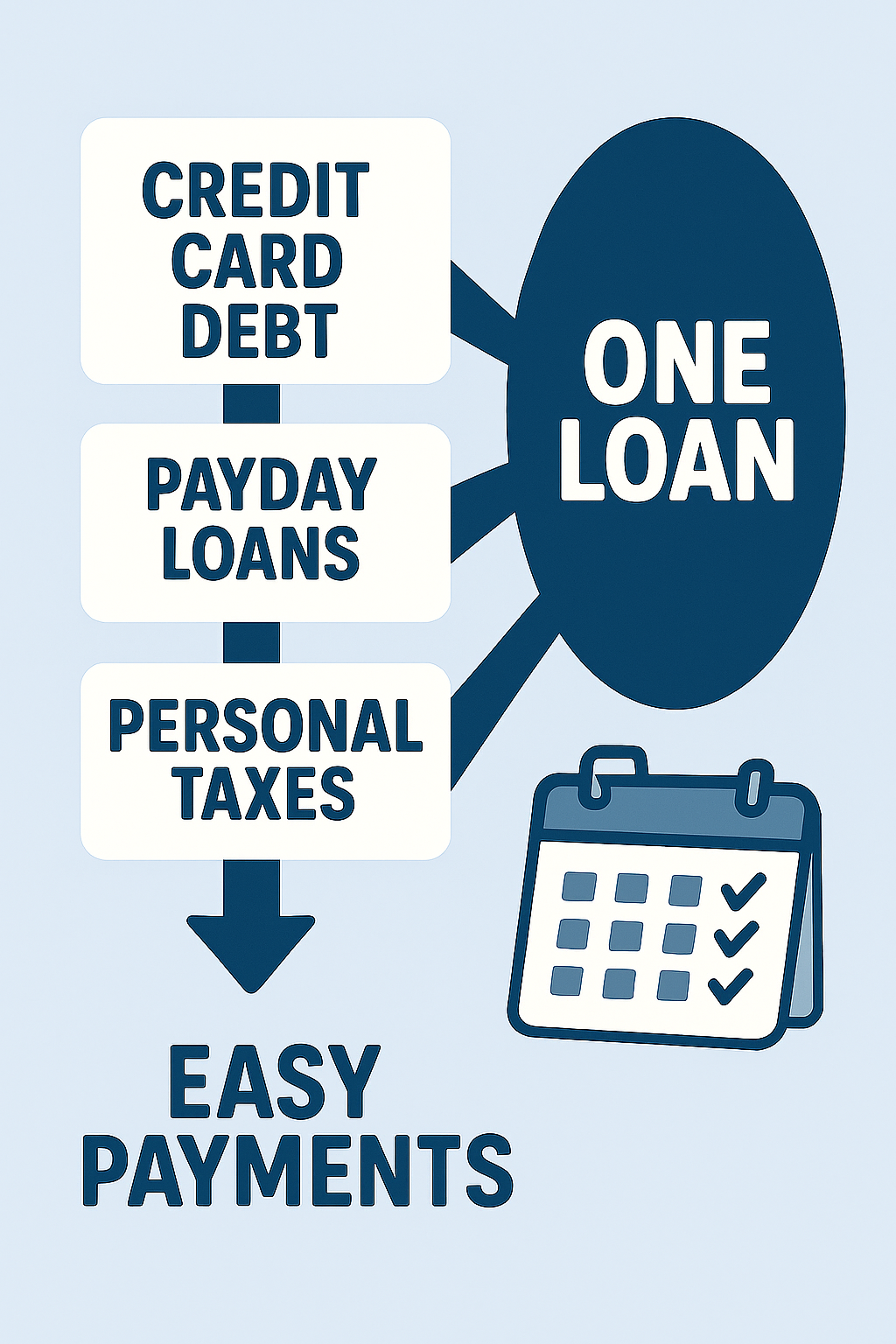
A debt consolidation loan can simplify everything into one payment and potentially lower your interest costs. And as a homeowner with equity, you may have more options than renters—sometimes including lower rates. But the stakes are higher too: when you leverage your home, you need a plan that protects it.
This guide is written specifically for Alberta homeowners with equity who want to consolidate debt without putting their home at risk—and avoid the costly mistakes that can make debt worse.
Why Homeowners With Equity Consider Debt Consolidation in Alberta
When you own a home, debt often shows up in “reasonable” ways:
-
Renovations started…then material costs jumped
-
A job change or income dip created credit card reliance
-
You used credit to cover property taxes, utilities, or insurance increases
-
You co-signed or helped a family member and ended up carrying a balance
-
You have multiple debts at high interest, even though you have equity in your home
The big advantage homeowners may have is access to equity-based lending options, which can sometimes mean:
-
lower interest rates compared to credit cards
-
longer amortization (sometimes) for payment flexibility
-
one structured payment
-
a clearer payoff strategy
But again: payment flexibility can be helpful… or dangerous if it just stretches debt longer.
What Is Debt Consolidation (For Homeowners)?
Debt consolidation means combining multiple debts into one new loan, typically used to pay off:
-
credit cards
-
personal loans
-
high-interest lines of credit
-
payday loans
-
arrears (sometimes)
-
collections (sometimes)
As a homeowner with equity, you may consolidate using:
1) An unsecured consolidation loan
No collateral. Approval depends heavily on credit and income. Often faster, but rates may be higher.
2) A secured option using home equity
This can include products like a home equity loan, refinanced mortgage funds, or other secured lending structures (depending on the lender and your situation). Rates can be lower than unsecured options, but the risk is real: your home is on the line if payments stop.
The Big Rule: Home Equity Should Reduce Debt, Not “Repackage” It
Using equity for consolidation works best when it does at least one of these:
-
lowers your interest rate meaningfully
-
turns revolving debt into a structured payoff plan
-
improves monthly cash flow without exploding long-term cost
-
prevents missed payments (which protects your credit and home)
If consolidation doesn’t create measurable improvement, it’s not a strategy—it’s a shuffle.
Mistakes to Avoid (Equity-Focused)
1) Turning short-term debt into long-term debt (quietly expensive)
Credit card debt is brutal, but it’s also technically “short-term” if you attack it aggressively. When you roll it into a longer-term loan tied to your home, you might lower the payment—yet pay interest for much longer.
Fix: If you’re using equity, try to structure it with:
-
a clear payoff timeline
-
the shortest term you can reasonably handle
-
prepayment flexibility so you can crush the balance faster
2) Focusing only on the monthly payment (and ignoring the true cost)
Homeowners often love consolidation because it can drop monthly payments. But the trap is thinking: “Lower payment = better deal.”
Sometimes the “better deal” is the loan that:
-
costs less in total interest
-
lets you pay extra without penalties
-
has a payoff plan you’ll actually stick to
Fix: Compare offers by:
-
APR (or equivalent borrowing cost)
-
term length
-
total cost of borrowing
-
fees
-
repayment flexibility
3) Borrowing against equity without fixing spending leaks
If your debt came from a monthly shortfall (not a one-time event), consolidation gives relief—but the balance can come right back.
The worst cycle looks like this:
-
Consolidate using equity
-
Credit cards get cleared
-
Monthly cash flow is still tight
-
Cards slowly build again
-
Now you have secured debt + new unsecured debt
Fix: Close the leak first:
-
Reduce key monthly expenses
-
renegotiate bills
-
set a strict “card rule” (one card, low limit, auto-pay)
-
build a small emergency buffer (even $500–$1,000 helps)
4) Treating your home like an ATM
Equity is not free money. Every time you borrow against it, you are:
-
increasing leverage on your home
-
committing future income
-
reducing your flexibility if rates rise or income drops
A little equity use can be smart. Repeated equity tapping can get dangerous fast.
Fix: Set an equity boundary:
-
Choose a maximum loan-to-value comfort zone
-
Leave a buffer for emergencies or property expenses
-
Avoid repeated refinance “top-ups” unless it’s part of a structured plan
5) Not accounting for property taxes, insurance, and “ownership costs.”
Homeowners have bills renters don’t—property taxes, maintenance, utilities, insurance, condo fees, and surprise repairs.
If consolidation uses up all your financial breathing room, a furnace replacement or tax increase can push you back onto high-interest credit.
Fix: Build “ownership reality” into your plan:
-
Include a monthly home maintenance buffer
-
Plan for annual tax and insurance changes
-
Don’t consolidate in a way that leaves you with $0 margin
6) Accepting a high-rate secured option because it’s “easy approval.”
Some equity-based or alternative products can be approved quickly—but at a cost (higher interest, hefty fees, restrictive terms).
If the rate is too high, you may not actually reduce total debt costs. You may just move debt around and add fees on top.
Fix: Demand clarity:
-
What is the interest rate and effective borrowing cost?
-
Are there lender/broker fees?
-
Is it open or closed?
-
What happens if you want to refinance or pay it off early?
If the math doesn’t help you, it’s not consolidation—it’s debt relocation.
7) Consolidating without a “protect the home” plan
This is the big homeowner-only mistake: using equity without building guardrails.
If your consolidation payment depends on everything going perfectly, you’re one setback away from missed payments—and that can escalate quickly with secured lending.
Fix: Create a protection plan:
-
Set payments you can handle even in a “bad month”
-
Keep an emergency fund goal
-
Consider disability/critical illness coverage if relevant (not always needed—just worth reviewing)
-
Keep communication open with lenders if hardship hits early
The goal isn’t just to pay off debt. The goal is to stay stable and protect the house.
Step-by-Step: A Smart Debt Consolidation Plan for Alberta Homeowners
Step 1: Add up all debts (with interest rates)
List each balance, minimum payment, and current rate.
Step 2: Estimate your usable equity (conservatively)
Don’t borrow to the limit. Leave a buffer.
Step 3: Decide what outcome you want
Examples:
-
“Reduce interest and be debt-free in 3 years.”
-
“Cut monthly payments and eliminate payday loans immediately.”
-
“Protect credit and stop missing payments”
Step 4: Compare 2–3 consolidation options
Include:
-
unsecured loans
-
equity-based options (if appropriate)
-
balance transfer options (only if you can pay down fast)
Step 5: Pay off debts directly and close the loop
Ideally, the consolidation funds clear debts right away so the temptation doesn’t creep back in.
Step 6: Lock in rules so the debt doesn’t come back
-
Limit credit card access
-
set auto-pay
-
monthly “debt check-in.”
-
apply extra funds to principal when possible
Frequently Asked Questions
Is it smart to use home equity to pay off credit cards?
It can be, because credit card interest is usually extremely high. But only if you:
-
Stop the card balances from returning
-
Keep a clear payoff timeline
-
Don’t stretch debt for so long that the total interest becomes huge
Can debt consolidation help me avoid falling behind on my mortgage?
Sometimes, yes—if high-interest debt is eating cash flow and consolidation meaningfully lowers your total monthly obligations. But if income is not enough to cover essentials, you may need a broader solution.
Will debt consolidation affect my credit?
Applying can cause a small short-term dip. Long term, if consolidation improves your payment consistency and reduces utilization, your credit can improve.
Conclusion: Use Equity Strategically—Not Desperately
As an Alberta homeowner with equity, you may have access to stronger debt consolidation options—but you also have more to protect. The win isn’t just one payment. The win is a plan that:
-
reduces interest
-
improves stability
-
prevents new debt from returning
-
and protects your home
Avoid the costly mistakes, compare the true cost of borrowing (not just the monthly payment), and build a simple system to stay on track once your debts are combined.

- Raise Your Credit Score in 2026: Brokers Tips - March 12, 2026
- Stated Income Mortgage in Canada: Unique Borrowing Solution - March 10, 2026
- Upsizing in a Tight Market: The 2026 Guide to Using Current Equity for Your Forever Home - March 7, 2026