A home inspection is a professional evaluation of a property before you buy it. In Canada, it typically costs $300 to $800 (estimate) and takes 2 to 4 hours. Skipping a home inspection in a hot market might feel like a smart move, but it can expose you to thousands of dollars in hidden repairs. This guide covers everything Canadian homebuyers need to know about the home inspection process, costs, checklists, and how to use the report to your advantage.
A home inspection is a professional, non-invasive visual assessment of a residential property. A licensed home inspector examines the major systems and structural components of the home to identify existing problems, safety hazards, and items that may require future repair.
The property inspection report delivered after the visit becomes one of the most important documents in any real estate transaction. It gives buyers a clear picture of what they are actually purchasing, not just what the property looks like on a sunny afternoon with fresh paint and clean carpets.
In Canada, a home inspection is not legally required in most provinces. However, skipping one is a risk that costs many buyers dearly after the keys are in hand.
What Does a Home Inspector Actually Check?
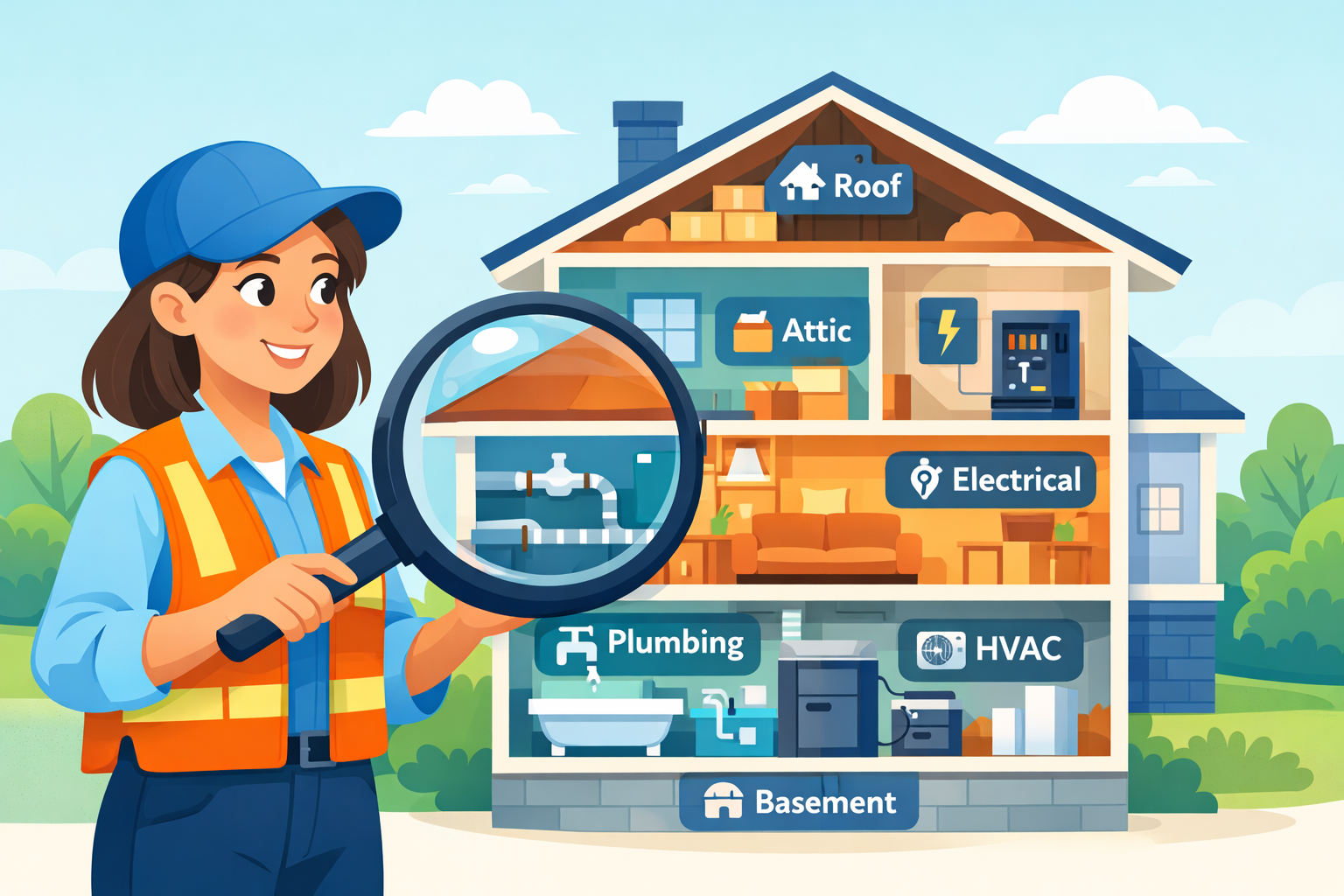
A certified home inspector in Canada examines all accessible and visible components of the property.
Here is what a standard home inspection typically covers:
- Roof: shingles, flashing, gutters, downspouts, ventilation
- Foundation and structure: cracks, settling, load-bearing walls
- Basement and crawl space: moisture, insulation, drainage
- Attic: insulation levels, ventilation, signs of water intrusion or pests
- Electrical system: panel condition, wiring type, outlets, grounding
- Plumbing: pipes, water heater, pressure, drainage
- HVAC: furnace, air conditioning, ductwork, filters
- Windows and doors: seals, functionality, energy efficiency
- Interior: walls, ceilings, floors, stairs
- Exterior: siding, grading, decks, walkways
Key Takeaway: A property inspection covers the visible and accessible systems of a home. It does not include behind-wall wiring, under-slab pipes, or hidden structural elements without additional specialized testing.
Why a Home Inspection Matters in Canada’s Real Estate Market
Canada’s real estate market is one of the most competitive in the world. In cities like Toronto, Vancouver, and Calgary, buyers have sometimes waived the home inspection condition to make their offer more attractive to sellers. That trend carries real financial risk.
A home inspection gives buyers leverage. If the inspector identifies major issues, the buyer may be able to renegotiate the purchase price, request that the seller make repairs, or walk away entirely before losing their deposit.
For first-time homebuyers in Canada, a property inspection also serves an educational purpose. Walking through the property with a certified inspector teaches you how the home functions, where the shut-off valves are, and what maintenance to prioritize in the first year of ownership.
What Can Go Wrong When You Skip the Inspection?
The risks of skipping a home inspection are well-documented. Buyers who waive the inspection condition have purchased homes with knob-and-tube wiring that required full rewiring, roofs with only one or two seasons of life remaining, and foundations with active water infiltration.
These are not small repairs. Electrical panel replacement in Canada can cost $3,000 to $8,000. A new roof ranges from $8,000 to $20,000 or more, depending on size and material. Foundation waterproofing can run $10,000 to $30,000 (extreme cases).
Common Mistake: Assuming that because a home passed a municipal inspection at the time of construction, it is still in good condition today. Buildings age. Systems wear out. A home inspection tells you the current reality, not the original one.
How Much Does a Home Inspection Cost in Canada?
The cost of a home inspection in Canada typically ranges from $300 to $800 (estimate) for a standard single-family home. The actual price depends on several factors, including the size and age of the property, the complexity of its systems, and the inspector’s experience and certifications.
Specialty add-on services such as radon testing, mould sampling, thermal imaging, and sewer scope inspections carry additional fees. These are worth considering for older homes or properties in regions where radon levels are a known concern.
Home Inspection Cost by Province
| Province / Region | Average Cost Range | Notes |
|---|---|---|
| Ontario (Toronto area) | $500 to $800 | Higher due to market demand and older housing stock |
| British Columbia (Metro Vancouver) | $450 to $750 | Licensed inspectors are required by law |
| Alberta (Calgary / Edmonton) | $400 to $700 | Licensed inspectors are required by law |
| Quebec | $750 to $850 | AIBQ-certified inspectors recommended |
| Atlantic Canada | $300 to $550 | Lower due to smaller market size |
| Prairie Provinces (SK / MB) | $350 to $600 | Varies by city vs. rural location |
Important to note: Only Alberta and British Columbia currently require home inspectors to hold a provincial licence. In Ontario, Quebec, and other provinces, buyers must take extra care to verify credentials independently.
Key Takeaway: The home inspection fee is one of the smallest line items in a real estate transaction and one of the highest-value ones. A $500 inspection that reveals a $25,000 structural issue pays for itself immediately.
The Home Inspection Process: Step by Step
Understanding the home inspection process helps buyers prepare and get the most out of the visit. Here is how a typical home inspection unfolds in Canada.
Step 1: Schedule the inspection. Once your offer is accepted with a property inspection condition, your real estate agent or you will contact a certified home inspector. Inspections are usually booked within 3 to 5 business days of offer acceptance.
Step 2: Attend the inspection. Always attend your home inspection in person. Following the inspector through the property lets you ask questions in real time and understand the findings firsthand.
Step 3: The inspector assesses the property. A thorough property inspection typically takes 2 to 4 hours, depending on the size and age of the home. The inspector examines all major systems and visible components.
Step 4: Receive the written report. Within 24 to 48 hours, you will receive a detailed home inspection report that includes photos, written findings, and recommendations. Review it carefully before your inspection condition deadline.
Step 5: Decide your next steps. Based on the report, you can proceed with the purchase, renegotiate terms, request specific repairs, or exercise your right to walk away if the findings are severe.
How to Choose a Certified Home Inspector in Canada
Ask for proof of errors and omissions insurance. Request sample reports to assess the level of detail they provide. A good report uses clear language, includes photos, and prioritizes findings by severity, so you know what needs attention right away versus what can wait.
Common Myth: A newer home does not need a home inspection. Even new construction can have deficiencies. Builder-grade finishes, improperly installed HVAC systems, and grading issues that direct water toward the foundation are all found in homes less than five years old.
Reading Your Home Inspection Report
A home inspection report can range from 20 to 80 pages, depending on the inspector and the property. Do not be overwhelmed by the length. The most important section to read carefully is the summary of findings, which organizes issues by severity.
Most reports categorize findings as safety hazards, major defects, minor defects, and maintenance recommendations. Safety hazards and major defects are the findings that should influence your decision to proceed, negotiate, or exit the transaction.
Pay special attention to findings related to the roof, foundation, electrical panel, and plumbing. These are the most expensive systems to repair and replace, and problems here often point to deferred maintenance throughout the property.
How to Use the Inspection Report to Negotiate
A home inspection report is a negotiation tool as much as it is an information document. If the report surfaces significant issues, you have several options depending on your market conditions and leverage.
- Request a price reduction equal to the estimated cost of repairs
- Ask the seller to complete specific repairs before closing
- Request a holdback of funds in trust until repairs are verified
- Walk away from the deal if safety or structural concerns are unacceptable
Important to Note: In a seller’s market, requesting extensive repairs may put your deal at risk. Prioritize the findings that represent safety hazards or structural concerns versus cosmetic issues that are easy to address after closing.
Home Inspection Checklist: What to Bring and Expect on Inspection Day
Come prepared to your home inspection with the right mindset and the right tools.
Here is a practical checklist for Canadian buyers.
Before the inspection:
- Confirm the inspection appointment and address
- Block 2 to 4 hours in your schedule
- Prepare a list of concerns or questions about the property
- Review any seller disclosures you have already received
During the inspection:
- Attend in person and follow the inspector room by room
- Ask questions freely, especially when the inspector flags something
- Take your own notes and photos for reference
- Pay attention to the inspector’s tone, not just their words
After the inspection:
- Read the full home inspection report before your condition deadline
- Get contractor quotes for any major findings if needed
- Discuss your next steps with your real estate agent and mortgage broker
- Keep the report for future reference as a homeowner
Common Myths About Home Inspections
Myth 1: A home inspection is only for buyers. Sellers can commission a pre-listing property inspection to identify and address problems before listing. This can reduce negotiating delays and help justify the asking price.
Myth 2: A property inspection guarantees the home is defect-free. A home inspection identifies visible, accessible deficiencies at the time of inspection. It is not a guarantee or warranty.
Myth 3: You only need a home inspection for older homes. Problems are not exclusive to old properties. New builds have defects, too, and a home inspection on a newly constructed home can catch issues before the builder’s warranty expires.
Myth 4: You can skip the inspection if the home was recently renovated. Renovations can actually hide problems. Newly finished drywall, for example, can conceal moisture damage or improper electrical work done without permits.
FAQ: Home Inspection Questions Canadian Buyers Ask Most
Q: Is a home inspection mandatory in Canada?
A: A home inspection is not legally required in most Canadian provinces. It is typically added as a condition in a purchase offer, which means it is the buyer’s choice to include or waive it. The exception is Quebec, where legislation has introduced stronger consumer protections around property disclosure and inspection. Regardless of legal requirements, real estate professionals, mortgage brokers, and consumer advocates across Canada strongly recommend a home inspection.
Q: Can a home inspection affect my mortgage approval?
A: A home inspection itself does not directly affect mortgage approval. However, if the inspection reveals serious structural or safety issues, your lender may require those issues to be remediated before advancing funds. In some cases, lenders may request a second assessment or holdback funds in trust. It is always a good idea to share any major findings with your mortgage broker so they can advise you on how it may affect your financing.
At LendToday.ca, our mortgage specialists work with buyers at every stage of the home-buying process, including situations where inspection findings change the deal structure.
Q: How long does a home inspection take?
A: A standard home inspection in Canada takes between 2 and 4 hours. Larger homes, older properties, or homes with complex systems such as a pool, septic system, or multiple HVAC units can take longer. Plan to spend the full duration on site. The written home inspection report is typically delivered within 24 to 48 hours after the visit.
Q: Who pays for the home inspection in Canada?
A: In most real estate transactions, the buyer pays for the home inspection. The fee is paid directly to the inspector, usually on the day of the inspection, and is separate from closing costs. Some sellers commission a pre-listing home inspection before putting the property on the market, but buyers should still arrange their own independent inspection regardless of whether a seller-paid report exists.
Q: What happens if the home inspection finds problems?
A: Finding problems in a home inspection is common. No property is perfect. Minor maintenance issues and cosmetic deficiencies are expected in most homes. The important thing is understanding the severity of any findings. For major defects such as foundation cracks, failing roofs, or unsafe electrical systems, buyers have the right to renegotiate the price, ask for repairs, or exit the agreement if the property inspection condition has not been waived.
Q: Can I use my home inspection results to get a better mortgage deal?
A: Yes, indirectly. If the inspection reveals costly repairs, you may be able to negotiate a lower purchase price, which affects your loan-to-value ratio and potentially your mortgage terms. A lower purchase price can also mean a lower down payment requirement in some cases. Talk to a mortgage advisor at LendToday.ca after your inspection to understand your full range of options.
Final Thoughts: Protect Your Investment with a Home Inspection
A home inspection is one of the most important steps in the Canadian home-buying journey. For a few hundred dollars and a few hours of your time, you gain a complete picture of the property’s condition, real negotiating power, and the confidence to move forward with one of the largest financial decisions of your life.
Whether you are a first-time buyer navigating a competitive market or a seasoned investor looking at a fixer-upper, a home inspection should never be an afterthought. It is due diligence, and it protects your money, your family, and your future.
Once your home inspection is complete and you are ready to move forward, LendToday.ca is here to help you secure the right mortgage for your new home. Our specialists work with buyers across Canada to find flexible, competitive mortgage solutions tailored to your situation.
Ready to Finance Your Home? Visit LendToday.ca to calculate mortgage payments, speak with a licensed mortgage broker, and get pre-approved before your next offer. We make the mortgage process simple, fast, and stress-free.

- Home Inspection in Canada: Everything Buyers Need to Know Before Closing - March 24, 2026
- Lien on a Property in Canada: What Homeowners Need to Know - March 18, 2026
- Inherited Property: What to Do with the Mortgage When You Inherit a Family Home - March 16, 2026