Can you lose your house over credit card debt in Canada? It is possible, but it does not happen overnight. A credit card company or other unsecured creditor cannot touch your home just because you missed payments. It first has to sue you and win a court judgment. With that judgment, it can register a writ against your property, garnish your wages and, in some cases, push for a sale. This guide explains each step in Ontario, the warning signs, and how to protect your home and your equity.
What is Unsecured Debt?
Unsecured debt is money you borrow that is not backed by an asset. Unlike a mortgage or car loan, an unsecured creditor cannot seize property just because you default. It has to take legal action first.
Common Types of Unsecured Debt
- Credit cards
- Personal loans
- Lines of credit not secured against your home
- Student loans
- Payday loans
- Collection accounts, such as old phone or utility bills
Important to note: these debts can start small, but high interest and fees make balances grow quickly.
Table: Secured vs. Unsecured Debt
| Feature | Secured Debt | Unsecured Debt |
|---|---|---|
| Backed by an asset? | Yes, such as your home or car | No |
| Can it affect your home? | Yes, directly | Yes, after a court judgment |
| Interest rate | Usually lower | Usually higher |
| How the lender collects | Power of sale or repossession | Lawsuit, judgment, writ, wage garnishment |
| Court needed first? | No | Yes |
Unsecured debt does not start with your home as collateral, but it can still reach your home through the courts. A mortgage lender can enforce directly. An unsecured creditor has to take the longer legal route first.
Key takeaway: do not assume your home is safe just because the debt was unsecured at the start.
When Your Bank Holds Both Your Mortgage and Your Credit Card
If your credit card or line of credit is with the same bank as your mortgage, check how your mortgage is registered. Some mortgages are registered as a collateral charge, which can secure more than the mortgage itself, and depending on the terms, other debts you owe that bank may be secured against your home. Banks can also use money in your accounts with them to pay a debt you owe them, which is called the right of set-off. Learn more in our guide to collateral charge vs standard charge mortgages.
What Is a Judgment?
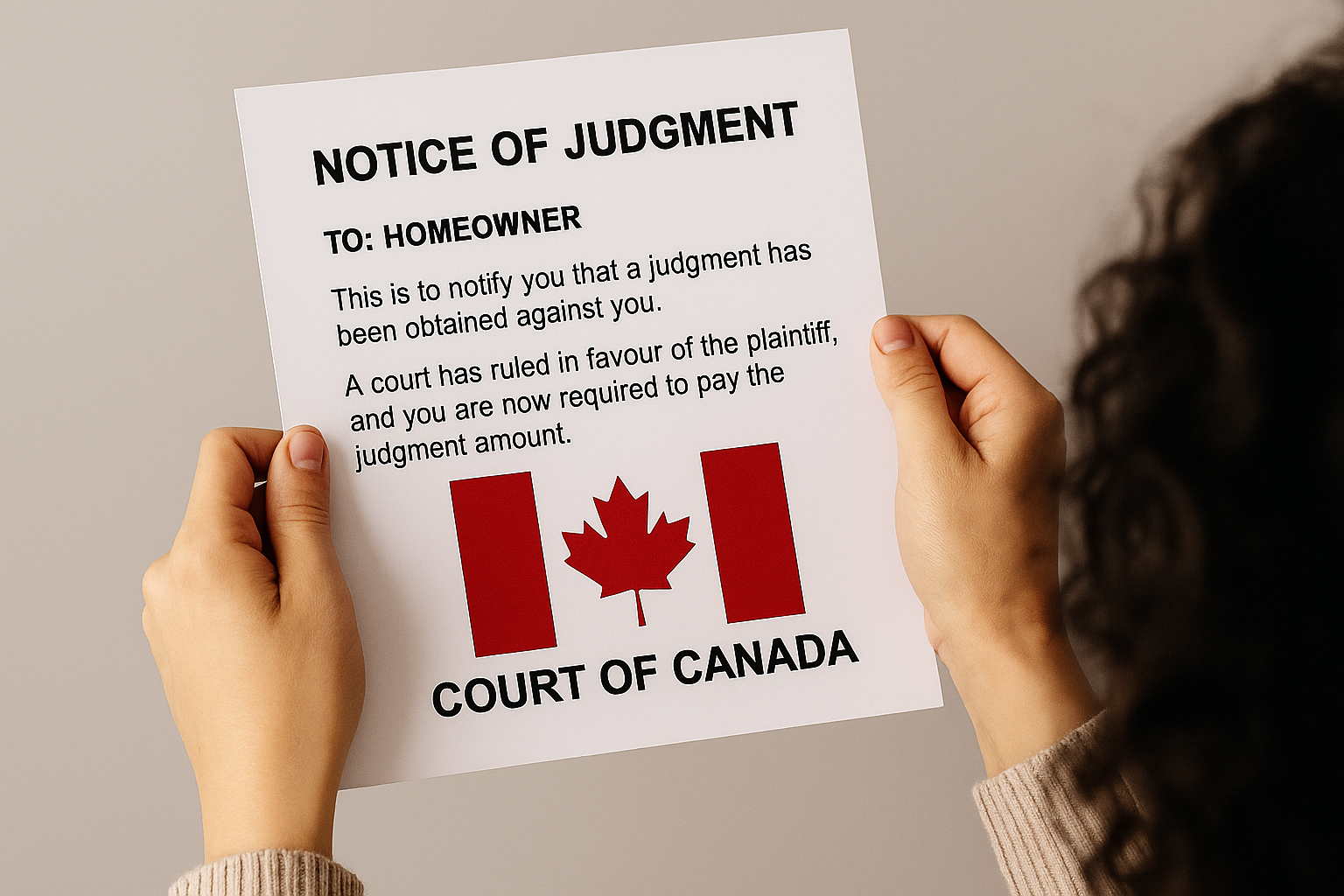
A judgment is a court decision stating that you owe a creditor money. It usually follows a lawsuit over unpaid debt, such as a credit card or personal loan. If you ignore the lawsuit, the creditor can get a default judgment without you ever going to court.
Once a creditor has a judgment, it can enforce it by registering a writ against your property, garnishing your wages or garnishing your bank account. A judgment can also appear on your credit report, generally for about six years, making it harder to borrow or refinance.
The Legal Path From Unsecured Debt to Losing Your Home
How Missed Payments Turn Into Legal Action
When you fall behind, the creditor will first try to collect, often through a collection agency. If that fails, it can sue you. In Ontario, a creditor generally has two years from when you defaulted to start a lawsuit, although a payment or a written acknowledgment of the debt can restart the clock.
Key takeaway: a lawsuit is the turning point. Respond to it, or get advice, rather than ignoring it.
From Judgment to a Writ Against Your Property
With a judgment, the creditor can file a writ of seizure and sale with the sheriff in the area where your home is located. The writ binds your property, so it shows up on title. In Ontario, a writ stays in force for six years and can be renewed. Read more about how a writ of execution works in Ontario.
In most cases, the writ sits on title until you sell or refinance. At that point, it has to be paid from the proceeds before the deal can close.
Common mistake: ignoring court papers. A lawsuit does not go away. Ignoring it usually leads to a default judgment and a writ.
Can a Creditor Force the Sale of Your Home?
Yes, a judgment creditor can ask the sheriff to sell property covered by a writ, but it is rare for a home with a mortgage. The mortgage and sale costs are paid first, so a forced sale only makes sense to a creditor when there is significant equity. More often, creditors wait for you to sell or refinance, or use wage garnishment instead.
Power of Sale and Foreclosure: When Creditors Get Aggressive
An unsecured creditor cannot start a power of sale. Only your mortgage lender can. But unsecured debt problems often lead to missed mortgage payments, and some mortgages treat a new writ or lien on title as a default. If you fall behind on the mortgage itself, that is when the risk of power of sale becomes real.
Common Myths About Unsecured Debt
“They Can’t Take My House”
False. Once a creditor has a judgment and a writ, it has a legal claim against your home. You will have to pay it when you sell or refinance, and in some cases it can push for a sale.
“They’ll Only Garnish My Wages”
Wage garnishment is common. In Ontario, creditors can generally garnish up to 20% of your net wages, or more for family support. But a writ against your home is another tool, and creditors can use both.
“Bankruptcy Is My Only Option”
Not necessarily. If you have home equity, refinancing or a second mortgage can pay off the debts. A consumer proposal is another option that lets you repay part of what you owe and keep your home.
Important to note: waiting limits your options. Interest, legal costs and court steps all build up over time.

Warning Signs You’re At Risk of Losing Your Home
- You are getting collection letters from a lawyer, not just a collection agency
- You have been served with a statement of claim
- You have ignored legal notices or court deadlines
- A writ or lien has been registered on your home
- Your mortgage lender has contacted you about something on title
- You are using credit to make minimum payments
Checklist: Are You at Risk?
- Has a court judgment been issued against you?
- Do you owe more than you can realistically pay in the next year?
- Have you missed payments for 90 days or more?
- Do you have equity in your home? Creditors look harder at homeowners with equity.
- Have you received legal threats or a statement of claim?
- Have you been avoiding calls from collectors?
- Are your credit cards maxed out?
- Are you unsure how much you owe, or to whom?
What You Can Do to Protect Your Home
1. Use Your Home Equity Before It Is Too Late
A debt consolidation refinance or a second mortgage can pay off credit cards, loans and judgments in one step, usually at a much lower rate. If you already have a home equity line of credit with room on it, that can work too, but a new one is harder to get once your credit has taken hits.
2. Speak With a Mortgage Professional Early
A broker can compare bank, B and private lenders, tell you how much equity you can access, and show you what it would take to clear any writs on title.
3. Consider a Consumer Proposal
A consumer proposal is a legally binding deal, arranged through a licensed insolvency trustee, to repay part of your unsecured debt. Once it is filed, most collection actions, lawsuits and wage garnishments stop. Your mortgage is not included, so you must keep paying it.
4. Explore Private Lending Options
If banks say no, private lenders may approve financing based mainly on your equity, even with damaged credit or a writ on title. It is usually short-term, with a plan to refinance to a lower cost lender later.
5. Sell Before Enforcement Goes Further
If keeping the home is not realistic, selling on your own terms usually protects more equity than waiting for creditors or your lender to act. Costs to budget for include real estate commission, legal fees and moving costs, and any writs will be paid from the proceeds on closing.
Illustrative example: a homeowner has a $45,000 credit card judgment, and a writ is already registered on title. With about $200,000 in equity, a private second mortgage pays the judgment in full, the writ is removed, and interest and enforcement costs stop growing. The homeowner then refinances with a lower cost lender once their credit improves.
Act Before It’s Too Late: Don’t Wait for the Legal Notice
By the time a statement of claim arrives, interest, legal costs and court steps have already started to add up. If you have equity in your home, the options are best before a judgment, and still good before a writ is enforced. Talk to a mortgage professional who regularly works with judgments, writs and refinancing, including with bad credit.
FAQ: Unsecured Debt and Home Loss in Canada
Can credit card companies take your house in Canada?
Not directly. A credit card company must first sue you and get a court judgment. It can then register a writ against your home and, in some cases, ask the sheriff to sell it. In practice, most creditors wait until you sell or refinance and collect from the proceeds.
Can a creditor put a lien on my house for unsecured debt?
Yes, once it has a judgment. In Ontario, the creditor files a writ of seizure and sale with the sheriff, and the writ binds your property.
How long does a writ stay on my house in Ontario?
A writ of seizure and sale stays in force for six years and can be renewed by the creditor before it expires.
Can a credit card company garnish my wages in Ontario?
Yes, after it gets a judgment. Creditors can generally garnish up to 20% of your net wages, and more for family support orders.
How long does a creditor have to sue me in Ontario?
Generally two years from when you defaulted. A payment or written acknowledgment of the debt can restart that period, so get advice before you respond to an old debt.
Can I refinance with a writ or judgment on title?
Often, yes. The writ is paid out from the new mortgage on closing. If banks decline you, private lenders that focus on equity can often help.
Will paying the debt remove the writ?
Yes. Once the judgment is paid, the creditor should withdraw the writ with the sheriff. Ask for written confirmation, and have your lawyer check title.