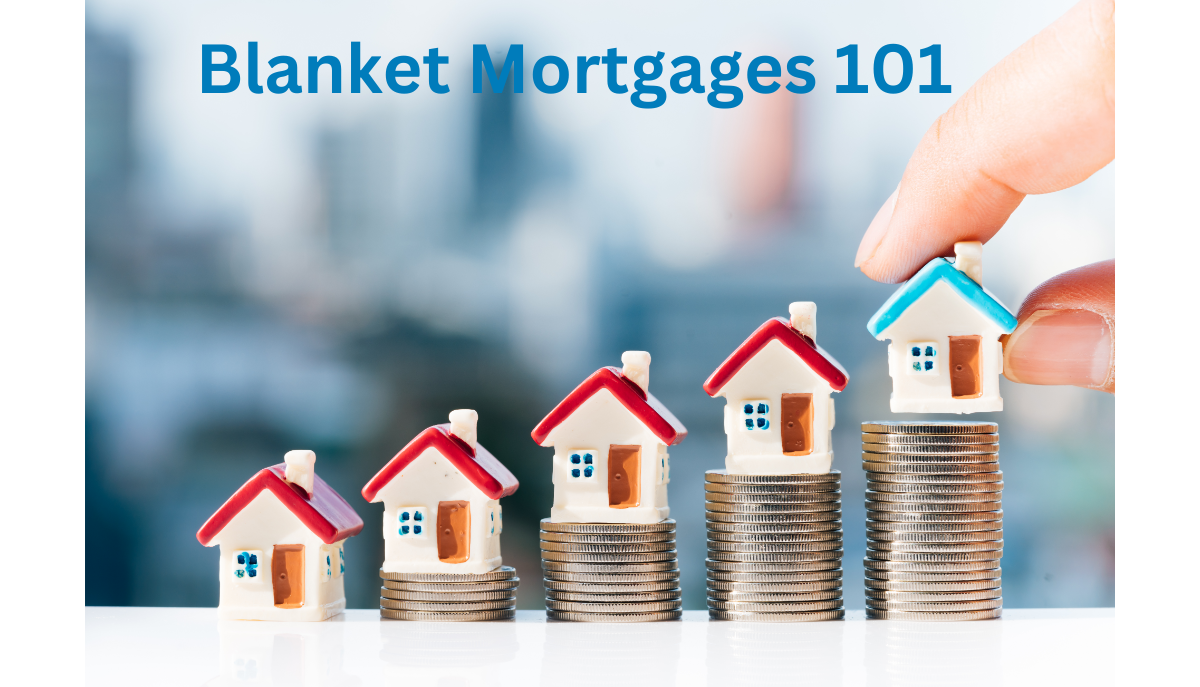
A blanket mortgage lets you use two or more properties as collateral under a single loan. It’s a powerful tool for Canadian real estate investors, multi-property owners, and homeowners with equity spread across multiple properties. Whether you need to consolidate debt, free up cash flow, or access more financing than a single property allows, a cross-collateralized mortgage could be the solution the banks aren’t telling you about.
What Is a Blanket Mortgage in Canada?
A blanket mortgage is a single loan secured against two or more properties at the same time. Instead of carrying separate mortgages on each property you own, a blanket mortgage consolidates them into one financing arrangement with one payment, one lender, and one set of terms.
This type of mortgage is especially useful for real estate investors, landlords, and homeowners who own multiple properties, including a principal residence and a cottage, rental property, or secondary home. It simplifies financial management while potentially unlocking more capital than a single-property mortgage could provide.
Important to note: A cross-collateralized mortgage is not the same as a standard second mortgage. It is a cross-collateralized loan, meaning the lender holds a registered interest in multiple properties simultaneously. This gives borrowers greater combined equity access but also means all properties are tied to the same loan agreement.
Is a Blanket Mortgage Available in Canada?
Yes, but availability is limited compared to standard mortgage products. Blanket mortgages exist in Canada and are used regularly by experienced real estate investors and property owners, but the major banks do not widely advertise them.
Most blanket mortgage financing in Canada comes through private mortgage lenders and select alternative or B-lenders. Banks and credit unions will occasionally consider them, but they evaluate these arrangements on a strict case-by-case basis, and most applicants with bruised credit or non-traditional income will not qualify through an institutional lender.
This is where working with a licensed mortgage broker becomes critical. A broker with access to the private and alternative lending market can identify lenders who understand cross-collateralized arrangements and structure the deal properly for your situation.
Common Myth: Many property owners assume that because they have two properties, they automatically qualify for more financing. The equity position, registered encumbrances, and overall debt service ratios across both properties are all evaluated before any approval is issued.

Who Uses a Blanket Mortgage?
Blanket mortgages are not just for large-scale developers. Everyday Canadians in a variety of situations benefit from this type of financing.
Real estate investors use cross-collateralized mortgages to consolidate multiple investment properties and reduce the administrative burden of managing several separate loans. Canadian real estate investors accounted for 30.4% of all home-buying transactions in Q1 2024, a record share. Reic Many of those investors are now looking for smarter financing strategies as carrying costs rise.
Multi-property homeowners — those who own a principal residence and a recreational or secondary property, use blanket mortgages to tap into combined equity for debt consolidation, major renovations, or emergency cash flow needs.
Homeowners with bruised credit who have built significant equity across multiple properties but cannot qualify through traditional channels often find that a blanket mortgage through a private lender is one of the only options that works for their situation.
Key takeaway: If you own more than one property and have equity, a blanket mortgage gives you access to the total value of what you’ve built — not just the equity in one property.
Using Two Properties to Get a Blanket Mortgage
The core concept of a blanket mortgage is simple: you use the combined equity in two or more properties to secure a larger loan than either property could support on its own.
Here is how the equity calculation works at a high level:
| Property | Estimated Value | Outstanding Mortgage | Available Equity |
|---|---|---|---|
| Principal Residence | $700,000 | $250,000 | $350,000* |
| Rental Property | $500,000 | $200,000 | $200,000* |
| Combined Blanket Mortgage | $1,200,000 | — | Up to $550,000* |
*Approximate, based on up to 75–80% LTV through a private lender. Actual amounts depend on the lender and the property assessments.
By combining both properties, you may qualify for significantly more than either property would allow on its own. This additional borrowing power can be used for debt consolidation, renovations, bridge financing, tax arrears, or to fund additional real estate purchases.
Important to note: Each lender will evaluate both properties independently. Location, condition, rental income if applicable, and registered charges all factor into approval. Properties in rural or remote areas may be assessed more conservatively.
How a Blanket Mortgage Compares to a Home Equity Loan
A blanket mortgage and a home equity loan serve similar purposes but have important structural differences.
A home equity loan is typically a second mortgage registered against a single property. It gives you access to the equity in that one property, and the existing first mortgage remains in place separately.
A blanket mortgage, by contrast, spans multiple properties under one mortgage charge. This makes it functionally similar to a home equity loan but with two key advantages: greater total equity access and a single consolidated payment.
When a blanket mortgage makes more sense than a home equity loan:
- You need more capital than one property’s equity can provide
- You want to consolidate multiple mortgage payments into one
- You have equity split across two properties and want to access it efficiently
- Your individual property equity is insufficient on its own to meet your financing needs
When a home equity loan may make more sense:
- You only need to access equity from one property
- You want to keep the properties legally separate
- You prefer a simpler, more standard lending arrangement
How Blanket Mortgage Payments Work
Payments on a blanket mortgage work the same way as any standard mortgage. You make a single monthly payment that covers the full loan balance across all properties included in the arrangement.
The interest rate will typically reflect the higher-risk nature of private or alternative lending. Blanket mortgages arranged through private lenders generally carry higher rates than traditional mortgages, but the trade-off is access to capital that would otherwise be unavailable, and a simplified payment structure.
Common Mistake: Borrowers sometimes assume that because properties are combined under one loan, they can sell one property freely without affecting the other. In most blanket mortgage arrangements, there is a release clause that governs what happens when one property is sold. Before entering a blanket mortgage, confirm the lender’s release terms clearly with your mortgage broker.
Key takeaway: A blanket mortgage simplifies your monthly obligations to a single payment while giving you access to the full equity value of your property portfolio. Just ensure you have a clear plan for the loan term, whether that is refinancing, selling, or renewing.
Blanket Mortgages and the Current Canadian Lending Environment
The Canadian lending environment in 2026 makes blanket mortgages more relevant than ever for multi-property owners. Alternative lenders, who typically provide financing to households with weaker credit, grew their outstanding mortgage value faster than traditional lenders in 2025, even as they lent more conservatively than in prior years. CMHC
Residential mortgage debt in Canada reached $2.3 trillion in August 2025, up 4.8% from a year earlier. CMHC With the overall debt load this high, many multi-property owners are looking for consolidation strategies that reduce their monthly exposure, exactly what a blanket mortgage is designed to do.
More than one-third of Canada’s mortgages — roughly 36% — are set to renew by the end of 2026. Muck Rack For real estate investors and multi-property owners facing renewals at rates higher than their original terms, a cross-collateralized mortgage can be part of a broader refinancing strategy that consolidates obligations and improves cash flow.
Blanket Mortgage Checklist — What You Need to Apply
Before applying for a blanket mortgage in Canada, prepare the following:
- ☐ Property ownership documents for all properties are included
- ☐ Current mortgage statements showing outstanding balances on each property
- ☐ Recent property tax statements for all properties
- ☐ Recent property appraisals or estimated values (your broker can arrange this)
- ☐ Proof of income or documentation of revenue from rental properties
- ☐ Credit report (even if your score is low, a broker needs to assess the full picture)
- ☐ Description of the purpose of the loan — what you intend to do with the funds
- ☐ Information about any other outstanding debts, liens, or charges registered against the properties
The more organized your documentation is going in, the faster a private lender can evaluate and approve your application.
Why Work With LendToday for a Blanket Mortgage
At LendToday, we have been helping Canadians access mortgage solutions that fall outside the traditional banking model for over 30 years. We understand that not every borrower fits the conventional lending box, and that not every property situation is straightforward.
Our network includes more than 50 lenders, including private and alternative mortgage lenders who actively consider blanket mortgage arrangements. We evaluate each application based on the full picture of your financial situation and your combined property equity, not just your credit score.
If you own multiple properties and are exploring your options, we can help you understand what a blanket mortgage could look like for your specific situation, what it would cost, and whether it is the right move.
Frequently Asked Questions — Blanket Mortgages in Canada
Q: Can I get a blanket mortgage if I have bad credit? A: Yes. Bad credit does not automatically disqualify you from a blanket mortgage, particularly through private lenders. Private lenders are primarily concerned with the equity in your properties, not your credit score. If you have sufficient combined equity across two or more properties, a blanket mortgage may be within reach even with a bruised credit history.
Q: How much equity do I need across both properties? A: Most private lenders will lend up to 75–80% of the combined value of the properties, minus any existing registered mortgages. The greater your combined equity, the stronger your approval position. As a general rule, the more equity you have going in, the better your rate and terms will be.
Q: Can I include a rental property and my primary residence in a blanket mortgage? A: Yes. Blanket mortgages can span different property types, including a principal residence, a rental property, or a recreational property. The lender will evaluate each property individually and assess the combined borrowing capacity. Rental income on investment properties may also be used to support your application.
Q: What happens if I want to sell one of the properties? A: This depends on the terms of your blanket mortgage. Most blanket mortgage agreements include a partial release clause, which allows you to sell one property and have it removed from the loan — typically after paying down a specified portion of the balance. Always confirm release terms with your broker before signing.
Q: Are blanket mortgages available outside of Ontario? A: Yes. Blanket mortgages are available across Canada, though product availability, lender access, and terms will vary by province. LendToday works with lenders across Ontario and beyond and can help identify options suited to your location and property types.
Q: How long does it take to get approved for a blanket mortgage? A: Through a private lender, approvals can often happen within days once all documentation is in order. This makes a blanket mortgage a practical option for borrowers dealing with time-sensitive financial situations like mortgage arrears, debt consolidation, or urgent renovation needs.