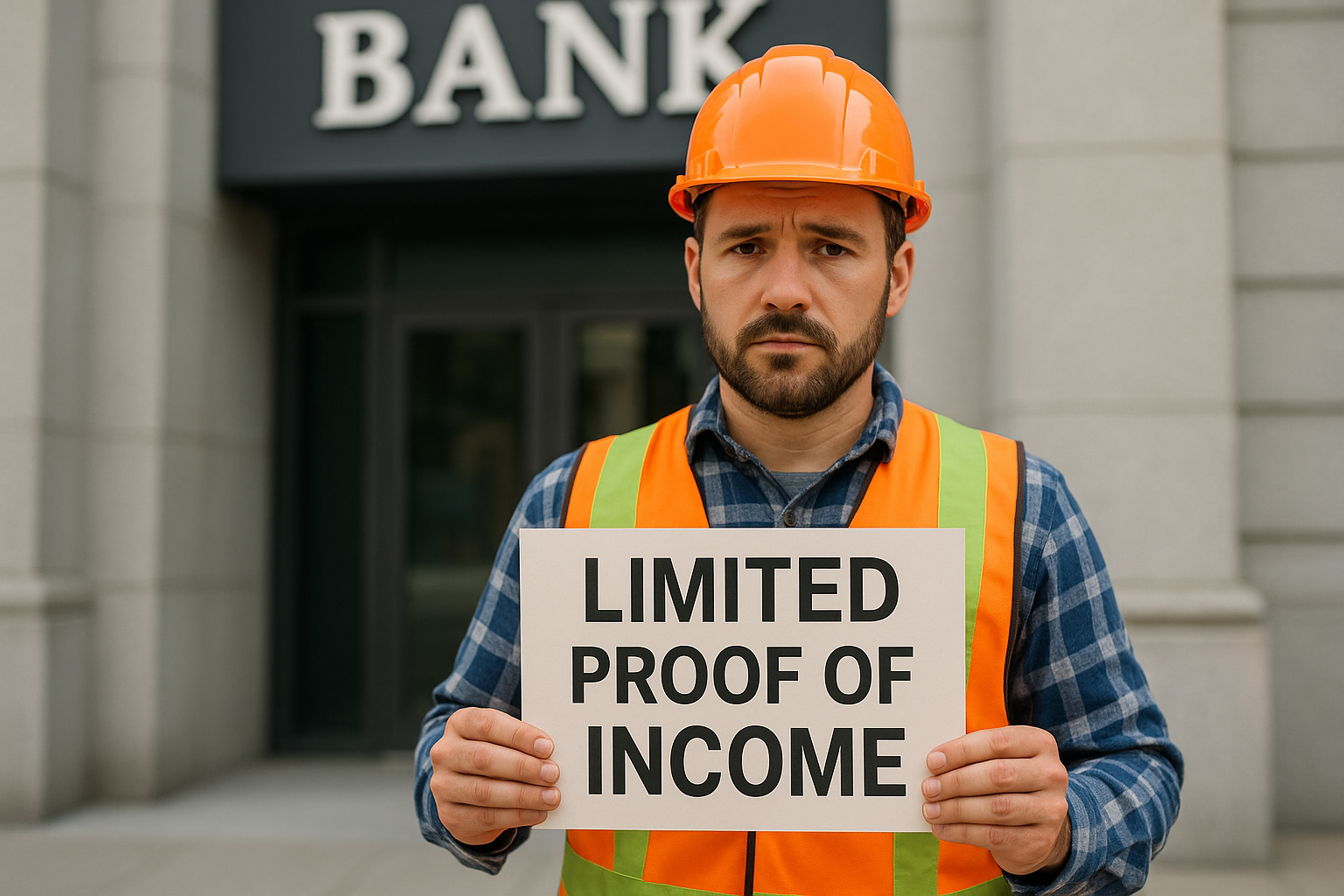
If you can’t show pay stubs, T4s or two years of tax returns, most banks will say no. That doesn’t mean you can’t borrow. The loans that work without traditional proof of income are almost always secured, usually by the equity in your home. Unsecured personal loans with no income check are rare and expensive, and many of the “no proof of income” ads online are payday or high cost lenders.
This guide explains which loans actually work without proof of income in Canada, what lenders look at instead, what they cost, and how Ontario homeowners can use their equity when the bank declines them.
Table of Contents
ToggleWhy Some Borrowers Can’t Provide Traditional Proof of Income
Banks want income they can verify on paper: pay stubs, an employment letter, T4s and Notices of Assessment. Plenty of people with real money coming in don’t fit that format.
- Self-employed people and contractors who write off a lot of expenses, so their taxable income looks low
- Gig workers and freelancers with no employer to confirm income
- Commission or seasonal workers whose income changes month to month
- People between jobs, on leave, or recently retired
- Newcomers without a Canadian income history
Even if you have money coming in, it may not be in the format a bank’s lending guidelines require.
“No Income” vs “No Proof of Income”: Why It Matters
These sound the same, but lenders treat them very differently.
- No proof of income means you earn money but can’t document it the way a bank wants. B lenders and private lenders have ways around this, such as stated income or bank statements.
- No income means nothing is coming in right now. Then the lender relies almost entirely on your equity, your credit and your plan to repay.
Also, “no job” isn’t always “no income.” Pension, CPP and OAS, rental income, investment income, EI and child and spousal support can all count as income with some lenders.
Loan Types That Don’t Require Proof of Income
Personal Loans: The Hardest Option Without Income
Unsecured personal loans are based on your credit and your income. Very few lenders approve them without income, and those that do usually charge rates close to the legal maximum. Since January 1, 2025, the criminal interest rate in Canada is 35% APR, so a lender can’t legally charge more than that on most loans.
If you need a small personal loan and can’t show income, your realistic options are a co-signer with good income, a loan secured by savings or a vehicle, or showing other income such as a pension or support payments.
Payday Loans: Avoid If You Can
Payday lenders often advertise “no income verification,” but they are the most expensive way to borrow. In Ontario, the maximum cost of a payday loan is $14 for every $100 you borrow (Ontario payday loan rules). Over two weeks that can work out to an annual rate in the hundreds of percent. If you own a home, a loan against your equity will almost always cost far less.
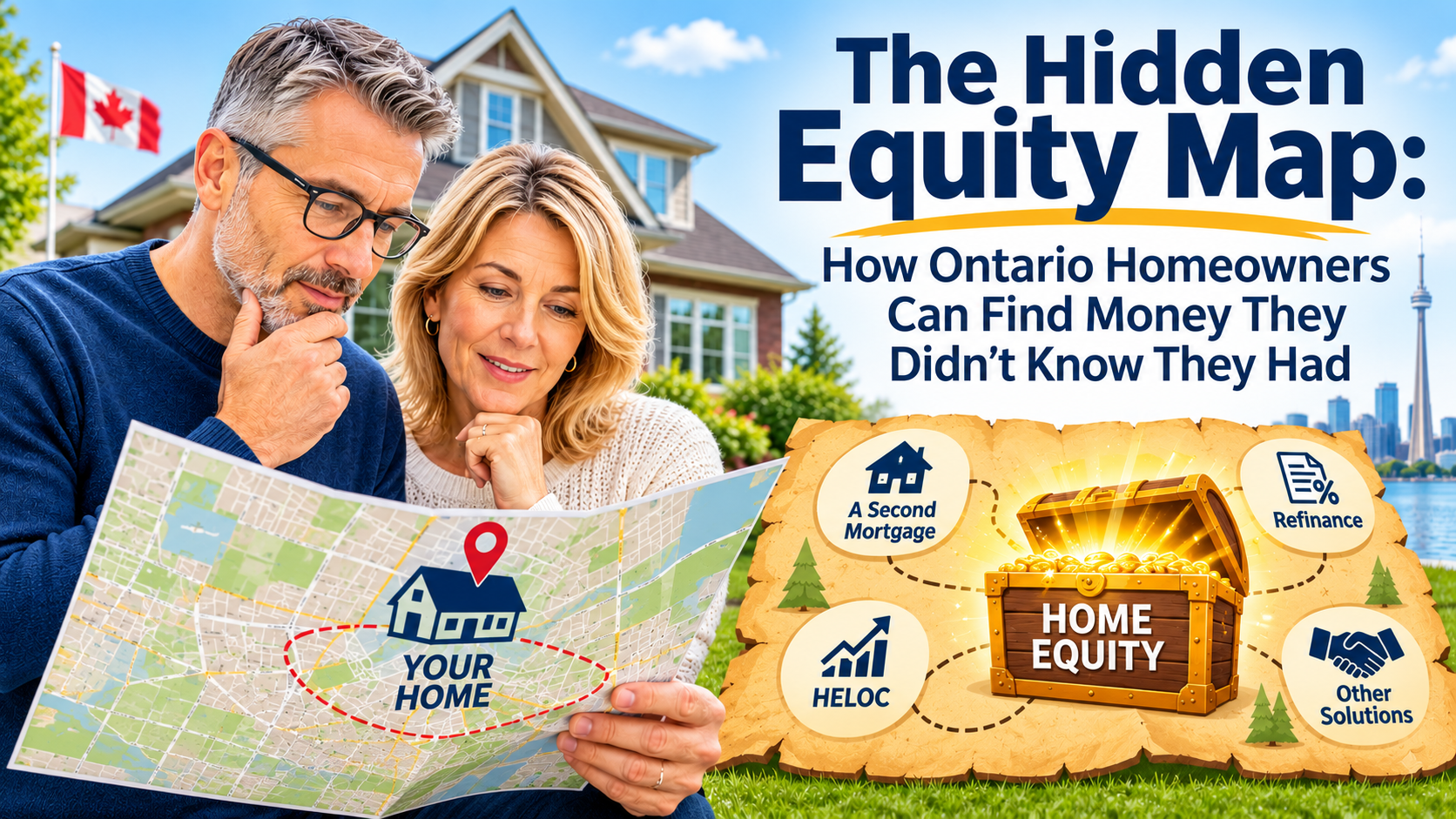
Home Equity Loan or Second Mortgage
A home equity loan lets you borrow a lump sum against the equity in your home. If you already have a mortgage, this is usually done as a second mortgage that sits behind your first one.
- Approval is based mainly on your equity, usually up to 80% of your home’s value across all mortgages
- Private lenders can approve with little or no income proof if the equity and exit plan are strong
- Terms are usually 12 or 24 months, often interest only
- Common uses: paying off credit cards, tax arrears, emergencies or a consumer proposal
Private Mortgage
A private mortgage is a first or second mortgage from a private lender or a Mortgage Investment Corporation (MIC). Private lenders focus on the property, your equity and how you will repay the loan, not on your pay stubs.
- Used to buy, refinance or pull equity out when a bank declines you
- Approval is often within 24 hours, and funding usually takes one to two weeks
- Short terms, with a plan to move back to a bank or B lender later
HELOC (Home Equity Line of Credit)
A HELOC is a revolving line of credit secured by your home. At banks and other federally regulated lenders, a HELOC can be no more than 65% of your home’s value, and you need good credit and verified income to qualify. A no income verification HELOC is rare and usually only available from some private lenders. If you already have a HELOC in place, using it is often the cheapest option.
Stated Income or Bank Statement Mortgage (B Lenders)
B lenders, also called alternative lenders, serve borrowers who earn money but can’t prove it the bank’s way. Instead of T4s, they may accept a stated income backed by business bank statements, or an average of deposits over 6 to 12 months. You usually need at least 20% equity. This works well for self-employed borrowers and costs much less than a private loan.
| Option | Income proof needed | Typical cost | Best for |
|---|---|---|---|
| Unsecured personal loan | Usually yes | High, up to 35% APR | Small amounts with a co-signer or other income |
| Payday loan | Minimal | Up to $14 per $100 borrowed | Avoid if possible |
| B lender stated income mortgage | Bank statements or stated income | Above bank rates | Self-employed with 20%+ equity |
| Private second mortgage | Little or none | Est. 7.99% to 14.99% plus fees | Homeowners with equity, any income situation |
| Private first mortgage | Little or none | Est. 6.99% to 10.99% plus fees | Refinancing or buying when banks decline |
| Bank HELOC | Yes, full income | Lowest | If you already have one |
Private rate ranges are estimates as of November 2026, not a rate offer, and subject to approval. Private loans also carry a lender fee of 2.5% to 5% of the loan and a broker fee of 2.5% to 5% of the loan, each depending on final approval.
What Lenders Consider If You Don’t Have Proof of Income
Equity in Your Home
This matters most. Lenders look at your loan-to-value (LTV): all your mortgages combined compared to your home’s value. Most private lenders stay at or below 80%. The more equity you have, the easier the approval and the better the rate.
Credit Score and History
Private lenders accept bruised credit, but they still want to see that you pay your bills. Missed mortgage payments or property tax arrears raise the cost.
Property Location and Condition
Homes in cities and towns with steady demand are easier to finance than rural or unusual properties. Condition matters too, because the lender’s security is the home.
Your Exit Strategy
Every private lender asks how you will pay the loan back. Common answers are refinancing with a bank or B lender once your income is documented, selling the property, or paying it down from a known lump sum. A clear exit plan can matter as much as your credit score.
Some Ability to Make Payments
Even without pay stubs, lenders want to know the monthly payment is realistic. Savings, bank statements, other income or a payment reserve can all help.
How Much Can You Borrow Without Proof of Income?
A simple way to estimate it: take 80% of your home’s value and subtract what you owe on your mortgage.
- Home value: $700,000
- 80% of value: $560,000
- Current mortgage: $400,000
- Available before fees: up to about $160,000
Lender fees, broker fees, legal costs and the appraisal come out of that amount. Use our home equity calculator for your own numbers.
Risks and Benefits of No-Proof-of-Income Loans
| Benefit | Risk |
|---|---|
| Approval based on equity, not paperwork | Higher interest rates than a bank |
| Fast approval, often within 24 hours | Lender fee and broker fee on top of interest |
| Can pay off high interest debt in one step | Short terms that must be renewed or refinanced |
| Interest-only payments keep costs low for now | Your home is at risk if you can’t pay |
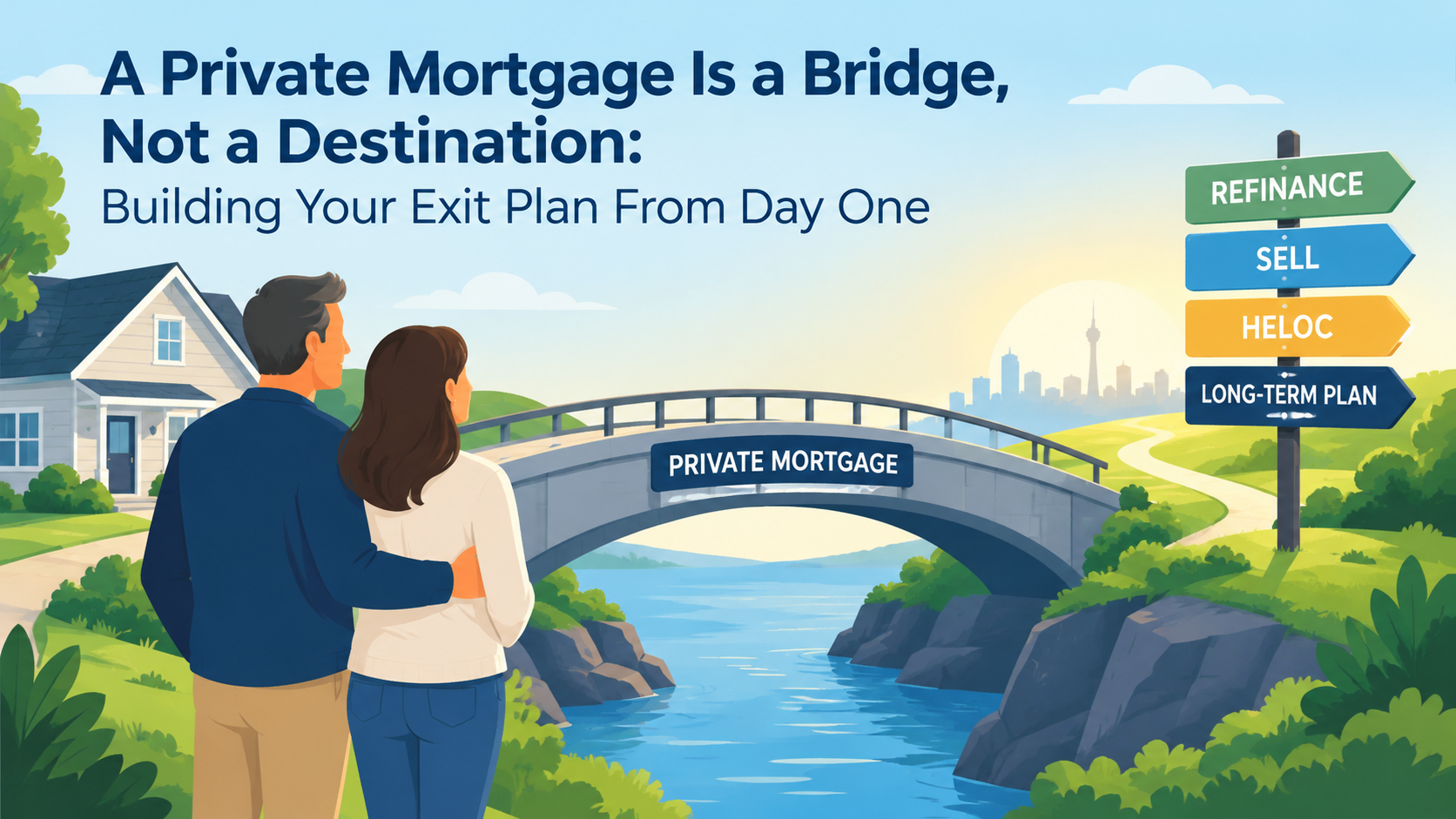
The biggest risk is borrowing without a plan to get out. A private loan is meant to be a bridge, usually for one or two years, not a permanent solution.
How to Apply for a Loan Without Proof of Income in Canada
- Gather what you have: photo ID, your latest mortgage statement, property tax bill, home insurance and any bank statements or proof of other income.
- Check your equity: estimate your home’s value and what you owe.
- Review your credit report so there are no surprises.
- Talk to a mortgage broker who works with B lenders and private lenders. One application can be shown to many lenders.
- Get an appraisal ordered through the lender.
- Agree on your exit plan before you sign, so you know how you will refinance or repay.
If you need a mortgage to buy a home rather than borrow against one, see our guide to getting a mortgage with no income in Ontario. If you want to refinance, read can I refinance my home with no income.
Example: No Pay Stubs, Strong Equity
This example is for illustration only.
A self-employed contractor in the GTA has a slow season and $40,000 in credit card and line of credit debt, with minimum payments of about $1,200 a month. His home is worth $700,000 and he owes $400,000 on his first mortgage. His bank won’t approve more because his tax returns show low income after write-offs.
A private lender approves a $45,000 second mortgage. That covers the $40,000 debt plus the lender fee, broker fee and legal costs. At an example rate of 9.99% interest only, the payment is about $375 a month. His total mortgages are about 64% of the home’s value. His exit plan is to refinance with a B lender using bank statements within two years.
Final Thoughts
If you own a home, the loan that doesn’t require proof of income is almost always one secured by your equity: a private second mortgage, a private first mortgage, or a B lender stated income mortgage. These cost more than a bank, but far less than payday loans or high rate personal loans. The key is to borrow only what you need and to have a clear plan to move back to a lower rate.
FAQ
Can I get a loan without proof of income in Canada?
Yes, if you own a home with equity. Private lenders can approve second mortgages and private mortgages based mainly on your equity, credit and exit plan. Unsecured loans without income are much harder to get.
What is the easiest loan to get without proof of income?
For homeowners, a private second mortgage is usually the easiest, because approval depends mostly on equity. For self-employed borrowers with at least 20% equity, a B lender stated income mortgage costs less.
Can I get a personal loan with no income verification?
It’s rare. Most personal loan lenders check income. Those that don’t often charge rates near the 35% APR legal limit. A co-signer, a secured loan, or showing other income such as a pension usually works better.
Do I need a job to get a home equity loan?
Not always. Private lenders can approve a home equity loan without employment if you have strong equity and a realistic way to make payments and repay the loan.
Can I get a loan without proof of income if I have bad credit?
Yes, with a private lender, as long as you have enough equity. Expect a higher rate and fees, and a short term.
How fast can I get a loan without proof of income?
Private approvals often come within 24 hours. Funding usually takes one to two weeks, after the appraisal and legal work.
Are no proof of income loans legal and safe?
Loans from licensed lenders arranged through a licensed mortgage brokerage are legal. In Ontario you can check a broker’s licence with FSRA. Be careful with lenders that ask for fees upfront before approval or promise approval to everyone.
See Your No Proof of Income Options