A HELOC gives you flexible access to your home equity, but heloc repayment is where most Canadian homeowners run into trouble. If you only make interest-only payments, your balance never shrinks. If rates rise, your monthly costs climb fast. This article breaks down how heloc repayment actually works, the difference between interest-only and principal payments, fixed vs. variable rate options, and what to do if you’re struggling to pay down your balance.
Table of Contents
ToggleWhat Is a HELOC and How Does Repayment Work?
A home equity line of credit (HELOC) is a revolving line of credit secured against your home. Canadian lenders will typically allow you to borrow up to 65% of your home’s appraised value, minus any outstanding mortgage balance. You access funds as needed, repay them, and borrow again, much like a credit card tied to your equity.
What makes heloc repayment different from a traditional mortgage is the flexibility, and the risk that comes with it. There is no fixed amortization schedule forcing you to pay down the principal over a set number of years. That means without a deliberate repayment strategy, your balance can sit untouched for years while interest quietly accumulates.
Understanding how heloc repayment is structured starts with knowing the two phases most lenders use.
The Draw Period vs. the Repayment Period
Some HELOCs operate with a defined draw period, typically 5 to 10 years, during which you can borrow freely and make interest-only payments. Once that period ends, you enter the repayment period, where full principal payments are required and the credit line closes.
Not all Canadian HELOCs work this way. Many Schedule I banks offer open-ended revolving HELOCs with no formal draw period cutoff, which puts the repayment responsibility entirely on the borrower. Key takeaway: if your lender has not set a defined repayment period, you need to set your own repayment timeline or your balance will never move.
How Your Credit Limit and Outstanding Balance Interact
Your credit limit is the maximum you can borrow. Your outstanding balance is what you currently owe. As you make principal payments, your available credit increases, and you can draw again. This revolving structure is useful for managing cash flow, but can easily become a cycle where you pay down and reborrow without ever reducing your total debt load.
Important to note: treating a HELOC like a permanent revolving balance rather than a short-term borrowing tool is one of the most common and costly mistakes Canadian homeowners make.
Interest-Only HELOC Repayment: What It Means and What It Costs You
Most HELOCs in Canada have a minimum payment equal to the interest charged on your outstanding balance for that month. This is what lenders mean when they refer to interest-only repayment terms. You are not required to pay down any principal to stay in good standing.
On the surface, this looks like financial flexibility. In practice, it is a slow trap.
How Interest-Only Payments Are Calculated
Your monthly interest-only payment is calculated by multiplying your outstanding balance by your annual interest rate, then dividing by 12. If you owe $100,000 on a HELOC at 7.2% annually, your minimum monthly payment is $600. That $600 pays your lender in full for that month. Your balance remains exactly $100,000 the following morning.
Variable-rate HELOCs tie directly to the lender’s prime rate, which moves with the Bank of Canada’s overnight rate. When the Bank of Canada raised rates aggressively between 2022 and 2023, Canadian HELOC holders saw their monthly interest costs climb sharply with no warning and no fixed end date.
The Interest-Only Trap: Why Minimum Payments Keep You Stuck
Common myth: making your minimum HELOC payment on time means you are managing your debt responsibly. The reality is that interest-only payments confirm you are servicing debt, not reducing it. After five years of minimum payments on a $150,000 HELOC at 7%, you will have paid roughly $52,500 in interest and still owe $150,000. Every dollar of that interest is gone. None of it built equity. None of it reduced your risk.
Repaying a HELOC on an interest-only basis indefinitely is not a repayment strategy. It is a holding pattern that benefits your lender far more than it benefits you.
Making Principal Payments on a HELOC
Paying down a HELOC means directing money toward your outstanding balance, not just covering the monthly interest. This reduces the principal you owe, lowers your future interest charges, and gradually frees up equity you can use more strategically.
Most Canadian HELOCs are open, meaning you can make principal payments at any time without penalty. This is a significant advantage over closed mortgage products with strict prepayment rules.
Why Paying Down the Principal Matters
Every dollar applied to principal reduces the balance on which interest is calculated. On a $100,000 HELOC at 7.2%, paying an extra $500 per month toward principal saves you over $43,000 in interest and eliminates the debt in roughly 13 years. Making only minimum interest-only payments on that same balance, indefinitely, costs an unlimited amount because the debt never ends.
Important to note: the psychological and financial risk of an open-ended revolving HELOC is that, without a forced repayment schedule, many homeowners never build the habit of paying down principal consistently. Life intervenes. The balance stays put.
Lump Sum vs. Regular Monthly Principal Payments
There are two practical approaches to paying down a HELOC faster. The first is regular monthly principal payments, where you commit a fixed amount above the minimum each month. This mirrors how a mortgage works and creates a predictable payoff timeline. The second is lump sum payments applied when cash is available, such as from a bonus, tax refund, or property sale.
Both approaches work. The right choice depends on your income pattern and cash flow stability. For salaried borrowers, a fixed monthly principal payment is easier to sustain. For self-employed or commission-based borrowers, lump sum payments aligned with income cycles may be more realistic.
Fixed vs. Variable Rate HELOCs and How They Affect Repayment
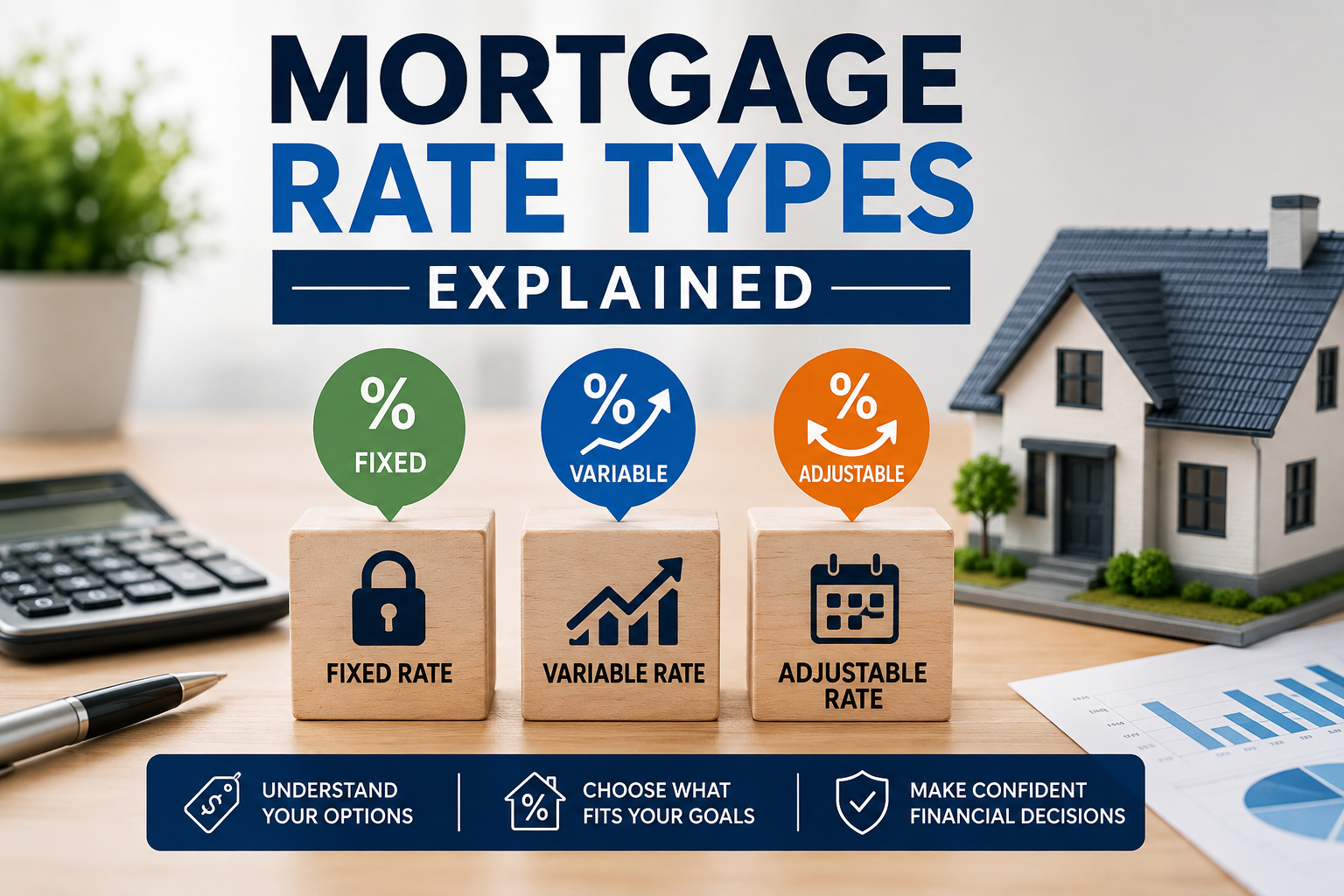
Heloc repayment terms are directly shaped by whether your rate is variable, fixed, or a combination of both. Most Canadian HELOCs carry a variable rate by default, but many lenders allow you to lock a portion of your balance into a fixed-rate segment.
Variable Rate HELOCs and the Bank of Canada Connection
A variable-rate HELOC is priced at prime plus or minus a lender-set spread. When the Bank of Canada moves its overnight rate, prime follows almost immediately, and so does your monthly payment. This creates direct repayment uncertainty. A borrower who budgeted $700 per month in interest charges in early 2022 may have been paying over $1,100 per month by late 2023 on the same balance.
Variable rates can also work in your favour. As the Bank of Canada cut rates through 2024, HELOC holders with variable balances saw their monthly costs decrease without refinancing. The risk runs in both directions.
Fixed Rate Portions: Predictability at a Cost
Many lenders allow you to convert part of your HELOC balance into a fixed-rate term sub-account, sometimes called a fixed-rate segment or home equity loan component. This portion behaves more like a standard loan with set monthly payments, a fixed interest rate, and a defined amortization schedule.
The trade-off is flexibility. Fixed segments typically cannot be repaid early without a prepayment penalty, and they reduce the available revolving credit on your HELOC. For borrowers who want predictable repayment terms and protection against rate increases, locking a portion into a fixed segment is a reasonable strategy.
HELOC Repayment Terms in Canada: What the Rules Actually Say
Canadian HELOC repayment is governed by a combination of federal regulation, lender policy, and the terms of your specific credit agreement. Not all lenders follow identical rules, and the differences matter.
OSFI Guidelines and the 65% LTV Cap
The Office of the Superintendent of Financial Institutions (OSFI) limits standalone HELOCs at federally regulated lenders to 65% of a property’s appraised value. If your HELOC is part of a combination mortgage product, the total borrowing, including the mortgage, can reach 80% LTV, but the HELOC portion itself cannot exceed the 65% threshold.
This cap directly affects how much equity you can access and how your heloc repayment strategy scales. A homeowner with a $600,000 property can access up to $390,000 through a HELOC, assuming no existing mortgage. That same homeowner carrying a $300,000 mortgage has a maximum HELOC credit limit of $90,000 under OSFI rules.
Requalification Risk at Mortgage Renewal
Common mistake: assuming your HELOC is permanent and untouchable. In Canada, HELOCs are in-demand products. Lenders can reduce your credit limit or demand full repayment with notice. More practically, when your mortgage comes up for renewal, your lender may require you to requalify under current stress test rules. If your income or property value has changed, your HELOC limit could be reduced or restructured, forcing accelerated heloc repayment on a timeline you did not choose.
Repayment Options When You’re Struggling to Pay Down a HELOC
Not every homeowner with a HELOC is managing it comfortably. Rising rates, job loss, or accumulated debt can make repaying a heloc feel impossible, especially when your monthly obligations are already stretched thin.
If you are struggling, there are structured options available beyond simply making minimum payments and hoping for the best.
Debt Consolidation Using Home Equity
If you carry high-interest debt alongside your HELOC, consolidating everything into a single lower-rate product can reduce your total monthly obligations and create room to actually pay down principal. A home equity loan or refinanced mortgage at a lower blended rate may cost significantly less per month than carrying a HELOC plus credit card balances at 19% or more.
Refinancing vs. Private Mortgage Solutions
Refinancing your primary mortgage to absorb a HELOC balance can extend your amortization and lower monthly payments, but it requires qualifying under current stress test rules and may cost you prepayment penalties on your existing mortgage.
For homeowners who do not qualify through traditional lenders due to credit issues, income irregularities, or high total debt, a private mortgage or second mortgage can provide a structured repayment solution using existing home equity. Private lenders assess deals based primarily on equity position rather than credit score or income, making them accessible when banks say no.
When a Home Equity Loan Makes More Sense Than a HELOC
A home equity loan delivers a lump sum at a fixed interest rate with a set amortization schedule and defined monthly payments. Unlike a HELOC, there is no revolving component and no temptation to reborrow. For borrowers who want discipline built into their repayment terms, a home equity loan eliminates the open-ended risk that makes HELOCs problematic for some people.
Key takeaway: if you find yourself readvancing your HELOC as fast as you pay it down, the product may not be the right fit for your financial behaviour. A structured loan with fixed monthly payments removes the choice and forces the payoff.
HELOC Repayment Comparison Table
| Repayment Type | Reduces Principal? | Payment Certainty | Flexibility | Best For |
|---|---|---|---|---|
| Interest-Only (Variable) | No | Low | High | Short-term cash flow management |
| Interest-Only (Fixed Segment) | No | High | Low | Rate certainty, no paydown goal |
| Principal + Interest (Variable) | Yes | Medium | High | Disciplined borrowers, rate risk tolerance |
| Principal + Interest (Fixed) | Yes | High | Low | Predictable payoff, rate-sensitive borrowers |
| Lump Sum Principal Payments | Yes | N/A | Very High | Irregular income earners |
| Home Equity Loan (Structured) | Yes | Very High | Low | Borrowers needing forced repayment discipline |
Checklist: Are You Repaying Your HELOC the Right Way?
- Do you know your current outstanding HELOC balance?
- Are you making payments above the interest-only minimum each month?
- Do you have a target payoff date for your HELOC?
- Have you reviewed how a Bank of Canada rate change would affect your monthly payment?
- Do you know whether your HELOC has a defined repayment period or is open-ended?
- Have you confirmed your lender’s requalification requirements at mortgage renewal?
- If you are struggling, have you explored consolidation or private mortgage options?
Frequently Asked Questions About HELOC Repayment
Q: What is the minimum payment on a HELOC in Canada?
A: The minimum payment on most Canadian HELOCs is the interest charged on your outstanding balance for that month. No principal payment is required to stay current. The exact amount depends on your balance, your interest rate, and whether your rate is fixed or variable. On a $75,000 balance at 7% annually, your minimum monthly payment would be approximately $438.
Making only the minimum keeps your account in good standing, but does nothing to reduce what you owe. If your goal is actually paying down a heloc, you need to pay more than the minimum every month.
Q: Can I make lump sum payments on a HELOC?
A: Yes. Most Canadian HELOCs are open products, which means you can make lump-sum principal payments at any time without a prepayment penalty. This is one of the biggest advantages of a HELOC over a closed mortgage product. If you receive a bonus, inheritance, or proceeds from an asset sale, applying that money directly to your HELOC balance reduces interest costs immediately and increases your available credit for future use.
Q: What happens to my HELOC when my mortgage renews?
A: Your lender may require you to requalify for your HELOC at renewal, particularly if there have been significant changes to your income, property value, or total debt load. Under current OSFI guidelines and the federal mortgage stress test, requalification is assessed at a rate higher than your actual contract rate. If your financial picture has changed, your lender could reduce your HELOC limit, require partial repayment, or in some cases call the balance entirely. This is one of the most underappreciated heloc repayment risks for Canadian homeowners.
Q: Is it better to pay off a HELOC or invest the money?
A: This depends on your interest rate and expected investment returns. A HELOC in Canada currently carries a variable rate in the 6% to 7% range for most borrowers. If your investment portfolio is not consistently returning more than your HELOC rate after tax, paying down a heloc is often the better financial decision. The guaranteed return of eliminating 7% interest costs is difficult to beat on a risk-adjusted basis. That said, individual circumstances vary and a fee-only financial advisor can help you model the comparison accurately for your situation.
Q: What if I cannot afford to make more than the minimum HELOC payment?
A: If you are only able to cover interest-only payments and your balance is not moving, you need to look at your full debt picture and explore restructuring options. Depending on your equity position, consolidating your HELOC into a refinanced mortgage, a home equity loan, or a private mortgage solution may significantly reduce your total monthly obligations and give you a realistic path to actually repaying your debt. Staying in an interest-only holding pattern on a large HELOC balance is not a neutral position. Every month of minimum payments is equity leaving your home permanently.
Q: Can a lender freeze or cancel my HELOC?
A: Yes. Canadian lenders have the legal right to reduce your HELOC credit limit, freeze advances, or demand repayment under certain conditions, including a significant drop in your property value, a change in your financial status, or a breach of your credit agreement. This can happen even if you have been making all your payments on time. Important to note: a HELOC is not the same as a mortgage. It is a demand product, and lenders have broader rights to modify or call it than most borrowers realize.
Final Thoughts
Heloc repayment is not complicated, but it requires intention. A HELOC is one of the most flexible borrowing tools available to Canadian homeowners, and that flexibility is exactly what makes it dangerous when there is no clear repayment plan in place.
Interest-only payments keep you afloat. Principal payments actually move you forward. Understanding the difference between your repayment options, whether that is a variable rate structure, a fixed segment, a lump sum strategy, or a shift to a home equity loan, puts you in control of an outcome that affects your financial security directly.
If you are currently paying down a heloc and managing it well, keep going. If you are stuck in a minimum payment cycle with no end date in sight, now is the time to look at your options before rates shift again or renewal forces the conversation.
LendToday works with Ontario homeowners who need real solutions when traditional lenders have run out of flexibility. If your HELOC situation has become a problem, we can help you find a structured path forward using the equity you have already built.
Contact Us Today For Heloc Repayment Help