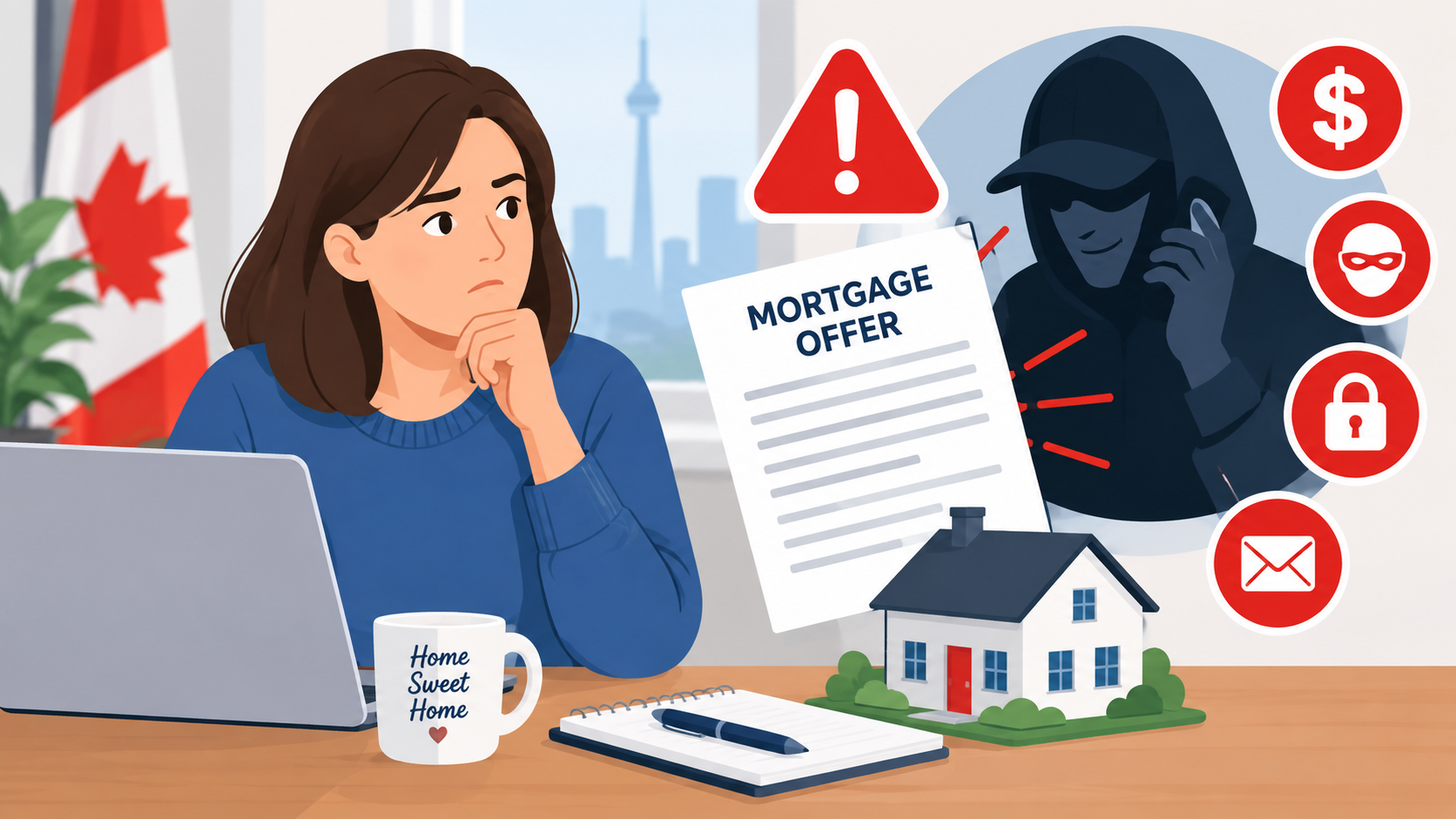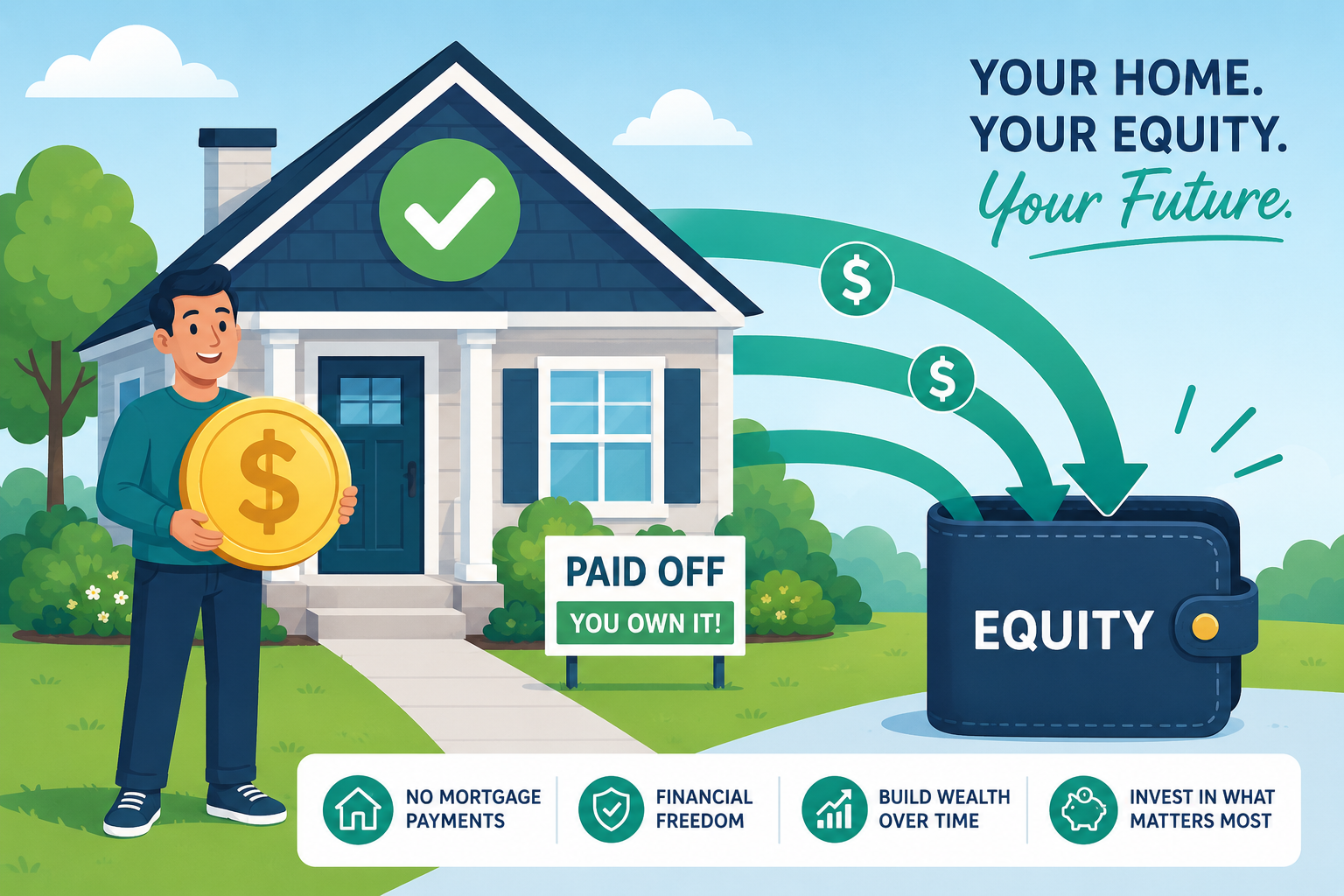
If your house is paid off, you can absolutely still get a loan or mortgage. A paid-off home is one of the strongest assets a lender can see, because you have full equity to borrow against. Whether you want to consolidate debt, renovate, or free up cash, you can get a loan or mortgage through a refinance, a home equity line of credit, a second mortgage, or a reverse mortgage. Even with bruised credit or non-traditional income, options exist. Here is how it works in Canada.
Table of Contents
ToggleYes, You Can Get a Loan or Mortgage When Your House Is Paid Off
Many homeowners assume that once the house is paid off, the banking or mortgage relationship is over forever. The opposite is true. When your house is paid off, you own 100% of the property value, and that gives you the most flexibility possible to get a loan or mortgage against it.
Lenders love a paid-off home. There is no existing lender in first position, no competing claim on the title, and a large cushion of home equity to lend against. That makes you a lower risk in many ways, even if other parts of your application are not perfect.
The term for a home with no mortgage is “free and clear.” Your property sits on title with no registered charge against it. To get a loan or mortgage, a lender simply registers a new charge and advances you funds based on your home equity.
Key takeaway: A paid-off house is not a dead end for financing. It is the opposite. It is the cleanest possible starting point to borrow against equity.
Why Homeowners Borrow Against a Paid-Off Home
People are often surprised at how common it is to get a loan or mortgage on a home that is already paid off. Here are the most frequent reasons.
Debt Consolidation
High-interest credit cards and unsecured lines of credit can quietly drain a household. Rolling that debt into a single mortgage secured by your home equity usually means one lower payment at a far better interest rate. Debt consolidation is one of the top reasons Canadians choose to borrow against equity.
Home Renovations
A kitchen redo, a new roof, or an addition can be funded by tapping the value already sitting in your home. Renovation financing through home equity is often cheaper than a personal loan or store financing.
Emergencies and Income Gaps
Job loss, a medical event, or a slow season for self-employed owners can create a short-term cash need. When your house is paid off, you can get a loan or mortgage to bridge that gap rather than selling assets or reaching for expensive credit.
Investment or Helping Family
Some homeowners borrow against home equity to invest, buy a second property, or help an adult child with a down payment. With a paid-off house, the accessible equity can be significant.
Important to note: Canadian household debt remains high, with Statistics Canada reporting household credit market debt at roughly 173% of disposable income in recent quarters. For many families, replacing costly consumer debt with a lower-rate loan secured by a paid-off home is a practical move.
How to Borrow Against Home Equity When Your House Is Paid Off
There are four main ways to get a loan or mortgage when your house is paid off. Each suits a different goal.
Cash-Out Refinance (New First Mortgage)
Because there is no existing mortgage, this is really just placing a new first mortgage on the property. You borrow a lump sum against your home equity and repay it over a set amortization. This is often the lowest-rate option and a strong fit for a large one-time need like debt consolidation.
Home Equity Line of Credit (HELOC)
A HELOC gives you revolving access to your home equity. You draw what you need, when you need it, and pay interest only on the balance you use. This flexibility suits ongoing projects or a standby safety net.
Second Mortgage
A second mortgage sits behind a first, but on a paid-off home it can be structured as a smaller registered charge alongside a HELOC or first mortgage. It is a common route when you need a specific lump sum and want to keep other financing separate. Private and alternative lenders are active here.
Reverse Mortgage
If you are 55 or older, a reverse mortgage lets you access home equity with no required monthly payments. The loan is repaid when you sell or leave the home. It is popular with retirees who want cash flow while staying in place.
Here is a quick comparison to help you see how each option to get a loan or mortgage stacks up.
| Option | Best For | Payments | Typical Access to Equity |
|---|---|---|---|
| Cash-Out Refinance | Large lump sum, lowest rate | Regular principal and interest | Up to 80% conventional |
| HELOC | Flexible, ongoing needs | Interest-only on the drawn amount | Up to 65% standalone |
| Second Mortgage | Specific lump sum, faster funding | Varies by lender | Often up to 80% combined |
| Reverse Mortgage | Homeowners 55+, no monthly payment | None required | Varies by age and value – 55% maximum usually |
Understanding Loan-to-Value (LTV) on a Paid-Off Home
Loan-to-value is the single most important number when you get a loan or mortgage against home equity. LTV compares how much you want to borrow to what your home is worth.
The formula is simple. If your home is appraised at $600,000 and you borrow $300,000, your loan-to-value is 50%. Because your house is paid off, you start at 0% LTV, which gives you the most room to work with.
Most conventional lenders cap a refinance at 80% loan-to-value. On a $600,000 paid-off home, that means accessible equity of up to roughly $480,000 through a traditional first mortgage. A standalone HELOC is usually capped at 65% loan-to-value.
Through alternative and private lenders, combined borrowing can sometimes reach 82%, depending on the property and location. Your accessible home equity is the appraised value multiplied by the allowed LTV.
Common mistake: Assuming your home is worth what a neighbour’s sold for. Lenders rely on a formal appraisal, not a listing price or a rough guess, so your usable home equity is based on that appraised value.
Can I Get a Mortgage With No Income or Bad Credit?
Yes. A frequent question is “can I get a mortgage if my income is low or my credit is bruised?” With a paid-off home, the answer is often still yes, because your home equity does a lot of the heavy lifting.
Prime lenders want strong credit and provable income to qualify for a mortgage. If you fit that box, you will likely get the best rate. But many Canadians do not fit neatly, and that is where alternative and private lenders come in.
Self-employed owners who write income down, retirees living on fixed or drawn income, and borrowers rebuilding credit can all get a loan or mortgage against a paid-off home. Lenders in this space weigh the equity and the property more heavily than the paystub.
Common myth: “Bad credit means I cannot get a mortgage.” Not true when your house is paid off. Strong home equity and a clear title give lenders room to say yes where an unsecured lender would say no.
Debt consolidation is one of the most common approvals in this category because the new loan often improves the borrower’s overall financial picture right away.
What You Need to Qualify for a Mortgage on a Paid-Off House
To qualify for a mortgage on a paid-off home, most lenders will want to review a short list of items. Having these ready speeds everything up.
Here is a simple checklist:
- Proof of ownership and a clear title (your paid-off status)
- A recent property appraisal or agreement to complete one
- Government-issued identification (2 valid forms)
- Some form of income or repayment evidence (paystubs, tax documents, pension, or business records)
- A sense of your credit history, though flexibility exists
- Property tax and insurance details
Not every lender requires every item in the same way. Prime lenders lean on income and credit to qualify for a mortgage, while equity-focused lenders lean on the property and your home equity.
Key takeaway: Even a light file can work when your house is paid off, because the equity gives lenders confidence.
Costs, Timelines, and What to Expect
Getting a loan or mortgage on a paid-off home involves some standard costs. These typically include an appraisal fee, legal fees to register the new charge, and possibly a lender or broker fee on alternative deals.
Funding timelines vary based on the lender, the complexity of your file, and how quickly documents come together. Simple prime files often move faster, while private deals can sometimes fund quite quickly when speed matters.
It is important to note that rates and fees differ widely between prime, alternative, and private lenders. A licensed mortgage broker can compare options across many lenders so you get a loan or mortgage that fits your goal and budget.
Important to note: Always ask for the full cost picture up front, including any fees, so there are no surprises at closing.
Frequently Asked Questions
Q: My house is paid off. Can I really still get a loan or mortgage?
A: Yes. A paid-off home is one of the strongest positions to borrow from. You own all the home equity, the title is clear, and lenders can register a new charge and advance funds. You can get a loan or mortgage through a refinance, HELOC, second mortgage, or reverse mortgage.
Q: How much can I borrow against a paid-off home?
A: It depends on your loan-to-value limit and appraised value. Conventional refinances usually go up to 80% LTV, a standalone HELOC up to 65%, and some alternative lenders higher. On a $500,000 home at 80%, that is up to roughly $400,000 in accessible equity.
Q: Can I get a mortgage with bad credit if my house is paid off?
A: Often yes. Alternative and private lenders focus on your home equity and the property rather than only your credit score. Strong equity on a paid-off house gives them room to approve when a prime lender might decline.
Q: Will I have monthly payments?
A: Usually yes, with a refinance, HELOC, or second mortgage. A reverse mortgage for homeowners 55 and older is the main exception, since it requires no monthly payments and is repaid when you sell or leave the home.
Q: Is borrowing against my paid-off home a good idea for debt consolidation?
A: For many Canadians it is, because it can replace high-interest credit card debt with one lower payment secured by home equity. Whether it is right for you depends on your rates, balances, and goals, so it helps to review the numbers with a licensed broker.
Talk to a Licensed Ontario Mortgage Broker
Your paid-off house gives you real options. The right one depends on your goal, your home equity, and your comfort with payments. A licensed mortgage broker can walk you through how to get a loan or mortgage that fits, compare lenders on your behalf, and keep the process simple.
Ready to see what your home equity can do? Call LendToday at 1-855-242-7732
✅ Key Takeaway
If you’re wondering if you can utilize the equity in your home or how you can get approved for a home equity loan with a paid-off home, we can help.
Using your home equity for debt consolidation can lower your monthly payments, cut high-interest debt,
and give you the breathing room you need to stay ahead.