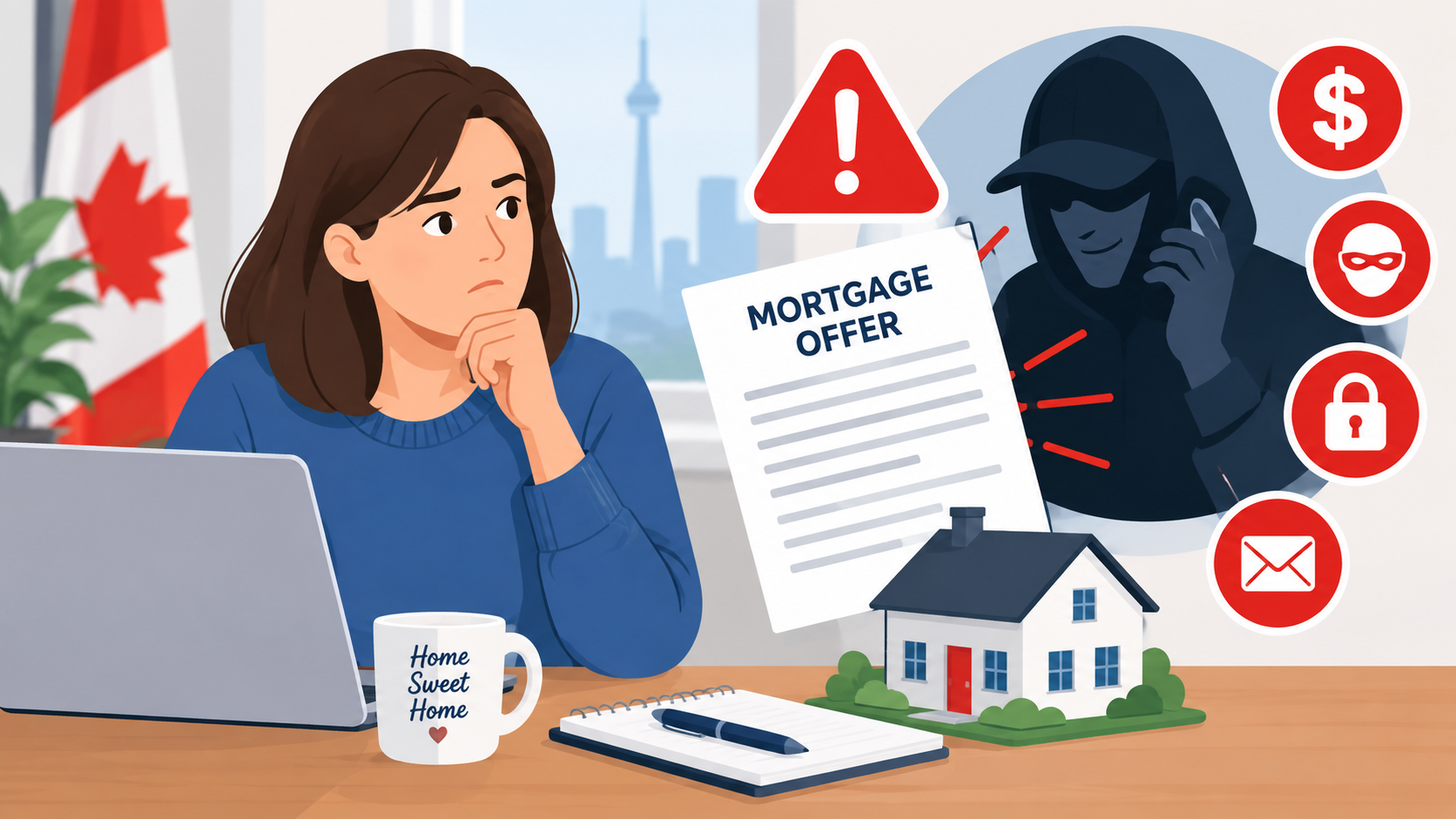
The most common mortgage questions in 2026 come from homeowners who have already been declined once. Being turned down by your bank does not mean you cannot get a mortgage in Canada. It means you were measured against one lender’s rulebook. Canada has three broad lender tiers, A lenders (the big banks), B lenders (alternative lenders), and private lenders, and each one weighs your credit, your income, and your property differently. This guide answers the mortgage questions Ontario homeowners actually ask after a decline, covering renewals, credit scores, self employed income, home equity, and what happens when you have fallen behind on payments. Every consultation with LendToday is free and comes with no obligation.
Table of Contents
ToggleWhy Canadians Are Asking Different Mortgage Questions in 2026
The mortgage questions homeowners bring to a broker today are not the questions they were asking five years ago.
Statistics Canada reported that in the first quarter of 2026, Canadian households owed roughly $1.80 in credit market debt for every dollar of disposable income, a ratio of 179.6 percent. That was the sixth straight quarterly increase. The share of income going toward debt payments also edged up over the same period.
Canada Mortgage and Housing Corporation reported that residential mortgage debt in Canada passed $2.4 trillion in December 2025. CMHC also confirmed that the renewal wave peaked in 2025 and will ease through 2026, but noted that most borrowers renewing their mortgages still face significant increases in their interest costs.
Important to note: those two pressures compound. Higher non mortgage debt raises your debt service ratios. Higher renewal costs raise your monthly payment. Both make it harder to pass a bank’s approval test even when nothing about you has changed.
That is why the mortgage questions in this guide are framed around the decline, not around the approval. Most published mortgage advice in Canada is written for the borrower who gets a yes. This one is written for the borrower who got a no.
Mortgage Questions About Being Declined
Why did my bank decline my mortgage application?
Banks decline applications for a small number of repeatable reasons. Understanding which one applies to you determines what you do next.
- Credit history. Recent late payments, a collection, a judgment, or a consumer proposal on file.
- Debt service ratios. Your gross debt service and total debt service percentages exceed the lender’s internal cap.
- Income type. Self employed, commission, contract, or newly arrived income that does not fit a standard verification model.
- Property type. Rural acreage, a former grow operation, unusual zoning, or a property the lender simply does not want on its books.
- The stress test. Federally regulated lenders must qualify you at a rate higher than the one you were actually offered, which shrinks the amount you can borrow.
Key takeaway: a decline from a chartered bank is a policy outcome, not a verdict on you as a borrower. The same file can be approved by a different lender operating under different rules.
Does being declined hurt my credit score?
The decline itself does not appear on your credit report. The application does, as a hard inquiry.
One hard inquiry has a small and short-lived effect. Several in a short window is a different story, because it signals to future lenders that you have been shopping aggressively and may have been refused.
Common mistake: applying at four or five banks in the same month after the first decline. Each one pulls your credit, each pull registers, and the file looks worse with every attempt.
Can I apply somewhere else right away?
Yes. The better move is to stop applying directly and let a licensed mortgage agent place the file once.
A broker pulls your credit a single time, reviews the reason for the first decline, and matches your situation to a lender whose guidelines actually fit it. If credit is the obstacle, there are lenders who work with damaged credit routinely, and the options for a bad credit mortgage in Ontario are wider than most homeowners assume.
Mortgage Questions About Renewal
What happens if my lender will not renew my mortgage?
Non-renewal is not default. Your lender is simply choosing not to offer you a new term, and you have until the maturity date to arrange financing elsewhere.
Lenders decline renewals when payment history has deteriorated, when the property has changed, or when internal policy has shifted. You are usually notified well in advance, and that notice period is the most valuable thing you have.
Key takeaway: start at least 120 days before your maturity date. A homeowner with four months of runway has real choices. A homeowner with two weeks has almost none.
Do I have to requalify when I switch lenders?
It depends on which of three things you are doing.
- Straight renewal with your current lender. No requalification in most cases.
- Switch or transfer to a new lender, same balance. The new lender underwrites you, so yes.
- Refinance to pull equity or restructure. Full underwriting, including the stress test if the lender is federally regulated.
Common myth: that renewal is automatic and guaranteed. It is not. It is an offer, and offers can be withheld.
Mortgage Questions About Credit Scores
What credit score do I actually need in Canada?
There is no single number, which is why this ranks among the most frequently asked mortgage questions in the country.
The Financial Consumer Agency of Canada notes that credit scores in Canada usually range from 300 to 900, with a higher score being better. What changes is how much weight a lender puts on that number.
A lenders lean heavily on the score. B lenders will look past a weaker score if the rest of the file is strong. Private lenders care far less about the score and far more about the equity in the property.
Can I get a mortgage with bad credit?
Yes, provided there is enough equity in your home to support the loan.
As your credit score falls, lenders shift their focus from you to your property. That is the single most useful thing to understand about alternative lending in Canada. It is also why two homeowners with identical scores can get completely different answers depending on how much equity each of them holds.
Checklist: what to fix before you reapply
- Pull both your Equifax and TransUnion reports and check for errors
- Bring any past-due accounts current, starting with the oldest
- Stop applying for new credit of any kind
- Lower credit card balances relative to their limits
- Do not close old accounts, since length of history helps you
- Gather two years of income documentation before you speak to anyone
Mortgage Questions About Income and Self Employment
Self employed Canadians generate a disproportionate share of mortgage questions, and for a fair reason. The system is built around T4 income.
A salaried applicant hands over a letter and two pay stubs. A business owner hands over two years of tax returns showing income deliberately minimized for tax purposes, and the bank reads that reduced number as the whole picture.
Important to note: the income that makes you efficient at tax time is the income that makes you look weak at mortgage time. These are the same dollars viewed through two opposing lenses.
Alternative lenders handle this differently. Many will consider bank statements, business financials, or a reasonable add back of expenses, rather than reading line 15000 and stopping there. If you own a business, self employed mortgage options exist that a bank branch will never mention to you.
Mortgage Questions About B Lenders and Private Lenders
What is a B lender?
A B lender is a regulated alternative lender, often a trust company or a credit union, that operates outside the strictest bank guidelines. They still verify income and still check credit. They simply apply more flexible thresholds and are willing to look at the full context of a file.
What is a private mortgage?
A private mortgage is funded by an individual investor or an investment corporation rather than a financial institution. The decision rests primarily on the property and the equity position, not on your credit score or your income documentation.
Private mortgages are typically short-term and interest-only, and they are registered on title like any other mortgage.
Is a private mortgage a last resort?
This is one of the mortgage questions that gets answered badly most often.
A private mortgage is a tool with a purpose and an end date, not a permanent arrangement. It is used to stop a power of sale, clear tax arrears, consolidate high interest debt into a single payment, or bridge a gap while credit is repaired. The exit plan matters as much as the loan itself, and any responsible agent will build one with you before the file is submitted. If that is your situation, private mortgages in Ontario are worth understanding properly before you rule them out.
Table: how the three lender tiers compare
| A Lender | B Lender | Private Lender | |
|---|---|---|---|
| Who they are | Chartered banks, monolines | Trust companies, credit unions, alternative lenders | Individual investors, mortgage investment corporations |
| Credit expectation | Strong and clean | Flexible, explanations accepted | Largely secondary |
| Income verification | Strict, document driven | Moderate, alternative documents considered | Minimal |
| Weight on the property | Moderate | Significant | Primary |
| Typical term | Longer terms | Shorter terms | Short term |
| Best suited for | Clean credit, verifiable income | Bruised credit, self employed, unconventional income | Urgent situations, arrears, heavy equity reliance |
| Relative cost | Lowest | Higher than A | Highest |
Key takeaway: moving down the tiers is not a failure. It is a matter of matching your file to a lender whose rules it actually fits, and many homeowners move back up a tier within a term or two.
Mortgage Questions About Accessing Home Equity
Once a bank has declined you, the conversation stops being about your income and starts being about your home equity.
Equity is the difference between what your property is worth and what you still owe against it. The more you hold, the more room a lender has to say yes despite everything else in the file.
That equity can be reached through a refinance, a second mortgage, or a home equity line of credit, and the right choice depends on your existing mortgage terms and what you need the funds for. Common uses include debt consolidation, renovations, an unexpected large expense, or clearing bills that have gone past due.
Important to note: pulling equity from your home converts unsecured debt into secured debt. That usually lowers your monthly cost, but it also puts your property behind the obligation. It is a trade worth making deliberately rather than by default.
Mortgage Questions When You Have Fallen Behind
Falling behind narrows your options. It rarely closes them entirely.
The Canadian Bankers Association reported that in May 2026 there were 14,061 residential mortgages at Canadian banks three or more months in arrears, out of roughly 4.93 million outstanding, an arrears rate of 0.29 percent. That count was up 27.2 percent from a year earlier, with Ontario sitting above the national average.
The number is small in percentage terms. It is not small if you are one of them.
What usually still works:
- Missed mortgage payments brought current through a refinance or second mortgage
- Property tax arrears cleared before the municipality registers a tax sale
- Canada Revenue Agency debt paid out and removed from title
- Multiple past due accounts consolidated into a single monthly payment
Key takeaway: timing drives outcomes here more than any other factor. Options that exist at two missed payments may not exist at six, and options that exist before a power of sale is issued shrink sharply once it is. Timelines vary by lender and by situation, so the honest answer is that acting early typically preserves more choices than waiting.
Frequently Asked Mortgage Questions
Q: How long should I wait to reapply after being declined?
A: There is no fixed waiting period, and waiting is not automatically the right move. What matters is whether anything has changed since the decline.
If the decline was caused by a documentation gap or the wrong lender choice, the file can often go out again immediately through a broker. If it was caused by recent late payments, giving those accounts a few months of clean history first will produce a materially better result.
Q: Will using a B lender or a private lender hurt my credit?
A: No. These are registered mortgages that report and behave like any other mortgage. Paying one on time helps your credit rather than harming it.
The credit damage in these situations almost always came before the mortgage, not from it. Many homeowners use an alternative term specifically to consolidate debt and rebuild, then return to a bank at the next renewal.
Q: Can I get a mortgage while I am in a consumer proposal?
A: Often yes, though the options narrow. Some alternative lenders will consider a file during an active proposal, particularly where there is meaningful equity in the property.
Others require the proposal to be paid out first, and in some cases the mortgage itself is structured to pay it out. This is a situation where speaking to a licensed agent before assuming the answer is worth the phone call.
Q: What documents should I have ready?
A: Government issued photo identification, your current mortgage statement, a recent property tax bill, and proof of income covering two years. If you are self employed, add your two most recent notices of assessment and your business financials.
Having these assembled before the first conversation shortens the process considerably and prevents the back and forth that frustrates most applicants.
Q: Does a mortgage broker charge me a fee?
A: On standard residential deals the lender compensates the brokerage, so there is no direct cost to you. On alternative and private files, a brokerage fee may apply and it must be disclosed to you in writing before you commit to anything.
Any licensed agent in Ontario is required to give you that disclosure. If a fee is ever unclear, ask for it in writing.
Q: What if my property is rural or non standard?
A: Banks frequently decline these on property type alone regardless of how strong you are as a borrower. Acreage, well and septic systems, mixed zoning, and unusual construction all trigger internal restrictions.
Alternative and private lenders assess the property on its actual marketability instead, which is often why a rural file that failed at a bank succeeds elsewhere.
Getting Answers to Your Own Mortgage Questions
The mortgage questions worth asking after a decline are not about whether you can get financing. They are about which tier of lender fits your situation, how much equity you are working with, and how quickly you need to move.
A bank evaluates you against one set of rules. A licensed mortgage agent evaluates your file against dozens.
LendToday is part of a licensed Ontario mortgage brokerage and works with homeowners in exactly these situations every day, including those who have been declined, those facing non renewal, and those who have fallen behind. Call 1-855-242-7732 or start your application at https://www.lendtoday.ca/apply-now-ontario/. The consultation is free and comes with no obligation.