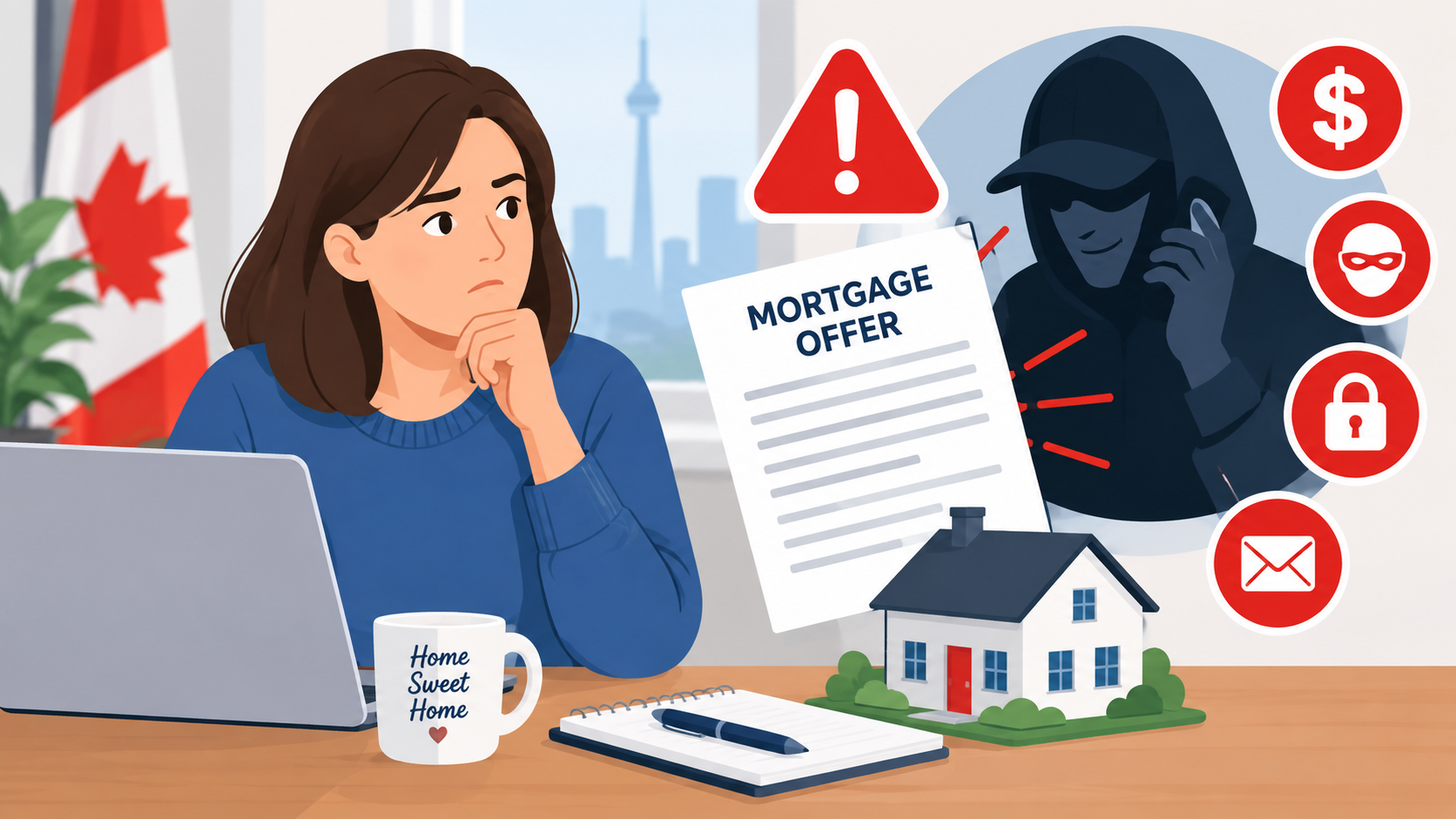
Getting your mortgage declined is one of the more disheartening moments in a financial journey. You filled out the paperwork, you waited for the answer, and the answer came back no. Whether it’s a purchase you were excited about, a refinance you needed for debt relief, or a renewal that suddenly fell through, a mortgage decline can feel like a door slamming shut.
Here is the truth most borrowers don’t hear in that moment: a bank decline is not the end of your mortgage options in Canada. It’s the start of a different conversation. The big banks operate under strict guidelines designed for a specific kind of borrower, and millions of Canadians fall outside those lines for reasons that have nothing to do with whether they can actually afford a mortgage. Self-employment, a credit hiccup, a divorce, a new immigration status, a recent job change, or even just an unusual property type can all trigger a decline at the bank while still leaving plenty of room for approval elsewhere.
This guide walks you through exactly what to do after getting your mortgage declined in Canada, why banks say no in the first place, what your real options look like, and how to set yourself up for a yes the next time you apply.
Table of Contents
ToggleQuick Answer: What to Do When a Bank Declines Your Mortgage
If a bank declines your mortgage application in Canada, your next steps are: ask the lender for the specific reason in writing, pull your credit reports from Equifax and TransUnion, contact a mortgage broker who works with alternative and private lenders, and avoid reapplying immediately with another bank. Most borrowers who are declined by an A lender qualify with a B lender or private lender, often at a slightly higher rate but with realistic terms designed to bridge them back to prime lending within 12 to 24 months. The single biggest mistake is assuming a bank decline means no mortgage is possible.
Why Banks Decline Mortgage Applications in Canada
Banks are federally regulated lenders bound by OSFI Guideline B 20 and internal credit policies that leave very little room for flexibility. Here are the most common reasons a mortgage application gets declined.
Credit Score Below the Threshold
Most A lenders require a credit score of 680 or higher. Even a score in the 660 to 679 range often triggers a decline or a referral to a smaller lender. Recent late payments, collections, or judgments can also cause a decline regardless of your overall score.
Debt Service Ratios Too High
Banks calculate two ratios on every application. Gross Debt Service (GDS) usually needs to be 39 percent or lower, and Total Debt Service (TDS) usually needs to be 44 percent or lower. If your existing debts, including car loans, lines of credit, credit cards, and child support payments, push you past these limits, the bank declines.
Income That Cannot Be Verified the Bank’s Way
This is one of the most common reasons self-employed Canadians get declined. Banks rely heavily on T1 generals, notices of assessment, and T4s. If your tax returns show lower income than your business actually generates, or if you have been self-employed for less than two years, the bank’s calculator says no, even when your real cash flow is strong.
Failure to Pass the Stress Test
Every federally regulated lender must qualify you at the higher of 5.25 percent or your contract rate plus 2 percent. The stress test reduces your borrowing power by roughly 15 to 20 percent compared to what your contract rate alone would allow.
Property Issues
Some properties simply do not fit bank guidelines. Examples include former grow ops, rural properties on large acreages, properties with mixed commercial use, leased land properties, mobile homes, and homes that fail the appraisal due to condition or location.
Recent Bankruptcy, Consumer Proposal, or Late Payments on a Mortgage
Most banks require two years of clean credit history after a discharged bankruptcy or consumer proposal, with re-established credit. A single recent late payment on your existing mortgage can also disqualify a refinance application.
Down Payment Source Problems
Banks need to verify the source of your down payment for 90 days. If money landed in your account recently from an undocumented source, even a legitimate one like a family gift without a proper gift letter, the bank may decline.
Employment Changes
Starting a new job, switching from salaried to commission income, or moving to a probationary period can all flag the file for decline.
The First Five Steps After a Mortgage Decline
What you do in the first week after a decline matters more than most borrowers realize. Here is the playbook.
Step 1: Ask for the Reason in Writing
You have a right to know why your application was declined. Ask the lender, the underwriter, or the mortgage specialist for a written explanation. The specific reason determines what your next move should be. A decline based on credit score is a very different situation than a decline based on property type.
Step 2: Pull Your Credit Reports
Download your free reports from both Equifax and TransUnion. Look for errors, duplicate accounts, accounts that should be closed, and any items you do not recognize. Errors do happen, and disputing them can lift your score within 30 to 60 days.
Step 3: Stop Applying at Other Banks
Every mortgage application creates a hard inquiry on your credit file. Multiple inquiries within a short window can lower your score further and signal to future lenders that you are credit shopping under stress. Pause and plan instead of shotgunning applications across the big six.
Step 4: Contact a Mortgage Broker
A broker has access to A lenders, B lenders, credit unions, monoline lenders, mortgage investment corporations, and private lenders. Many borrowers who are declined by one bank qualify with a different lender that has slightly different policies. A broker can identify the right fit without putting more hard inquiries on your credit file.
Step 5: Understand Your Timeline
If your application is time sensitive, like a purchase with a closing date, the broker needs to know immediately. If you have more flexibility, the broker can help you decide whether to apply now with an alternative lender or wait three to six months to strengthen your file and reapply with an A lender.
Your Real Options After a Bank Decline
Most borrowers do not realize how layered the Canadian mortgage market actually is. Here is what’s available below the A lender tier.
B Lenders
B lenders are regulated alternative lenders that work with borrowers who fall just outside bank guidelines. They typically accept credit scores in the 600 to 680 range, are more flexible on self employed income, and can work with slightly higher debt ratios. Rates are usually 1 to 2 percent higher than A lenders. Examples include Home Trust, Equitable Bank, MCAP, and several credit unions.
Credit Unions
Provincially regulated credit unions are not bound by the federal stress test in the same way. Some credit unions can approve files that federally regulated banks cannot, particularly for self-employed borrowers and borrowers with non-standard properties.
Mortgage Investment Corporations (MICs)
MICs pool investor capital to fund mortgages for borrowers outside bank guidelines. They are regulated, professional, and can move quickly. Rates are higher than B lenders but lower than most individual private lenders.
Private Mortgage Lenders
Private lenders are individuals or small lending entities that focus on the equity in your property rather than your credit or income. They are the most flexible option in the market and the most expensive, with rates typically ranging from 8 to 15 percent. Private mortgages are designed as short-term bridges of 12 to 24 months, not long-term solutions.
A Lender Reapplication After Strengthening Your File
Sometimes the right answer is not a different lender but a stronger application. If your decline was due to a fixable issue like high credit card balances, missing documentation, or a recent job change, three to six months of preparation can get you approved with an A lender after all.
How to Choose Between Your Options
The right path depends on three things: the reason you were declined, your timeline, and your willingness to pay a higher rate temporarily.
If you were declined for a credit score in the 620 to 680 range and you have time, focus on credit rebuilding and reapply with an A lender in three to nine months. If you do not have time, a B lender is your best bet.
If you were declined because of self-employed income, a B lender or credit union with stated income programs is often the right next step. The rate is slightly higher, but the underwriting actually fits how your income works.
If you were declined for high debt ratios, refinancing with a B lender to consolidate debts into the mortgage can lower your total monthly payments and bring your ratios back under control. From there, the path back to an A lender becomes much easier.
If you were declined because of a recent bankruptcy, consumer proposal, or collections, a private lender or B lender that specializes in recovery files can get you approved while you continue rebuilding. Plan a 12 to 24-month exit back to prime.
If you were declined because of the property type, a broker with a specialized lender network is essential. Some properties that banks decline are easily financed by credit unions or private lenders who understand the asset type.
If you were declined and your closing date is days away, a private lender can often fund within 5 to 10 business days. The rate is higher than ideal, but losing the deal and your deposit is usually worse.
What Not to Do After a Mortgage Decline
A few common mistakes can make a difficult situation worse.
Do not apply at multiple banks in quick succession. Each application creates a hard inquiry and lowers your score.
Do not max out credit cards trying to fix the gap. Higher utilization lowers your score further and worsens your debt ratios.
Do not co-sign with someone whose credit is also bruised. Two weak files do not equal one strong file, and you can drag each other down.
Do not panic and accept the first private mortgage offer you get. Rates, fees, and terms vary widely between private lenders. A broker can shop the file and save you thousands.
Do not lie or omit information on your next application. Misrepresenting income, debts, or down payment sources is mortgage fraud and can lead to criminal charges in Canada.
Do not give up on the goal. A bank decline is a detour, not an ending.
Frequently Asked Questions
Can I get approved after my mortgage was declined by a bank in Canada?
Yes. A bank decline does not mean no mortgage is possible. Most borrowers declined by an A lender qualify with a B lender, credit union, mortgage investment corporation, or private lender. A mortgage broker can identify the right alternative based on the specific reason for the decline.
How long should I wait to reapply for a mortgage after being declined?
It depends on the reason. If the decline was based on a fixable issue like high credit card balances or missing documentation, three to six months of preparation may be enough. If the decline was based on a more serious issue like a recent bankruptcy or low credit score, 12 to 24 months may be needed before an A lender will reconsider.
Does a mortgage decline hurt my credit score?
The application itself creates a hard inquiry that can lower your score by a few points. The decline itself is not reported to the credit bureaus. However, multiple applications across multiple banks in a short window can compound the credit impact, which is why working with a broker rather than reapplying directly is usually the smarter move.
Why would a bank decline my mortgage if I have good income?
Income alone does not guarantee approval. Banks also look at credit score, debt service ratios, down payment verification, employment stability, and property type. A borrower with high income but high credit card balances, recent late payments, or a non-standard property can still be declined.
Can a mortgage broker get me approved after a bank turned me down?
Often yes. Brokers have access to lenders that banks do not work with, including B lenders, credit unions, mortgage investment corporations, and private lenders. Each of these has different policies, and a file that one lender declines may be approved by another with no changes required.
What is the difference between a bank decline and a denial?
In Canadian mortgage practice, the terms are used interchangeably. Both mean the lender has reviewed your application and chosen not to proceed. What matters more than the wording is the specific reason given, because that determines your next move.
Can I get a private mortgage immediately after a bank decline?
Yes. Private mortgages can be arranged in 5 to 10 business days, which is why they are often used when a purchase closing is at risk. Private mortgages carry higher rates and fees and are designed as short-term bridges of 12 to 24 months, with a planned refinance back to a B lender or A lender at the end of the term.
Will my mortgage decline show up on future applications?
The application and hard inquiry remain on your credit report for up to six years, but the decline itself is not recorded. Future lenders will see that you applied, not that you were declined. They will, however, make their own decision based on your current credit, income, and equity.
How a Mortgage Broker Helps After a Bank Decline
When you walk into a single bank, you are pitching your file to one underwriter applying one set of guidelines. When you work with a broker, you are pitching your file to a network of lenders, each with slightly different policies.
At LendToday, our team has spent more than three decades helping Canadians find mortgage solutions after a bank has declined them.
When a borrower comes to us after a decline, our process is simple. We review the reason for the decline, pull a complete picture of credit, income, and equity, and identify the lenders most likely to approve the file. We also build an exit strategy from day one, so that even if the first solution is alternative or private, there is a clear plan to move back to prime lending as soon as you qualify.
If you have just been declined for a mortgage, reach out for a no-obligation review. We will give you a straight read on your options and the timeline to get back on track.