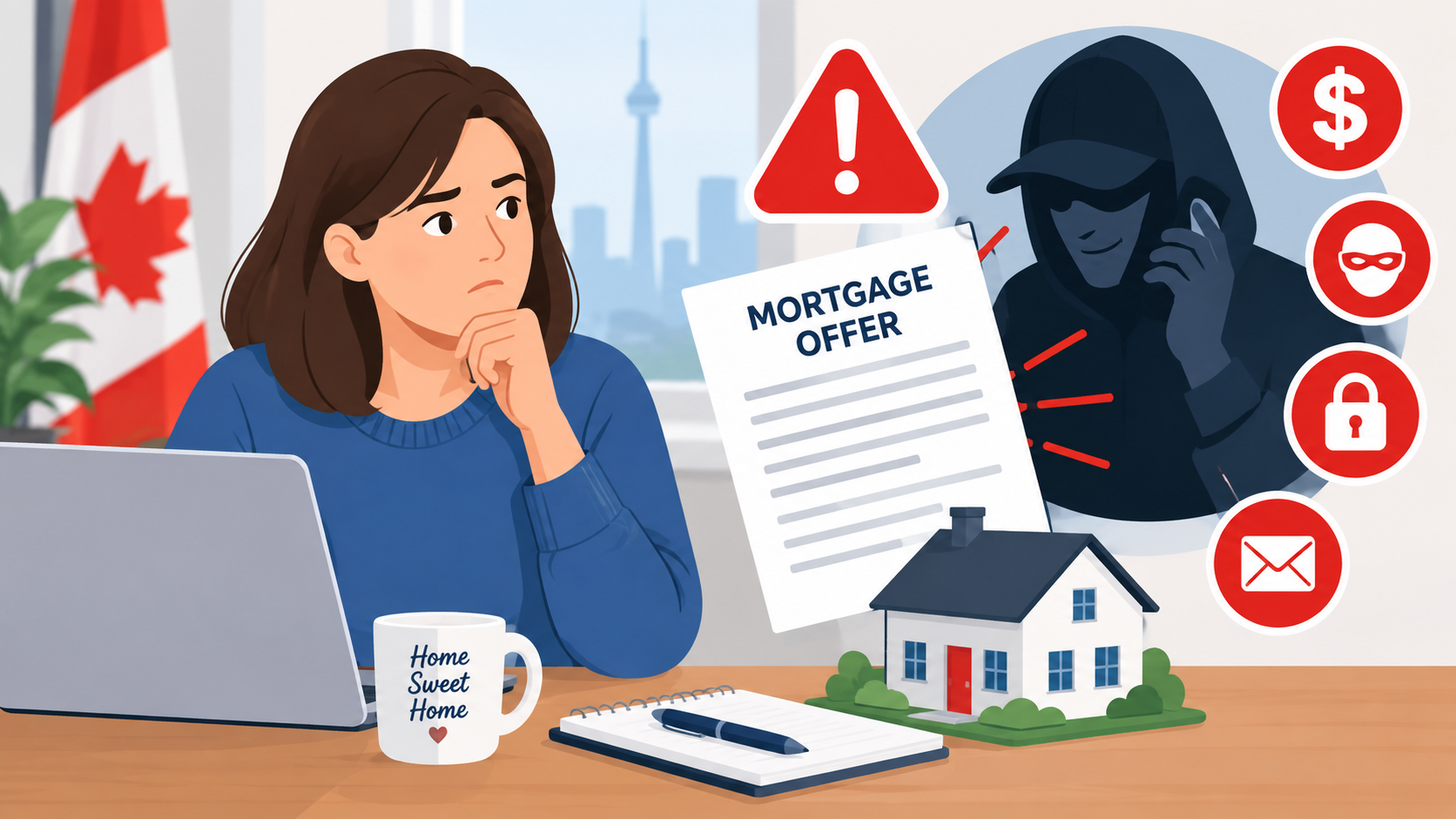
A subprime mortgage is a home loan designed for borrowers who do not qualify for a traditional bank mortgage. In Canada, these loans are offered by B-Lenders and private lenders. If your credit score is below 660, your income is hard to verify, or you have had past financial trouble, an alternative mortgage lender may be your best path to homeownership in 2026. Rates are normally higher than prime, but the approval process is far more flexible. This guide covers how to qualify, what rates to expect, and how to use a subprime mortgage as a stepping stone back to prime lending.
Getting turned down by your bank does not mean the door to homeownership is closed. For hundreds of thousands of Canadians, a subprime mortgage is the bridge between a difficult financial moment and owning a home. In 2026, with tighter bank regulations and rising household debt, more Canadians than ever are exploring this option.
This guide covers what a subprime mortgage is, how it works, who qualifies, and what you should know before applying.
Table of Contents
ToggleWhat Is a Subprime Mortgage in Canada?
A subprime mortgage is a type of home loan offered to borrowers who do not meet the strict eligibility standards set by Canada’s major banks. The word “subprime” refers to the credit profile of the borrower, not the quality of the property or the lender itself.
In Canada, alternative mortgages are most commonly provided by B-Lenders and private lenders. These institutions operate with more flexible underwriting rules, allowing them to approve applicants that banks must turn away due to government regulations like the B-20 mortgage stress test.
How Subprime Mortgages Differ from Prime Mortgages
The core difference between a prime and a subprime mortgage comes down to risk. Prime mortgages go to borrowers with strong credit scores (660+), stable employment income, and low debt ratios. Alternative mortgages are available to borrowers who fall outside those parameters.
Because the risk to the lender is higher, a high risk mortgage comes with higher interest rates and fees. However, a subprime mortgage also comes with a critical advantage: approval when a prime lender says no.
Key Takeaway: According to TransUnion Canada, approximately 12% of all Canadian mortgages are with alternative lenders, and roughly one-third of Canadians carry credit scores considered “below prime.” This is not a niche product. It is a mainstream solution used by everyday Canadians.
Who Is Considered a Subprime Borrower?
A subprime borrower is typically someone whose financial profile does not meet A-Lender standards. Common situations include:
- Credit score below 660 (some B-Lenders accept scores as low as 450)
- Self-employed with income that is difficult to verify through traditional tax returns
- Recent bankruptcy or consumer proposal (within the past 1 to 2 years)
- High debt-to-income ratio that exceeds bank guidelines
- New to Canada with little or no Canadian credit history
- Income from non-traditional sources such as seasonal work, commission, or rental income
Important to Note: Being a subprime borrower does not mean you cannot afford a home. Many Canadians in this category are financially responsible people who have experienced a setback, are self-employed, or have a financial profile that simply does not fit inside the rigid box of a chartered bank.
The Three Tiers of Canadian Mortgage Lending
Canada’s mortgage market operates in three distinct tiers. Understanding each tier is essential before pursuing a subprime mortgage.
A-Lenders: The Big Banks
A-Lenders include Canada’s six major chartered banks (RBC, TD, Scotiabank, BMO, CIBC, National Bank) as well as credit unions and large monoline lenders. They offer the lowest interest rates and best mortgage terms. However, they require borrowers to pass the federal mortgage stress test, maintain a credit score above 660 to 680, and prove income through traditional documentation.
If you fit neatly inside an A-Lender’s box, this is always your first choice. If you do not, this is where a B-Lender or private lender enters the picture.
B-Lenders: Subprime Mortgage Specialists
B-Lenders are regulated Canadian financial institutions that specialize in borrowers who fall just outside the prime lending criteria. Examples include Home Trust, Equitable Bank, Community Trust, and DUCA Credit Union. They are not fringe lenders. They are professional institutions that use what the industry calls “common-sense underwriting” to look beyond a credit score.
A subprime mortgage from a B-Lender typically costs 1% to 2% more in interest than a comparable prime mortgage and usually includes a one-time lender fee of approximately 1% of the loan amount. In exchange, the borrower receives approval flexibility that a major bank simply cannot offer.
Private Lenders: The Last-Resort Bridge
Private lenders are individuals, corporations, or mortgage investment corporations (MICs) that lend their own capital. They operate outside the regulatory framework that governs banks and B-Lenders, which means they can approve virtually anyone, provided there is sufficient property equity to secure the loan.
An alternative mortgage from a private lender carries the highest rates (6.99% to 15%) and is structured as a short-term bridge, typically 6 to 24 months. A reputable mortgage broker will always have a clear exit strategy in place before placing a client with a private lender.
| Feature | A-Lender (Bank) | B-Lender | Private Lender |
|---|---|---|---|
| Min. Credit Score | 680+ | 500 to 659 | None required |
| Interest Rate | ~4.44% | 4.99% to 5.54% | 6.99% to 15% |
| Lender Fee | None | ~1% of loan | 1% to 3% |
| Down Payment | 5% min. | 20% min. | 20% to 35% |
| Max LTV | 95% | 80% | 65% to 75% |
| Max Amortization | 25 years | 30 to 40 years | 1 to 2 years |
| Income Proof | Strict | Flexible | Minimal |
| Self-Employed | Difficult | Accepted | Accepted |
| Stress Test | Required | Usually required | Not required |
Common Myth: “B-Lenders and private lenders are predatory or unregulated.” This is false. B-Lenders like Home Trust and Equitable Bank are regulated by federal and provincial financial authorities. Working with a licensed mortgage broker ensures you are matched with a legitimate, compliant lender.
Why Canadians Need Subprime Mortgages in 2026
Several converging trends have made the subprime mortgage more relevant in 2026 than at almost any point in Canadian history.
The Impact of the Mortgage Stress Test
Canada’s federal B-20 mortgage stress test requires borrowers at A-Lenders to qualify at a rate significantly above the actual contract rate. For many Canadians with moderate incomes or higher debt loads, this test pushes them out of the prime lending market entirely, even if they can comfortably afford their actual monthly payments.
This is one of the primary reasons demand for a subprime mortgage from a B-Lender has grown steadily since the B-20 rules were tightened in 2018.
Rising Debt Levels and Tighter Bank Rules
Canadian households carry some of the highest debt-to-income ratios in the developed world. According to CMHC data, mortgage borrowing hit record levels in recent years, with households adding over $100 billion in mortgage debt in a single year during the pandemic period. Higher total debt reduces the likelihood of passing strict bank qualification tests.
Additionally, the growth of self-employment and gig work means a growing segment of Canadians cannot provide the two-year verified income history that A-Lenders require. For these borrowers, an alternative mortgage lender is not a last resort. It is the right tool for their situation.
Key Takeaway: In the last quarter of 2024, over 30% of new Canadian mortgages were issued by non-bank lenders, including B-Lenders, credit unions, and mortgage investment corporations. The subprime mortgage market is a significant and growing portion of the Canadian lending landscape.
How to Qualify for a Subprime Mortgage in Canada
Qualifying for a subprime mortgage is more accessible than most people expect. Here is what lenders actually look at.
Key Qualification Factors
| Qualification Factor | What Subprime Lenders Look For |
|---|---|
| Property Value / Equity | Minimum 20% equity or down payment |
| Credit Score | 500+ for B-Lenders; private lenders may have no minimum |
| Income Documentation | Flexible: bank statements, self-declared income accepted |
| Debt-to-Income Ratio (GDS/TDS) | B-Lenders allow higher ratios than prime banks |
| Down Payment Source | Gifted, borrowed, or savings accepted by most B-Lenders |
| Property Type | Must be in a marketable location; rural may limit options |
| Purpose of Mortgage | Purchase, refinance, renewal, or equity takeout all eligible |
What to Expect from the Application Process
Most Canadians access subprime mortgages through a licensed mortgage broker. B-Lenders and most private lenders do not deal directly with the public. A broker who specializes in alternative lending will have established relationships with multiple subprime mortgage lenders and can compare offers on your behalf.
Here is a simplified view of the process:
- Step 1: Consult with a mortgage broker to review your financial situation and credit profile
- Step 2: Gather documentation including bank statements, tax returns, self-declared income letters, and property details
- Step 3: The broker submits your application to suitable B-Lenders or private lenders
- Step 4: The lender orders a property appraisal to confirm the home’s market value
- Step 5: Approval is issued, terms are reviewed, and the mortgage closes
Common Mistake: Applying directly to multiple lenders before speaking with a broker. Each credit inquiry can lower your credit score by a few points. A mortgage broker submits one application and shops it to multiple subprime mortgage lenders without triggering multiple credit hits.
Subprime Mortgage Rates in Canada 2026
Rates for a subprime mortgage are higher than prime rates, reflecting the additional risk the lender absorbs.
Here is where rates generally sit so far in 2026:
- A-Lender (prime) 3 and 5-year fixed: approximately 4.44%
- B-Lender subprime mortgage: approximately 4.99% to 5.54% depending on credit profile
- Private lender high risk mortgage: approximately 6.99% to 15%
- Second mortgage from a B-Lender: starting around 8.5%
- HELOC in second position: starting around 7.49%
- *rates are subject to change without notice
While subprime mortgage rates are higher than what a bank offers, they remain far below alternatives like credit cards (19% to 22%) or unsecured personal loans (11% to 18%). For borrowers using alternative lenders to consolidate high-interest debt, the savings can be substantial even at a higher mortgage rate.
Important to Note: B-Lender subprime mortgage terms are typically 1 to 3 years, not the 5-year terms common with prime mortgages. This shorter term is intentional. It gives borrowers time to improve their credit profile so they can refinance with a prime lender at renewal.
The Exit Strategy: Moving from Subprime to Prime
One of the most important things to understand about a subprime mortgage is that it should be temporary. A responsible mortgage broker will not place a client in a subprime mortgage without a clear exit strategy: a realistic plan to move into prime lending within 1 to 3 years.
Steps that help borrowers transition from subprime to prime include:
- Make all mortgage payments on time to rebuild your payment history
- Pay down revolving credit (credit cards and lines of credit) to improve utilization ratios
- Avoid new credit applications that trigger hard inquiries
- Dispute any inaccurate items on your TransUnion or Equifax credit report
- Build documented income history, especially if you are self-employed
Most borrowers who enter the subprime mortgage market with a plan and a good broker successfully transition to A-Lender or B-Lender rates within two to three years.
Common Myths About Subprime Mortgages
Common Myth 1: “A subprime mortgage is like the predatory loans that caused the 2008 financial crisis.”
Fact: The Canadian subprime mortgage market operates under strict provincial and federal regulations. Unlike the US market in the early 2000s, Canadian subprime lenders require meaningful equity (typically 20% or more), do not offer no-documentation loans, and are subject to anti-predatory lending laws.
Common Myth 2: “Getting a subprime mortgage will permanently damage my financial future.”
Fact: A subprime mortgage used correctly is a bridge, not a trap. Most borrowers use the 1 to 3-year term to stabilize their finances and improve their credit, then refinance at significantly better rates.
Common Myth 3: “Only people with terrible credit need a subprime mortgage.”
Fact: Many subprime mortgage borrowers have decent credit but are self-employed, recently divorced, new to Canada, or investing in a property type that banks will not finance. The subprime mortgage is about situation, not character.
Frequently Asked Questions
Q: What credit score do I need for a subprime mortgage in Canada?
A: There is no universal minimum for a subprime mortgage. B-Lenders typically accept credit scores as low as 500, while some private lenders have no minimum credit score requirement at all. A higher score will still result in better rates and terms even within the subprime mortgage category. A score of 580 to 620 gives you access to a reasonable range of B-Lender programs.
The most important factor for private lenders is not your score but the equity in the property.
Q: How much does a subprime mortgage cost compared to a bank mortgage?
A: A subprime mortgage from a B-Lender typically carries an interest rate 1% to 2% higher than a comparable prime rate, plus a one-time lender fee of approximately 1% of the mortgage amount. Private lender subprime mortgage rates range from 6.99% to 15%, with lender fees of 1% to 3%. You will also pay for a property appraisal, typically between $300 and $500.
While costs are higher, a subprime mortgage remains far cheaper than carrying credit card debt or missing out on homeownership entirely.
Q: Can I get a subprime mortgage after a bankruptcy or consumer proposal?
A: Yes. A B-Lender can often approve a subprime mortgage as early as one year after a bankruptcy discharge or consumer proposal completion. A-Lenders and CMHC-insured mortgages typically require a waiting period of 1.5 to 2 years post-discharge. Private lenders may have no waiting period at all, provided you have sufficient property equity.
Your mortgage broker will identify which subprime mortgage lenders have the most favourable post-bankruptcy policies.
Q: Do subprime mortgages require a larger down payment?
A: Yes. Most subprime mortgages require a minimum down payment of 20%, compared to as little as 5% for insured mortgages through A-Lenders. This is because CMHC mortgage insurance is not available for subprime mortgages. B-Lenders will typically finance up to 80% of the property’s value. Private lenders are often more conservative, with maximum LTV ratios of 65% to 75%, especially for properties outside major urban markets.
Q: How do I find a reputable subprime mortgage lender in Canada?
A: The best way to access subprime mortgage lenders is through a licensed mortgage broker. B-Lenders and most private lenders do not deal directly with the public. A broker who specializes in alternative lending will have established relationships with multiple subprime mortgage lenders, can compare offers on your behalf, and is legally obligated to act in your best interest.
Look for a broker licensed with the Financial Services Regulatory Authority of Ontario (FSRA) or the equivalent body in your province.
Is a Subprime Mortgage Right for You?
A subprime mortgage is not a penalty for past financial mistakes. It is a practical financial tool for Canadians whose situation does not fit inside the rigid approval criteria of a major bank. In 2026, with rising housing costs, a complex income landscape, and strict stress test rules, more Canadians than ever are finding that B-Lenders and private lenders provide the path forward that A-Lenders cannot.
The key is to enter a subprime mortgage with a plan. Work with a qualified mortgage broker, understand your rates and fees, and use the term to strengthen your financial position so you can move into prime lending at renewal.
If you have been declined by a bank or are not sure where to start, LendToday.ca specializes in connecting Canadians with the right subprime mortgage solution for their unique situation. Our team works with leading B-Lenders and private lenders across Ontario and Canada to find approvals where traditional lenders cannot.
Ready to explore your options? Contact LendToday.ca today for a free, no-obligation consultation. Our licensed mortgage brokers specialize in B-Lender mortgages, private mortgages, bad credit mortgages, home equity loans, and mortgage refinancing.
Ready to Explore Your Options?
Contact LendToday.ca today for a free, no-obligation consultation. Our licensed mortgage brokers specialize in B-Lender mortgages, private mortgages, bad credit mortgages, home equity loans, and mortgage refinancing.