Virtual home tours let Canadian buyers explore properties remotely using 3D walkthroughs, live video showings, and interactive floor plans. They have become a standard part of the real estate process, particularly for out-of-province and relocation buyers. While virtual home tours offer real convenience, they have limits. Understanding what they show and what they miss, knowing how to protect yourself with a conditional offer, and securing the right mortgage financing before you shop are the three most important things you can do when buying a home you have only seen on a screen.
What Is a Virtual Home Tour?
A virtual home tour is a digital viewing experience that allows a prospective buyer to explore a property without visiting it in person. Instead of scheduling a physical showing, buyers can walk through a home using their computer, tablet, or smartphone from anywhere in the country or the world.
Virtual home tours have moved well beyond slideshows of listing photos. Today, they range from self-guided 3D experiences to live video calls where a real estate agent walks through the property in real time. For Canadian buyers, they have become a routine part of the home purchase process, not a workaround.
Types of Virtual Home Tours
There are several formats you are likely to encounter when shopping for real estate online:
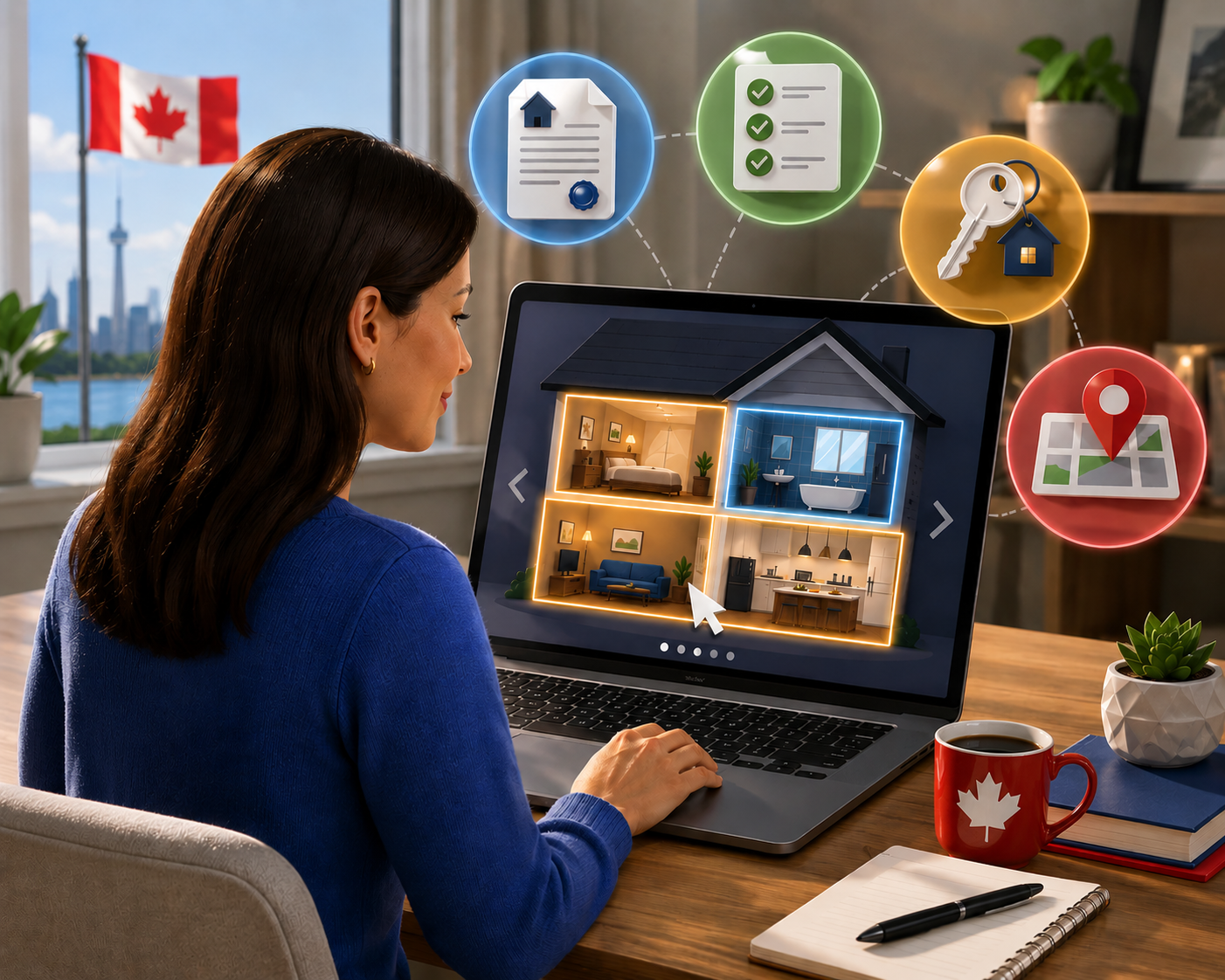
3D interactive tours use camera technology to stitch together a navigable model of the home. Matterport is the most widely used platform in Canada. Buyers can move room to room, zoom in on details, and view a dollhouse-style floor plan from above. These are self-guided and available any time through the listing.
360-degree photo tours are a simpler version of the 3D tour. They use panoramic photos taken from fixed points in each room. They are less immersive than a full 3D model but are faster and cheaper for sellers to produce, so they are common on mid-range listings.
Live video showings are real-time walkthroughs conducted over FaceTime, Zoom, or another video platform. A buyer’s agent or the listing agent moves through the home while the buyer watches and asks questions live. This format is particularly useful for buyers who want to direct the tour and ask about specific details they notice.
Pre-recorded video walkthroughs are professionally filmed or agent-filmed videos uploaded to the listing. They give a better sense of flow and proportion than photos, but cannot be paused, zoomed, or redirected the way a live or 3D tour can.
How Virtual Tours Differ from Photos and Video Walkthroughs
Listing photos are curated. A photographer chooses the angle, the lighting, and what gets left out of the frame. A virtual home tour, particularly a 3D model, gives buyers far more control over what they look at. You can linger on the ceiling, back up to see the full width of a room, or check whether two rooms actually connect the way the floor plan suggests.
Key takeaway: A virtual home tour is not a replacement for a physical visit, but it is a significant upgrade over photos for forming a realistic first impression of a property.
Why Virtual Home Tours Have Become So Common in Canada
Virtual home tours existed before 2020, but they were considered a premium feature rather than a standard listing element. That changed quickly, and the shift has held.
The Role of the Pandemic in Accelerating Adoption
When in-person showings were restricted across Ontario and much of Canada in 2020 and 2021, virtual home tours became the primary way buyers could evaluate properties. Real estate boards, brokerages, and individual agents adopted the technology rapidly out of necessity.
The convenience proved sticky. Even after restrictions were lifted, many buyers and agents continued to use virtual tours to pre-qualify properties before committing to an in-person visit. Sellers also recognized that listings with high-quality virtual tours attracted more serious inquiries and spent less time on the market.
According to the Canadian Real Estate Association, digital tools, including virtual tours, are now considered standard practice for listing preparation in most urban and suburban markets across the country.
Out-of-Province and Relocation Buyers
Canada’s internal migration patterns have made virtual home tours especially important. Buyers relocating from Toronto to smaller Ontario cities, from Ontario to Atlantic Canada, or from any province to another cannot easily attend multiple in-person showings before making a decision.
Important to note: Relocation buyers and out-of-province buyers are among the heaviest users of virtual home tours in Canada, and many have purchased properties after doing no in-person viewing at all prior to making a conditional offer.
Virtual home tours also serve international buyers, new Canadians purchasing before arriving, and buyers in remote communities who face long travel distances to reach listings in their target area.
What You Can (and Cannot) Learn from a Virtual Home Tour
A virtual home tour gives you a lot. It does not give you everything. Knowing the difference is how you avoid costly surprises after an offer is accepted.
What Virtual Tours Show Well
Virtual home tours are genuinely useful for evaluating:
- Room size and proportions relative to each other
- Layout and flow between spaces
- Natural light at the time of filming
- Finishes, fixtures, and the visible condition of surfaces
- Proximity of rooms (whether the primary bedroom is beside a main living area, for example)
- The presence or absence of features like a basement, garage, or main floor laundry
3D tours in particular are excellent for floor plan comprehension. Buyers who have used Matterport tours consistently report that they arrived at in-person showings with a much clearer sense of how the home was configured than they would have had from photos alone.
What Virtual Tours Miss
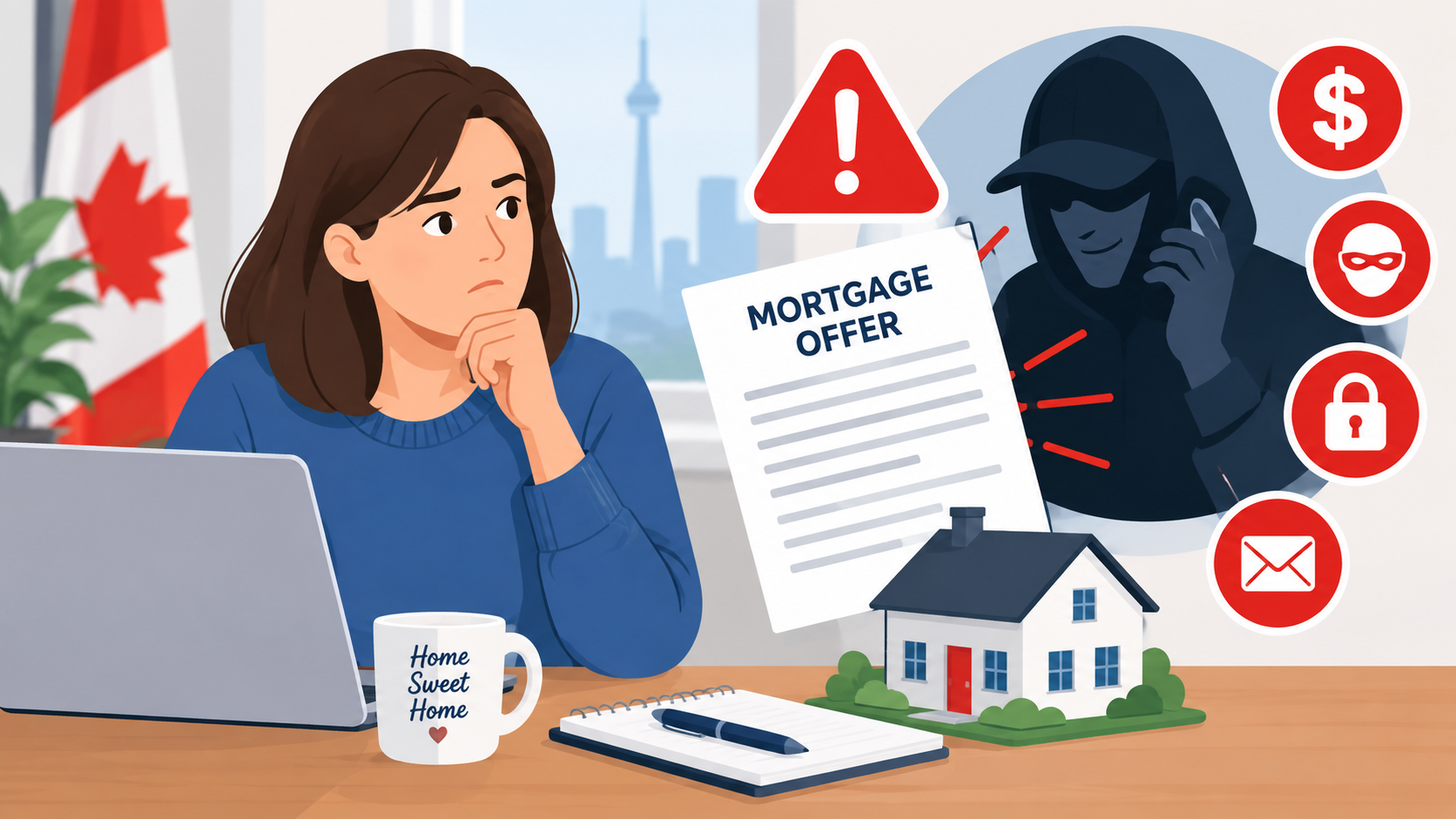
Common mistake: Assuming a virtual home tour tells you everything you need to know about a property’s condition.
Virtual tours cannot convey:
- Smell, including mould, moisture, pet odours, or cigarette smoke
- The feel of the neighbourhood, street noise, or proximity to adjacent properties
- Sounds from neighbours, mechanical systems, or nearby roads
- The actual quality of finishes up close (what looks like hardwood may be laminate)
- Structural concerns, roof condition, foundation issues, or anything in the walls
- Basement moisture or crawlspace conditions
- The accuracy of room measurements (camera lenses distort perceived size)
A virtual home tour should be treated as a screening tool. It helps you decide whether a property is worth pursuing further, not whether it is ready for an unconditional offer.
How to Evaluate a Property Using a Virtual Home Tour
Getting the most out of a virtual home tour requires approaching it with the same critical eye you would bring to a physical showing.
Questions to Ask During a Virtual Showing
If you are doing a live video showing with an agent, ask them to:
- Open and close interior doors to check alignment and swing clearance
- Walk the perimeter of each room slowly so you can observe baseboards, corners, and ceilings
- Show the mechanical room, electrical panel, and water heater
- Walk outside to show the condition of the foundation, roof line, eavestroughs, and lot
- Check under the sink in the kitchen and bathrooms
- Turn lights on and off to identify non-functioning fixtures
- Show any area the camera has not captured clearly
Using Virtual Tours Alongside Other Research Tools
A virtual home tour works best as one layer of a multi-source evaluation. Combine it with:
MLS listing data: Check the listed square footage, lot size, age of the home, and tax history.
Google Street View: Evaluate the street, neighbouring properties, and visible exterior condition across different seasons if older imagery is available.
Satellite and aerial maps: Understand the lot shape, proximity to commercial uses, green space, or highways.
Disclosure documents: Ask your agent to obtain the seller’s disclosure form before you commit to a showing or an offer. In Ontario, sellers are required to disclose known material defects.
Key takeaway: A well-prepared buyer uses a virtual home tour to build a picture and then uses every other available resource to fill in the gaps before writing an offer.

Making an Offer on a Home You’ve Only Seen Online
It is possible to make a competitive offer on a home you have only viewed through a virtual home tour. Buyers do it regularly. The key is building appropriate protections into the offer itself.
Conditional Offers and Their Importance
A conditional offer allows you to make an offer that is binding only if certain conditions are met within a defined period. The two most critical conditions when buying based on a virtual tour are:
Condition on inspection: This gives you the right to hire a licensed home inspector to physically evaluate the property. The inspector will identify deficiencies that a virtual tour cannot capture, including structural issues, roof condition, plumbing, electrical, HVAC, and moisture concerns. If the inspection reveals serious problems, you can renegotiate or walk away.
Condition on financing: This protects you if your mortgage approval changes between the offer and the closing date. Even with a pre-approval in place, lenders can decline specific properties based on appraisal results, title issues, or changes in your financial situation.
Common myth: In a competitive market, you have to go unconditional to win. While sellers prefer unconditional offers, many transactions still close with conditions. Waiving conditions on a property you have only seen through a virtual home tour is a significant financial risk.
Working with a Buyer’s Agent Remotely
A trusted buyer’s agent is your eyes and ears on the ground when you cannot be there in person. Ask your agent to do a second walkthrough on your behalf after your virtual showing and report back on anything that concerns them. Ask for their candid assessment of the neighbourhood, the street, and the home’s condition relative to the asking price.
Mortgage Financing When You’re Buying Remotely
Sorting out your mortgage financing before you shop is important for any buyer. For buyers relying on virtual home tours to purchase remotely, it is essential.
Getting Pre-Approved Before You Shop
A mortgage pre-approval gives you a confirmed borrowing limit based on your income, credit, and debt profile. It tells you what price range is realistic, signals to sellers and agents that you are a serious buyer, and speeds up the removal of financing conditions once your offer is accepted.
Important to note: A pre-approval is not a guarantee of final mortgage approval. The lender must still approve the specific property, and the home must appraise at or above the purchase price for most lenders to advance the funds.
How Private and Alternative Lenders Approach Remote Purchases
Not every buyer qualifies for a traditional bank mortgage. Self-employed buyers, borrowers with bruised credit, those in consumer proposals, or buyers purchasing non-standard properties often turn to alternative or private lenders to make a purchase work.
Private lenders focus primarily on the property itself rather than the borrower’s income profile. The key metric is the loan-to-value ratio (LTV), meaning how much you are borrowing relative to the appraised value of the home. Because the property is the security, private lenders require a current appraisal regardless of whether the purchase was based on a virtual home tour or an in-person visit.
Working with a mortgage broker who has access to private lending products gives remote buyers more options, particularly when the transaction timeline is tight or the property type falls outside conventional lender guidelines.
Using Home Equity to Fund a Remote Purchase
Some buyers fund a remote purchase, or the down payment for one, by accessing equity in a property they already own. A home equity loan or second mortgage against your current home can provide the capital needed for a down payment, bridging costs, or the full purchase of a smaller investment property.
If you are considering this approach, it is worth speaking with a mortgage professional early in the process. Lenders will want a current appraisal of your existing property, and processing timelines matter when you are working within a conditional offer window.
If you own a home in Ontario and want to understand how much equity you may be able to access, LendToday.ca can help you explore your options.
Checklist: Before You Make an Offer Based on a Virtual Home Tour
Use this list before writing any offer on a property you have evaluated primarily online:
- Completed a 3D or live video virtual home tour of the property
- Reviewed all listing documents, including disclosure forms and property history
- Researched the neighbourhood using Street View, satellite maps, and local sold data
- Confirmed your financing with a pre-approval from a lender or mortgage broker
- Asked your buyer’s agent to do an in-person walkthrough and report back
- Included a condition on home inspection in your offer
- Included a condition on financing in your offer
- Reviewed the timeline for condition removal and confirmed it is realistic
- Identified a licensed home inspector available in the property’s location
- Confirmed the closing timeline works with your current housing situation
Virtual Home Tours and the Future of Canadian Real Estate
Virtual home tours are not going away. The technology continues to improve, and buyer expectations have shifted permanently. Listings without any virtual component are increasingly at a disadvantage, particularly in markets where buyers are coming from outside the region.
Emerging developments include AI-powered tour guides that answer questions about a property during the walkthrough, augmented reality tools that let buyers virtually stage or renovate a space before purchasing, and integration with mortgage calculators and neighbourhood data directly within the tour interface.
For Canadian buyers, the practical takeaway is that virtual home tours are a legitimate and increasingly reliable way to research a home purchase. The tools are better than they were five years ago, and they will be better still five years from now. Used carefully, with the right financing in place and appropriate protections built into your offer, buying a home you first saw online is not the leap of faith it once seemed.
FAQ
Q: Can I legally buy a home in Canada without ever seeing it in person? A: Yes. There is no legal requirement in Canada for a buyer to physically visit a property before completing a purchase. Remote and virtual purchases occur regularly, particularly among out-of-province buyers and international purchasers. That said, most real estate professionals strongly recommend at minimum a conditional offer with an inspection clause so you have the opportunity to evaluate the property in person before the sale is finalized.
Q: Are virtual home tours accurate? A: 3D virtual home tours produced with platforms like Matterport are generally accurate representations of a property’s layout and visible condition at the time of filming. However, wide-angle lenses can make rooms appear larger than they are, and tours cannot capture condition issues that are hidden behind walls, or detectable only through smell or physical inspection. Treat a virtual home tour as a strong first impression, not a complete picture.
Q: What should I look for during a virtual home tour? A: Pay attention to room proportions and how spaces connect, the condition of visible surfaces like flooring, walls, and ceilings, the presence of natural light, and the layout of the kitchen and bathrooms. Ask your agent to show you the mechanical room, electrical panel, and exterior during a live video showing. Look for anything that appears patched, painted over, or recently renovated without explanation.
Q: Can I get a mortgage for a home I’ve only seen through a virtual tour? A: Yes. Your lender or mortgage broker will require a property appraisal regardless of how you first viewed the home. The appraisal is conducted in person by a licensed appraiser and confirms the property’s market value for lending purposes. Your mortgage application process is the same whether you toured the home virtually or in person.
Q: What is the biggest risk of buying a home based on a virtual home tour? A: The biggest risk is missing condition issues that a virtual tour cannot capture, including moisture, structural defects, pest activity, and the true quality of finishes and mechanical systems. This is why a condition on home inspection is so important for buyers who have not visited a property in person before making an offer. A few hundred dollars spent on an inspection can prevent tens of thousands in unexpected repair costs after closing.
Q: How does home equity financing work for a remote purchase? A: If you own a home with available equity, a lender can register a charge against your existing property and advance funds you can use toward a down payment or purchase. The amount available depends on your current property value, your existing mortgage balance, and the lender’s LTV requirements. Private lenders in Ontario can often move faster than traditional banks, which matters when you are working against a conditional offer deadline.
Buying a home online? Let’s chat about your mortgage financing options and how to protect your new investment.