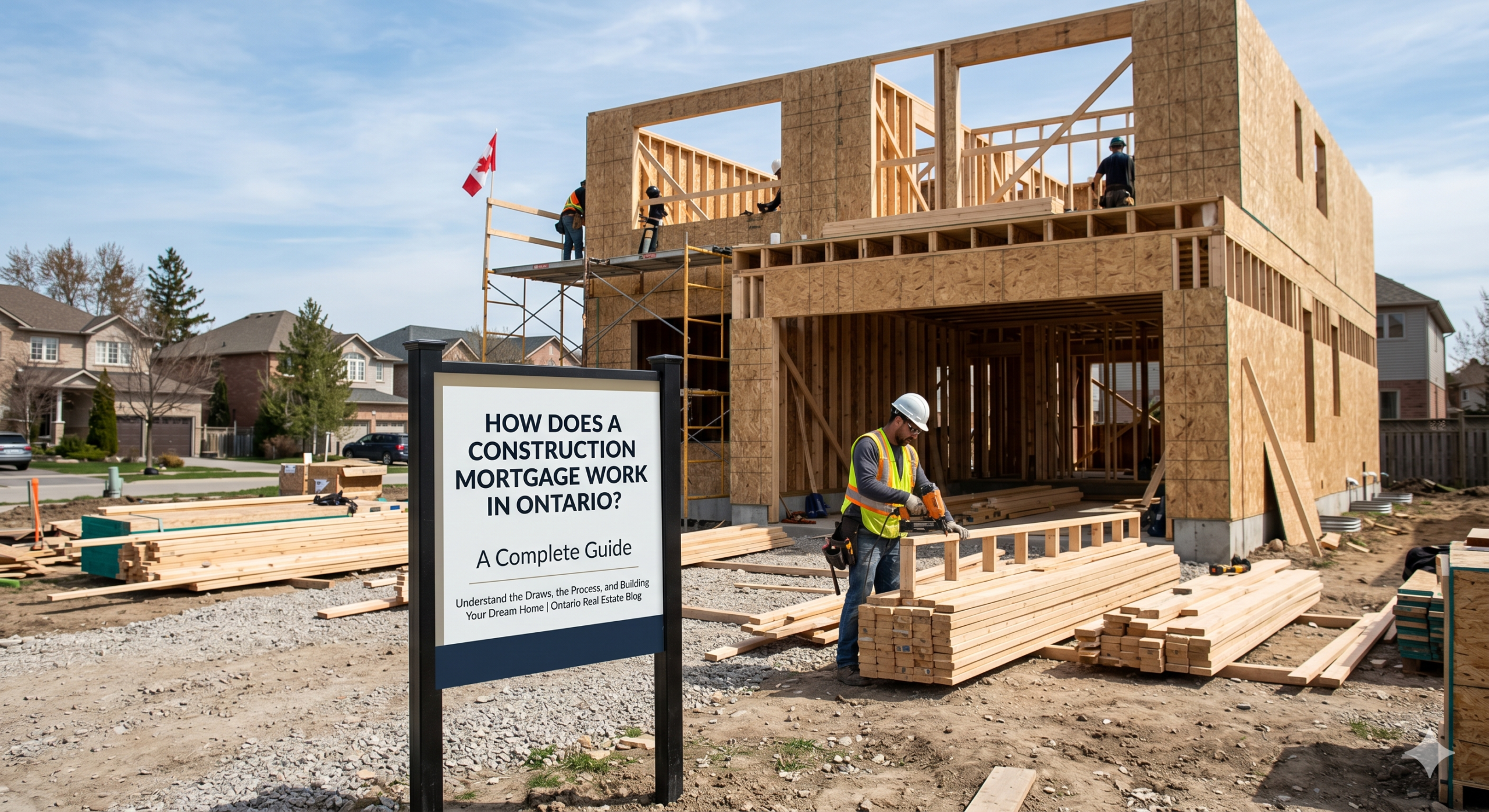
A construction mortgage in Ontario works differently from a typical home loan funds are released in stages as your build progresses, not in a single lump sum at closing. If you’re planning to build a custom home, tear down and rebuild, or finance a major renovation, understanding how these loans function is essential before you break ground.
This guide walks through how a construction mortgage in Ontario works from application to final occupancy, including draw schedules, down payment requirements, qualification criteria, and what to do if traditional banks turn you down.
Table of Contents
ToggleWhat Is a Construction Mortgage in Ontario?
A construction mortgage is a short-term financing solution designed to fund the building of a new home or substantial renovations. Unlike a standard mortgage, where the lender disburses the full loan amount at closing, a construction mortgage in Ontario releases funds incrementally, called “draws” as specific milestones are reached during the build.
Once the home is complete and you take occupancy, the construction loan is typically converted into a conventional residential mortgage. This two-stage structure allows borrowers to manage cash flow during a build and ensures the lender’s funds are tied to verified progress on the property.
Construction mortgages in Ontario are most commonly used by:
- Homeowners building a custom home on owned or newly purchased land
- Buyers purchasing a home through a registered builder before completion
- Property owners undertaking major renovations or additions
- Investors developing residential projects
How a Construction Mortgage Differs From a Traditional Mortgage
The biggest difference lies in how and when money changes hands. A traditional mortgage funds the full purchase price on closing day. A construction mortgage funds the build in stages, with each draw tied to an inspection confirming a specific phase has been completed.
Other key differences include:
- Interest-only payments: During construction, you typically only pay interest on the funds advanced, not the full loan amount.
- Higher interest rates: Construction loans usually carry rates 1–3% above conventional mortgages due to elevated lender risk.
- Stricter qualification: Lenders require detailed plans, builder credentials, fixed-price contracts, and realistic timelines.
- Mandatory inspections: An appraiser or inspector visits the site before each draw is released.
- Larger down payment: Most lenders expect 20–35% down, sometimes more depending on your credit and the project type.
Types of Construction Mortgages Available in Ontario
There are two main types of construction financing in Ontario, and the right one depends on whether you’re hiring a builder or managing the build yourself.
Progress Draw Mortgage
A progress draw mortgage—also called a self-build construction mortgage is for homeowners building on their own land, often acting as their own general contractor or working with a custom builder. Funds are released directly to you or your builder at each pre-agreed stage of construction. This option requires the most documentation, the largest down payment, and the most active lender oversight.
Completion Mortgage
A completion mortgage, sometimes called a builder’s mortgage, is for buyers purchasing a new build from a registered builder. The builder finances the construction themselves, and the lender provides the full mortgage on closing, when the home is complete and ready for occupancy. This is the more common arrangement for buyers in subdivisions or new developments.
How the Construction Draw Schedule Works in Ontario
The draw schedule is the backbone of any construction mortgage in Ontario. Each draw releases a portion of the total loan after an inspection confirms work has been completed to that stage. While exact percentages vary by lender, a typical four-draw schedule looks like this:
Draw 1 – Foundation Stage (approximately 15%) Released after excavation, foundation pour, and backfill are complete. The home is at grade level.
Draw 2 – Lock-Up Stage (approximately 30–40%) Released once framing, roof, exterior walls, windows, and exterior doors are installed. The structure can be locked.
Draw 3 – Drywall Stage (approximately 20–25%) Released after rough plumbing, electrical, HVAC, insulation, and drywall are installed.
Draw 4 – Completion Stage (approximately 20–25%) Released when the home is finished, the occupancy permit is issued, and final inspections are complete.
Some lenders use a three-draw or five-draw schedule, and percentages can shift based on appraised value at each stage. Importantly, you’ll need to cover construction costs out of pocket between draws and wait for inspection sign-off before reimbursement.
Down Payment Requirements for a Construction Mortgage in Ontario
Down payment expectations are higher for construction financing than for a standard purchase. Most Ontario lenders require:
- 20% minimum for completion mortgages with insured financing through a registered builder
- 25–35% for progress draw or self-build mortgages with A lenders
- 35% or more for borrowers using alternative or private lenders, particularly on equity-based deals
The land itself can sometimes count toward your down payment. If you already own the lot free and clear, the appraised land value may be applied to your equity contribution, reducing the cash you need at closing.
Interest Rates and Qualification Criteria
Construction mortgage rates in Ontario typically run higher than standard mortgage rates. A few factors influence what you’ll pay:
- Your credit score and overall financial profile
- The size of your down payment
- Whether you’re working with an A lender, B lender, or private lender
- The type and complexity of the build
- Current market interest rates
To qualify with a major bank or credit union, you’ll generally need:
- A credit score of 680 or higher
- Verifiable income that meets debt service ratios (GDS under 39%, TDS under 44%)
- A detailed construction budget and timeline
- Fixed-price contracts with licensed contractors
- Builder registration with Tarion, Ontario’s new home warranty program, for builder-built homes
- Proof of building permits and approved drawings
- Property insurance and course-of-construction coverage
The Construction Mortgage Application Process
Applying for a construction mortgage in Ontario involves more documentation and lender involvement than a standard purchase. Here’s what to expect:
- Pre-approval: Submit income, credit, and project details to confirm your borrowing capacity.
- Project documentation: Provide architectural drawings, building permits, fixed-price contracts, and a detailed cost breakdown.
- Land appraisal: The lender appraises the lot and the projected “as-complete” value of the finished home.
- Loan approval: Final approval is conditional on the appraisal and the construction plan.
- Closing on land or initial advance: If you’re buying the lot, the first advance funds the purchase.
- Construction begins: Work starts according to your timeline.
- Draw inspections: An appraiser visits at each stage to verify completion before the next draw is released.
- Final inspection and conversion: Once the occupancy permit is issued, the construction loan converts to a standard mortgage.
The full process from application to occupancy typically takes 9–18 months, depending on the size and complexity of the build.
What If You Don’t Qualify With a Bank?
Major banks have strict requirements for construction mortgages, and many self-employed borrowers, those with bruised credit, or buyers with non-traditional income are declined, even when they have substantial equity. This is where alternative and equity-based lenders come in.
At LendToday.ca, we work with Ontario homeowners and self-builders who don’t fit the conventional bank mold. Equity-based construction financing focuses on the value of your land and the projected value of the completed home, rather than traditional income verification or strict credit benchmarks. This can be especially useful for:
- Self-employed borrowers without two years of tax returns
- Homeowners with significant land equity but lower credit scores
- Buyers who need to close quickly or have been declined by their bank
- Investors building rental or multi-unit properties
While alternative construction financing typically carries higher rates, it can bridge the gap until your project is complete and you can refinance into a standard mortgage.
Costs to Budget For Beyond the Mortgage
A construction mortgage covers the build itself, but Ontario buyers should plan for additional costs:
- HST on new builds: 13% applies to new construction, with rebates available for principal residences
- Land transfer tax: Provincial LTT (and municipal LTT in Toronto) applies to land purchases
- Permit and development fees: Vary by municipality
- Tarion enrolment fees: For builder-built homes
- Legal fees: For land closing and final mortgage registration
- Appraisal and inspection fees: Charged at each draw
- Insurance: Course-of-construction policies are mandatory during the build
Setting aside a contingency fund of 10–15% of your build budget is also wise, as cost overruns are common on Ontario construction projects.
Frequently Asked Questions About Construction Mortgages in Ontario
How much down payment do I need for a construction mortgage in Ontario?
Most lenders require a minimum down payment of 20–35% for a construction mortgage in Ontario. Self-build progress draw mortgages typically require 25% or more, while completion mortgages through registered builders can sometimes go as low as 20% with insured financing. Alternative lenders may require 35% or higher equity contributions.
Can I get a construction mortgage in Ontario with bad credit?
Yes. While major banks generally require a credit score of 680 or higher, alternative and private lenders can approve construction financing for borrowers with bruised credit. These lenders focus on the equity in your land and the projected value of the completed home rather than relying solely on credit scores.
How long does a construction mortgage last in Ontario?
The construction phase typically lasts 9–18 months, after which the loan converts to a standard mortgage. During construction, you make interest-only payments on the funds advanced. Once the home is complete and the occupancy permit is issued, the loan transitions to a regular amortized mortgage.
Do I make payments during construction?
Yes, but you only pay interest on the portion of the loan that has been advanced, not the full mortgage amount. This keeps payments lower during the build. Once construction is complete and the loan converts, you begin making full principal-and-interest payments.
Can I act as my own general contractor with a construction mortgage?
Some lenders allow self-managed builds, but most prefer that you hire a licensed general contractor. If you do act as your own contractor, expect more scrutiny, a larger down payment requirement, and stricter inspections at each draw stage.
Is a construction mortgage the same as a HELOC?
No. A HELOC (home equity line of credit) lets you borrow against the equity in an existing property, while a construction mortgage funds the actual building of a new home or major renovation. Some homeowners do use a HELOC for smaller renovations, but it’s not typically suitable for full new builds.
What happens if construction takes longer than planned?
If your build runs over the agreed timeline, you may be able to extend the construction term—usually with additional fees and a new appraisal. Communicate with your lender early if delays are expected, as failing to complete on time can trigger default penalties or force premature conversion to permanent financing.
Ready to Explore Construction Financing in Ontario?
Building a home is one of the most rewarding investments you can make, but financing it requires the right lender and the right structure. If you’re planning a build in Ontario and want to understand your construction mortgage options—including alternative routes if you’ve been declined elsewhere—reach out to the LendToday.ca team for a no-obligation consultation.